

Bản Giốc Waterfall Travel Guide: One of Vietnam’s Most Beautiful Natural Wonders
Introduction to Bản Giốc Waterfall
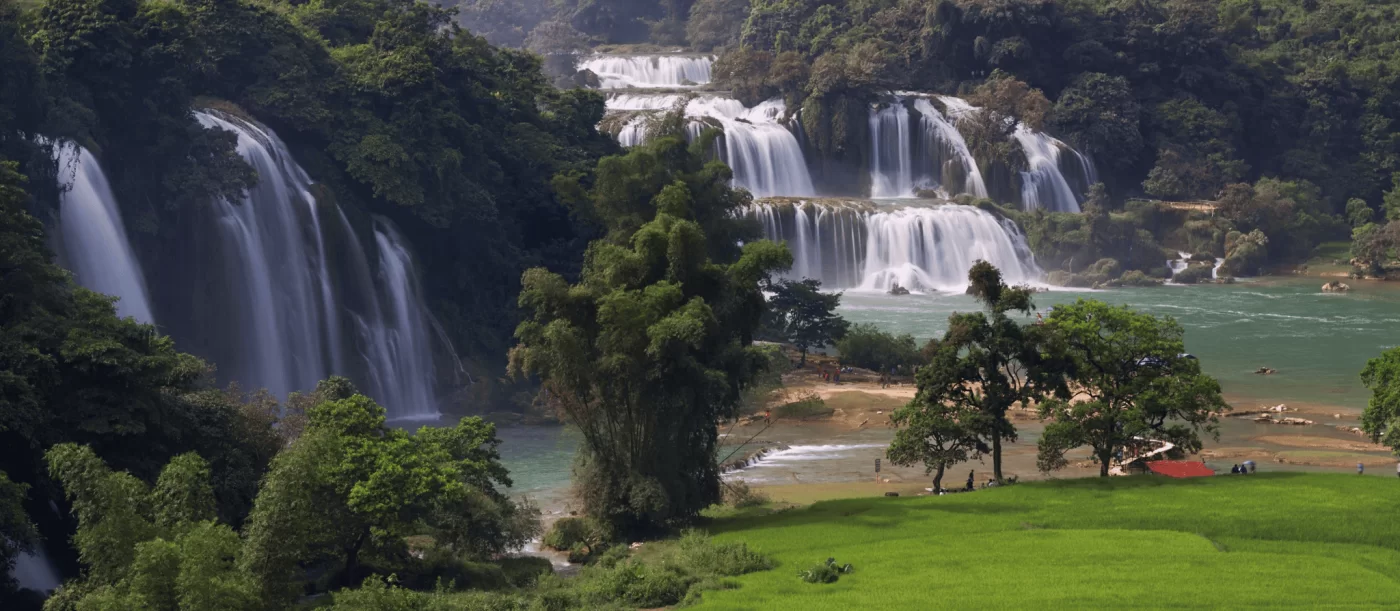
Bản Giốc Waterfall is one of the most beautiful natural attractions in Vietnam. Located on the border between Vietnam and China in Cao Bằng Province, the waterfall is about 30 metres high and nearly 300 metres wide. As a result, it is the widest waterfall in Vietnam.
The falls flow along the Quây Sơn River, a clear green waterway surrounded by rice fields, bamboo groves, and limestone mountains. Although road access has improved in recent years, the area remains much quieter than many popular destinations in northern Vietnam.
Besides the waterfall, travellers can visit caves, traditional villages, mountain roads, and peaceful countryside. Therefore, Bản Giốc is a great destination for nature lovers, photographers, and motorbike travellers.

Best Time to Visit Bản Giốc Waterfall
You can visit Bản Giốc Waterfall throughout the year. However, September is often considered the best month.
During this time, the waterfall is full after the rainy season. At the same time, nearby rice fields turn golden during harvest season. October and November also offer pleasant weather and excellent visibility.
Most travellers begin their journey from Cao Bằng City, located around 90km away. Along the route, there are several interesting attractions. For this reason, spending at least one full day in the area is highly recommended.

Attractions on the Way to Bản Giốc
Phúc Sen Blacksmith Village
Located around 30km east of Cao Bằng City, Phúc Sen Village is famous for traditional knife-making. Roadside workshops display handmade knives, farming tools, and other metal products.
According to local stories, blacksmithing has existed here for hundreds of years. In addition, several workshops sit above deep valleys, creating excellent viewpoints for photography.
Scenic Countryside and Bamboo Water Wheels
After Phúc Sen, the landscape becomes increasingly scenic. Rice fields, rivers, and limestone mountains create impressive views along the road.
One of the highlights is the traditional bamboo water wheel. These simple structures lift water from rivers and carry it into nearby fields. Although fewer wheels remain today, they still show the creativity of local farmers.
Khuổi Ky Stone Village
Just a few kilometres from Bản Giốc Waterfall, Khuổi Ky Village offers a peaceful escape. The village is famous for its stone houses and traditional Tày culture.
Many buildings are believed to be several centuries old. Today, visitors can stay in homestays, enjoy local food, and experience daily village life. As tourism continues to grow, Khuổi Ky attracts more travellers each year.
Ngườm Ngao Cave
Only one kilometre south of Khuổi Ky lies Ngườm Ngao Cave.
Inside the cave, travellers discover large chambers filled with stalactites, stalagmites, and rock formations. Moreover, the site remains easy to visit and rarely feels crowded. Those seeking more adventure can also join guided tours into deeper sections of the cave.


Exploring Bản Giốc Waterfall
Main Viewing Area
At Bản Giốc, the Quây Sơn River forms the border between Vietnam and China. Today, entry is simple. Travellers only need to purchase a ticket before following a paved path to the waterfall.
The walkway crosses rice paddies, small bridges, and streams before reaching the main viewing area. From here, visitors enjoy wide views of the waterfall framed by limestone mountains.
Many people spend several hours walking around the site and taking photographs. In addition, different viewpoints provide excellent opportunities to appreciate the surrounding landscape.
Bamboo Raft Experience
For a closer view, a bamboo raft ride is available near the base of the waterfall.
The journey lasts around ten minutes and brings visitors much closer to the cascading water. Meanwhile, tourists on both the Vietnamese and Chinese sides often wave to each other across the river.
Although swimming is not permitted, the raft trip offers a memorable experience.
Hidden Viewpoints Above the Falls
Adventure lovers can explore a narrow trail leading above the waterfall.
The path passes through jungle vegetation, rocky sections, and natural pools. Eventually, hikers reach higher viewpoints overlooking the falls and surrounding valley.
However, the route can be steep and slippery. Therefore, wearing suitable footwear is strongly recommended.
History and Border Significance
Today, the area feels peaceful and welcoming. However, the border region also holds historical importance.
Several nearby locations witnessed fighting during the 1979 Sino-Vietnamese conflict. As a result, visitors can still see memorial sites dedicated to local residents.
Meanwhile, a hilltop pagoda opposite the waterfall offers wide views of the valley. From this viewpoint, travellers can enjoy a final look at Bản Giốc before continuing their journey.


Accommodation Near Bản Giốc Waterfall
Staying in Khuổi Ky Village
Many travellers choose Khuổi Ky Village because of its traditional atmosphere and convenient location.
Several homestays and guesthouses provide comfortable accommodation. Among them, Minh Khang Homestay is especially popular thanks to its traditional design and historic wooden beams.
Furthermore, many properties serve local dishes and offer opportunities to learn about Tày culture.
Saigon-Bản Giốc Resort
Another option is Saigon-Bản Giốc Resort, the largest hotel near the waterfall.
The rooms are clean, spacious, and comfortable. Some upper-floor rooms even offer distant views of the waterfall. While the resort feels more modern than traditional, it remains a reliable choice for many travellers.
Staying in Cao Bằng City
Alternatively, many visitors stay in Cao Bằng City, located about 83km from Bản Giốc.
The city offers a wide range of hotels, guesthouses, and homestays. Popular choices include Los Angeles Hotel, Jodevi Homestay, and Ca Homestay.
Because accommodation and dining options are more varied, Cao Bằng City serves as a practical base for exploring the province.


Food and Drink
Near Bản Giốc Waterfall
Several local restaurants operate near the waterfall entrance. Most serve rice dishes, noodles, and regional specialties.
Another good option is dining at homestays in Khuổi Ky Village. Many prepare fresh meals using locally sourced ingredients.
Eating in Cao Bằng City
For greater variety, head to Cao Bằng City.
Popular local dishes include bánh cuốn and phở chua. In addition, the city offers hotpot restaurants, cafés, bakeries, and local markets.
Coffee lovers should also visit Nâng Café, one of the most relaxing cafés in the city.


Transportation to Bản Giốc Waterfall
From Hanoi to Cao Bằng
Travelling from Hanoi to Cao Bằng is relatively easy.
Sleeper buses usually take six to seven hours. Alternatively, drivers can travel along National Highway QL3 through scenic mountain landscapes.
Because the journey is quite long, many travellers choose to stop overnight in Bắc Kạn or Ba Bể National Park.
From Cao Bằng City to Bản Giốc
Bản Giốc Waterfall is located around 83km east of Cao Bằng City.
A rented motorbike or private car offers the greatest flexibility. This option allows travellers to stop at viewpoints, villages, and attractions along the way.
Public buses also operate daily between the city and the waterfall. However, they provide less freedom and require more planning.


Final Thoughts
Bản Giốc Waterfall combines beautiful scenery, local culture, history, and excellent road-trip experiences. Unlike many famous destinations in northern Vietnam, the area still feels peaceful and uncrowded.
Whether you visit for a day trip or stay for several nights, Bản Giốc Waterfall offers one of the most rewarding travel experiences in Vietnam.
0 Comment