
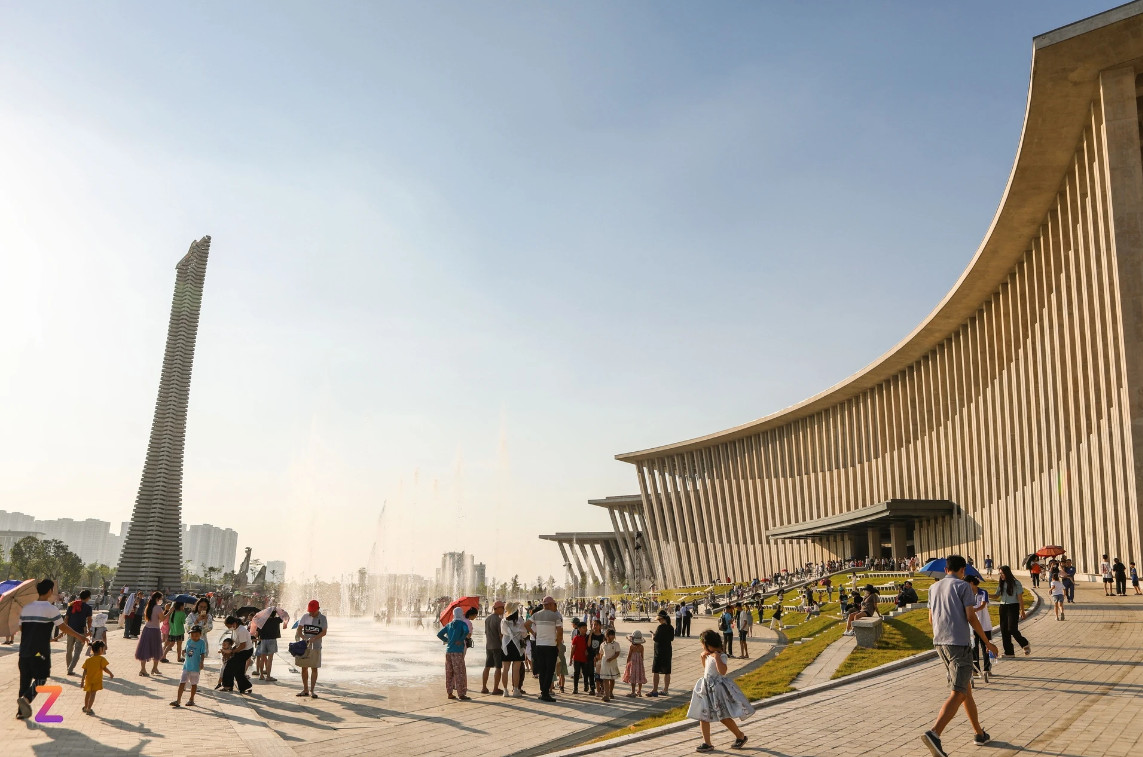

1.Overview of Vietnam Military History Museum
The Vietnam Military History Museum is one of the most important cultural and historical attractions in Hanoi. It highlights the strength and development of the Vietnam People’s Army.
- Address: Km 6+500 Thang Long Boulevard, Tay Mo Ward, Nam Tu Liem District, Hanoi
- Opening hours: 8:00–11:00 & 13:00–16:30 (closed on Mondays and Fridays)
- Ticket price: 50,000 VND/person; 25,000 VND for students

A panoramic view of the new Vietnam Military History Museum.
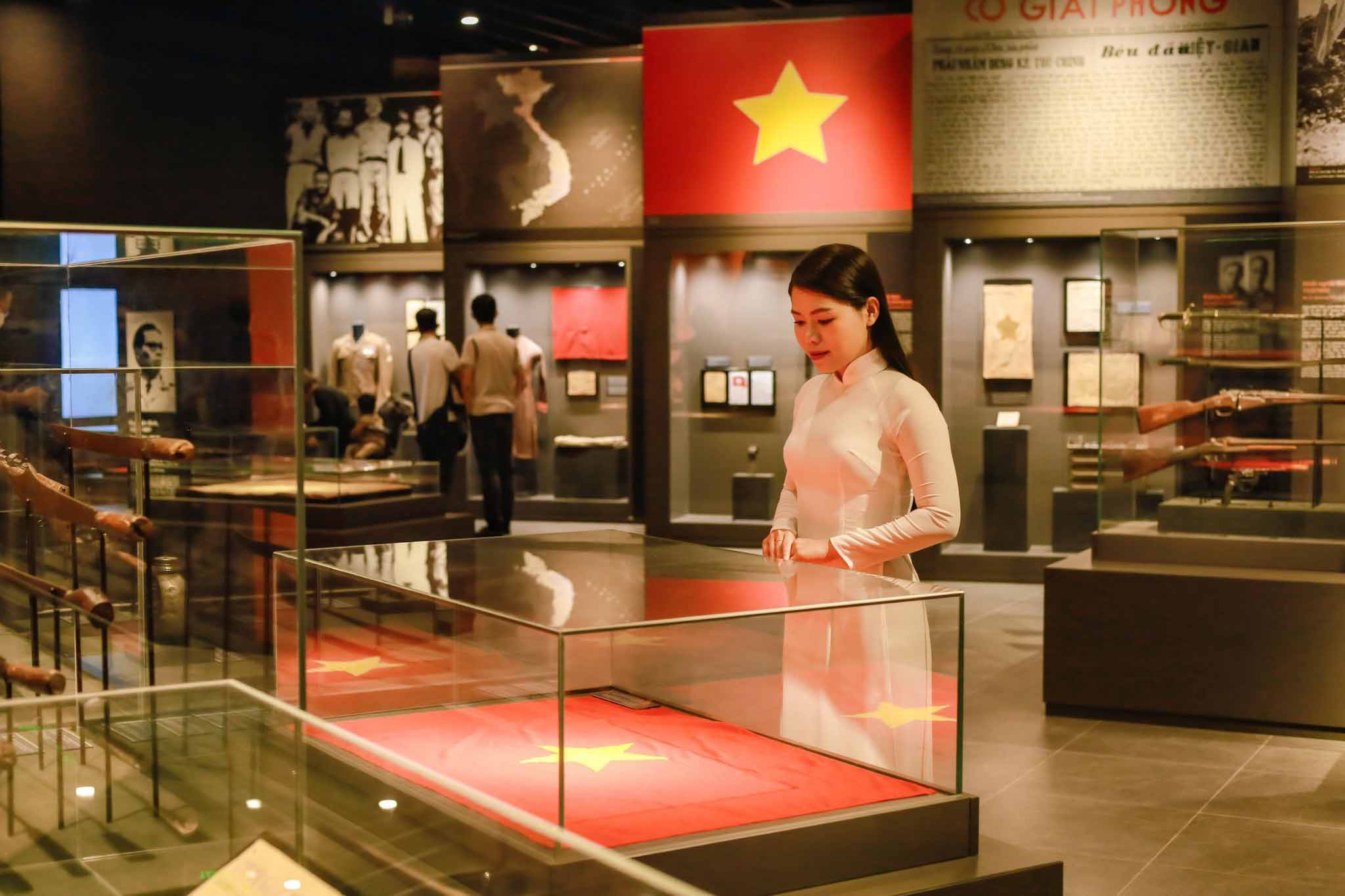
The artifacts are displayed with detailed captions and images, helping visitors understand the content of each period.
2.Modern Design Inspired by “Heaven, Earth, and Sea”
2.1Large-Scale and Impressive Architecture
Since 2019, the Ministry of National Defence has developed this large-scale project. The museum covers 386,600 m², making it one of the biggest museums in Vietnam.
The complex includes:
- A spacious front courtyard
- A symbolic Victory Tower
- A main building with four floors and one semi-basement
In addition, the main structure has a total floor area of 64,640 m² and reaches a height of 35.8 meters.
Notably, the design follows a modern architectural style. At the same time, it blends natural light with artificial lighting to create a comfortable atmosphere.
More importantly, the concept of “Heaven, Earth, and Sea” shapes the entire structure. These elements represent both nature and the three core forces of the army.
Therefore, the museum is not only a place to display war history. It also offers an interactive space where visitors can explore Vietnam’s journey toward independence.
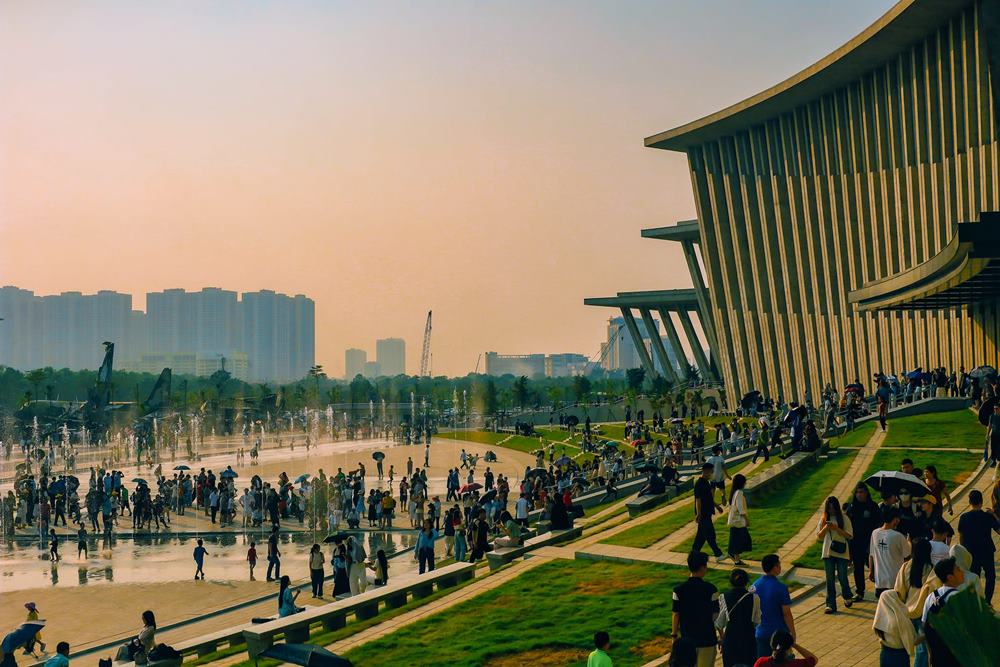
The museum is designed in a modern style with four above-ground floors and one semi-basement floor.
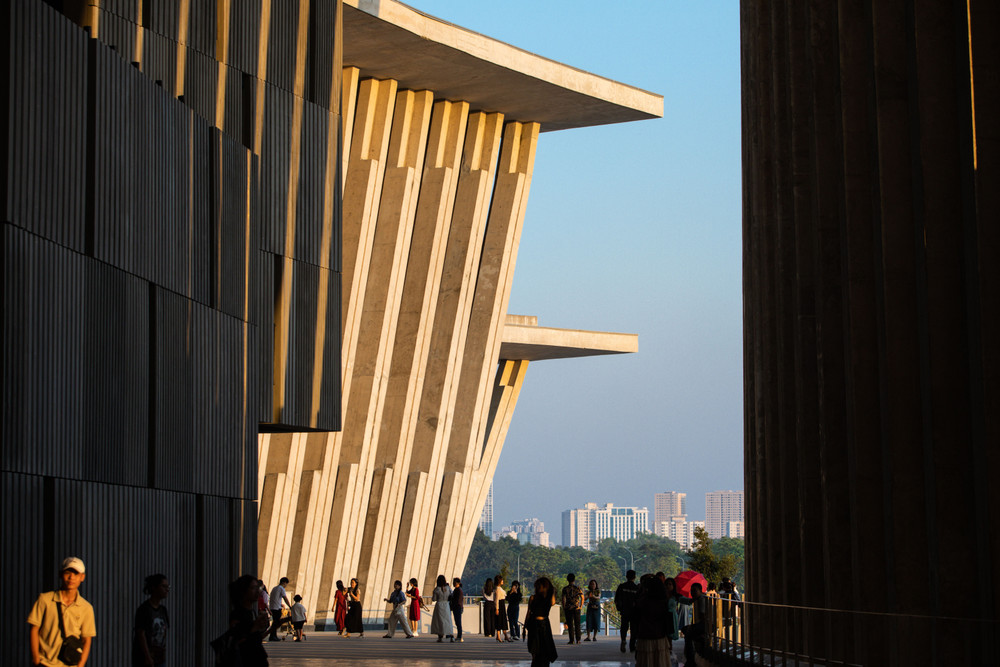
The Vietnam Military History Museum features a simple, modern design that harmonizes architectural lighting with natural light.
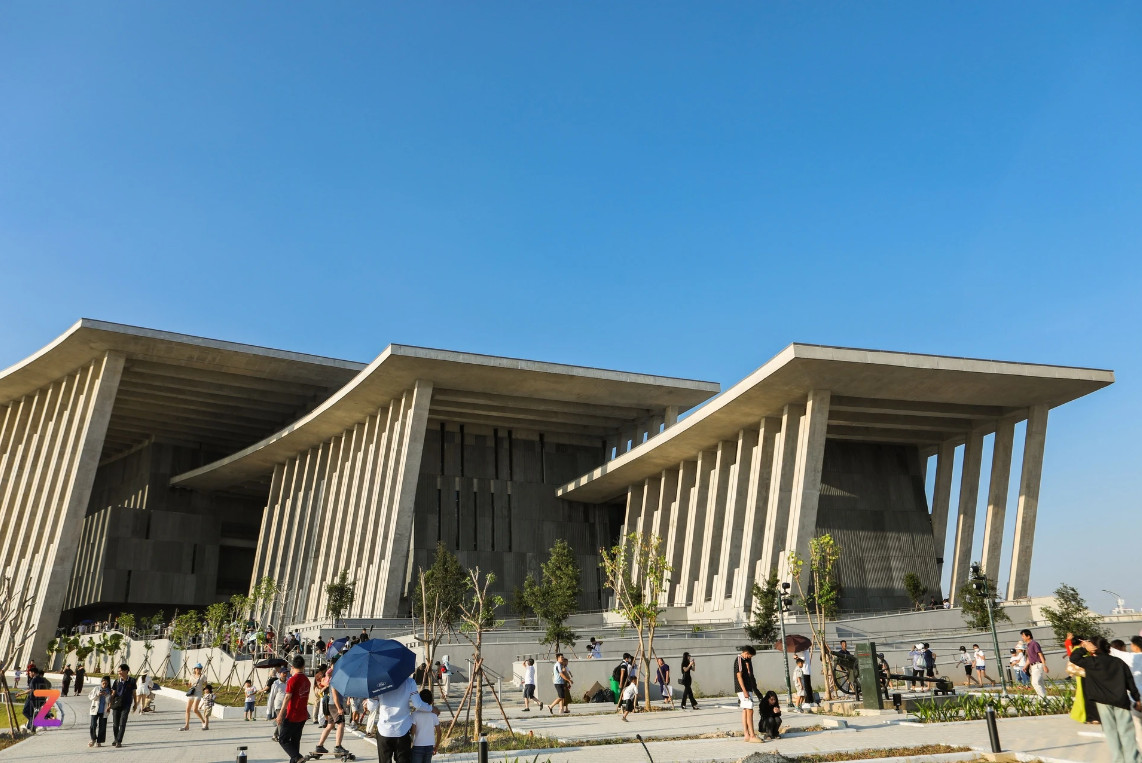
The museum’s architectural lines harmonize with each other, creating a beautiful visual effect in the afternoon sunlight.
2.The Iconic Victory Tower
One of the most striking highlights is the Victory Tower.
- Height: 45 meters
- Design: Star-shaped top
- Symbolism: The year 1945 – Vietnam’s independence
Interestingly, the tower features a five-pointed star reaching toward the sky. Meanwhile, its pentagonal base represents five key social classes: intellectuals, farmers, workers, entrepreneurs, and soldiers.
Because of this symbolic design, the tower becomes a powerful visual landmark within the museum.
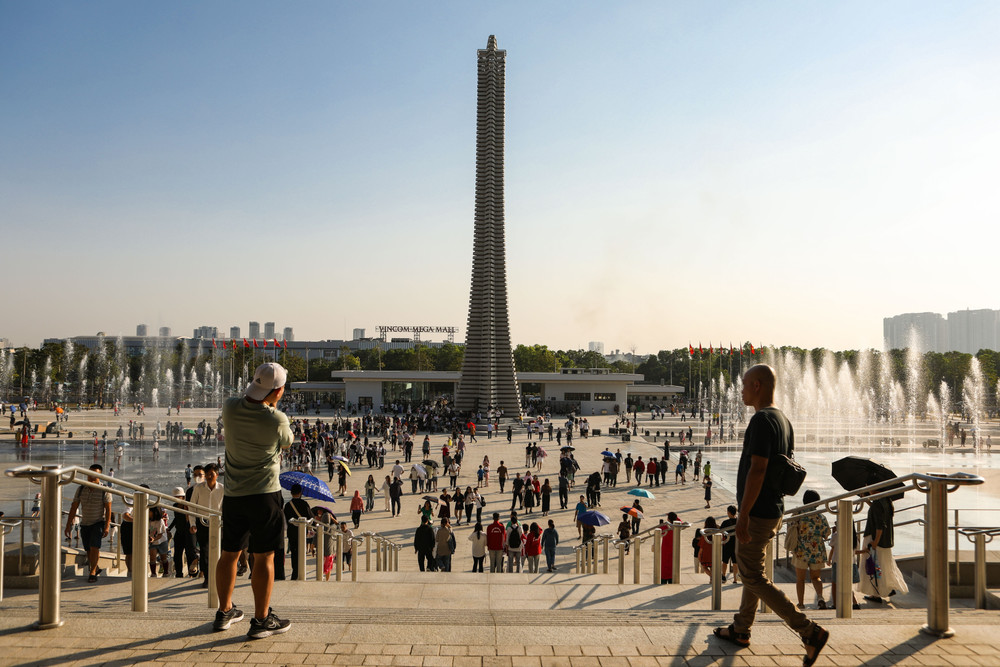
A highlight within the museum grounds is the Victory Tower, standing 45 meters tall, representing the milestone of Vietnam’s independence in 1945.
3.Outdoor Exhibition Areas and Military Artifacts
3.1Weapons and Equipment on Display
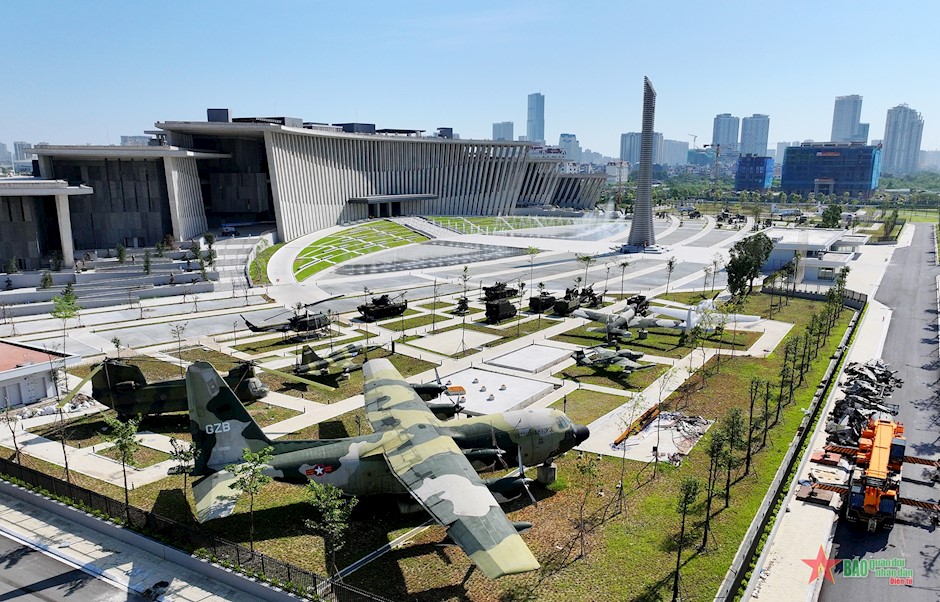
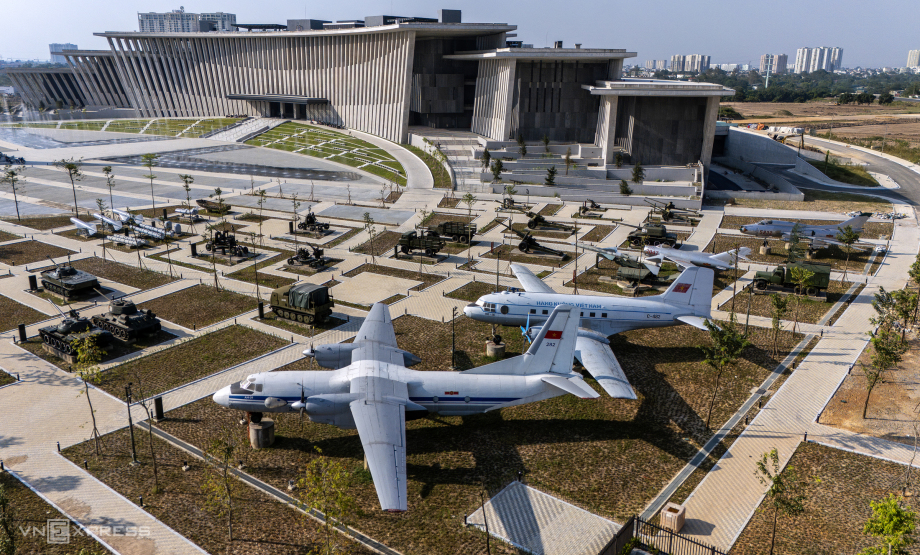
On both sides of the museum, visitors can explore large outdoor exhibition areas.
Here, you will find:
- Tanks and armored vehicles
- Artillery and heavy weapons
- Military aircraft
For example, the museum displays:
- An 85 mm cannon
- PT67 tank (No. 555)
- MiG-17 aircraft (No. 2047)
Weapons and equipment used by the Vietnamese army and people during the resistance war against French colonialism are displayed in front of the central building on the left.
On the right is equipment used by the US military during the Vietnam War.
3.2Message of Peace and Symbolic Spaces
Beyond military displays, the museum also delivers a strong message of peace.
Architects carefully designed symbolic elements such as:
- Green sprouts growing from war debris
- White doves representing peace
- B52 wreckage as a reminder of history
As a result, visitors can reflect on both the cost of war and the value of peace.
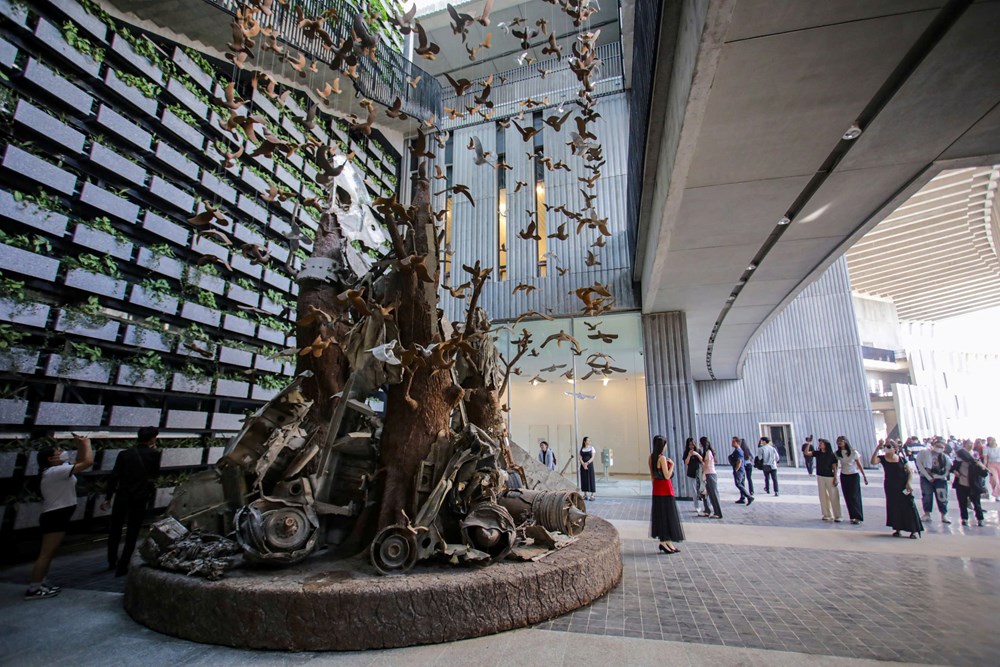
A section of the wreckage of a B52 bomber shot down by Vietnamese forces over Hanoi is on display in the main hall.
4.Highlights Inside the Museum
4.1Legendary Aircraft – The “Silver Swallow” MiG-21
Inside the main hall, the MiG-21 fighter jet (No. 4324) stands out as a national treasure.
The aircraft hangs from the ceiling, creating the impression of flight. Next to it, a large LED screen presents Vietnam’s culture and history.
Historically, this aircraft achieved remarkable success:
- 69 combat sorties
- 22 engagements
- 14 enemy aircraft shot down
Because of these achievements, the jet features 14 red stars on its body. It was officially recognized as a National Treasure in 2015.
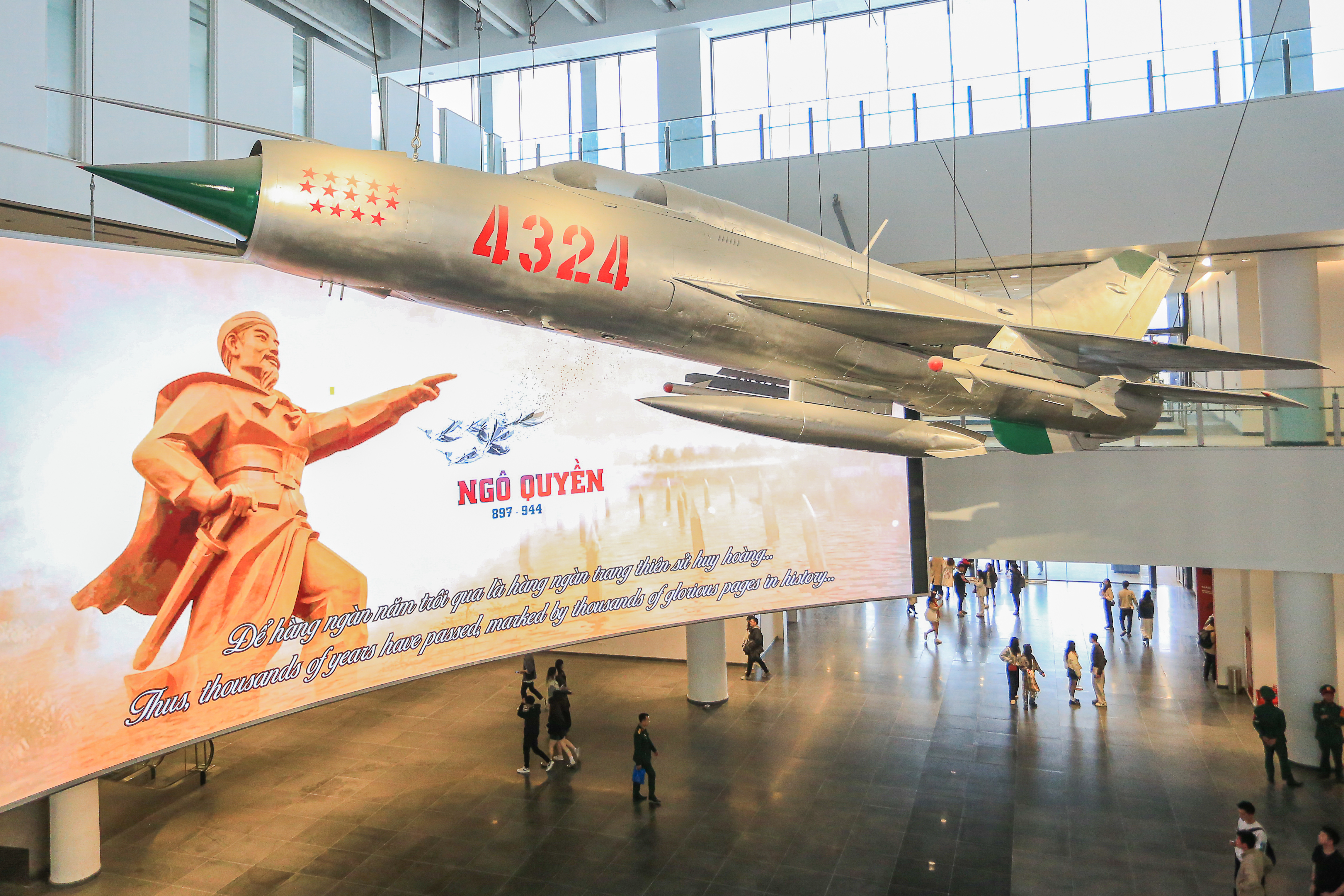
The “Silver Swallow” fighter jet has achieved many victories.
4.2Other National Treasures
In addition to the MiG-21 (No. 4324), the museum also preserves:
- MiG-21 (No. 5121)
- T-54B tank (No. 843)
- Map of the Ho Chi Minh Campaign
Notably, Tank 843 played a key role on April 30, 1975. It led the assault into Saigon and reached the Independence Palace, marking a historic moment.
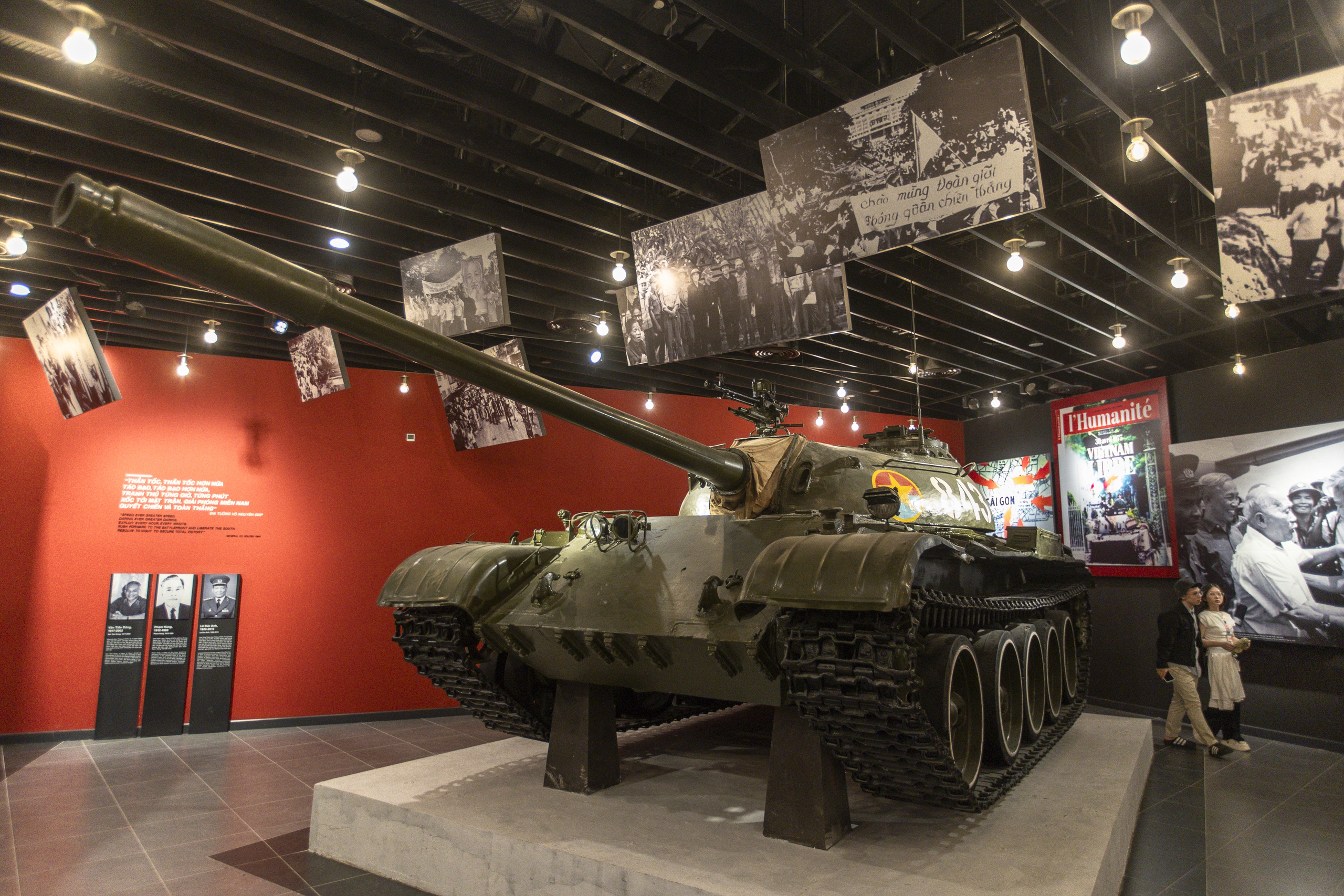
The photo shows tank 843 of Company 4, Battalion 1, 203rd Armored Brigade, 2nd Corps. This tank participated in the liberation of Hue and Da Nang, and later in the Ho Chi Minh Campaign. On April 30, 1975, tank 843 led the formation into Saigon, and on the way to the Independence Palace, it destroyed three enemy tanks and armored vehicles, finally ramming into the palace’s side gate. The rest is history.
4.3Main Exhibition Themes
The museum organizes its indoor exhibitions into six main themes, arranged chronologically:
- Early nation-building and defense
- Independence protection (939–1858)
- Resistance against French colonialism (1858–1945)
- War against France (1945–1954)
- Vietnam War against the US (1954–1975)
- National development from 1976 to present
Thanks to this structure, visitors can easily follow Vietnam’s historical timeline.
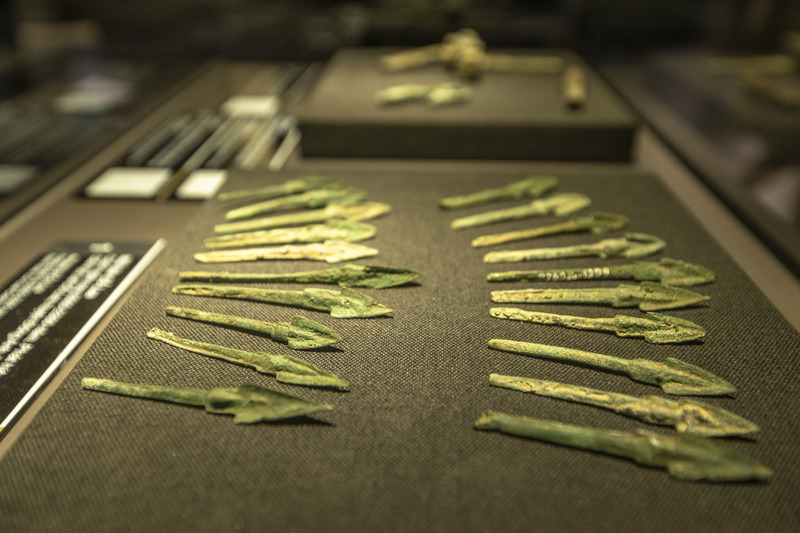
The artifacts displayed in Theme 1 space summarize the process of nation building and defense of the Vietnamese people from the time of Hung Vuong to the victory at Bach Dang (938) ending more than 1,000 years of Northern domination.
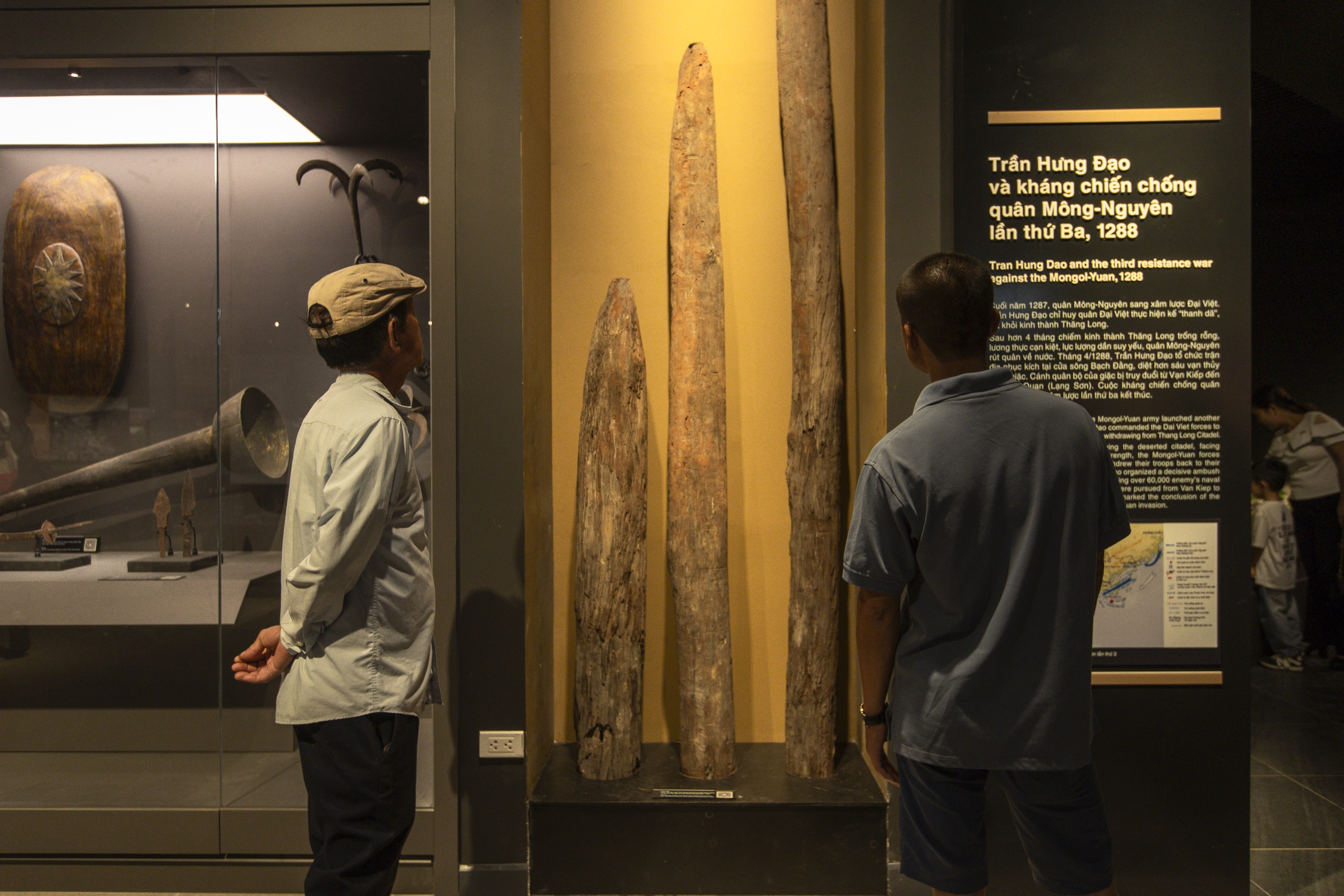
Artifacts from the period of defending independence, from 939 to 1858.
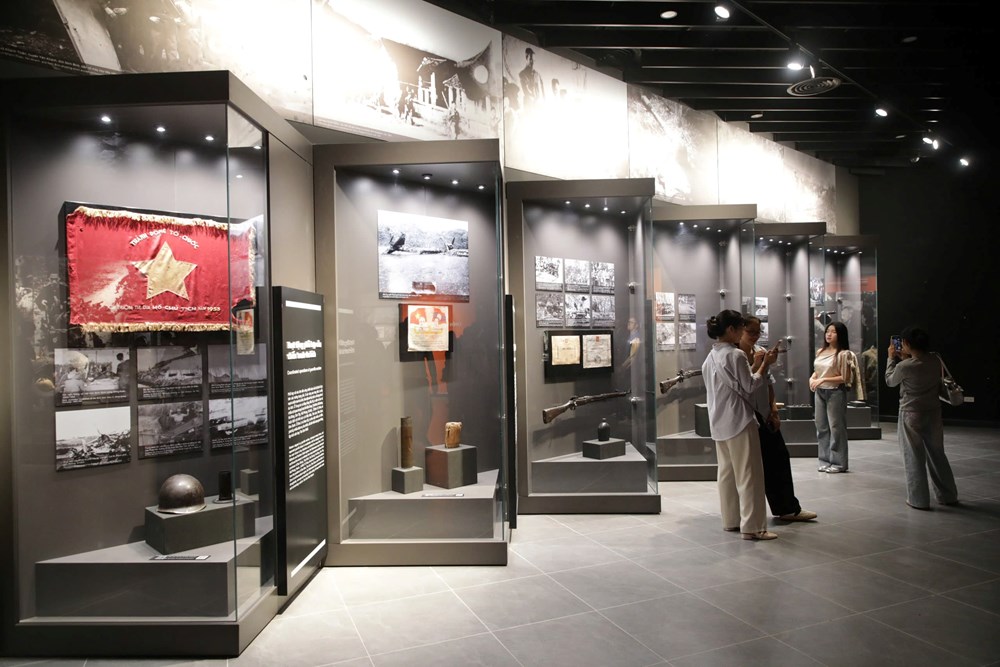
Thousands of historically valuable artifacts are on display across six themes.
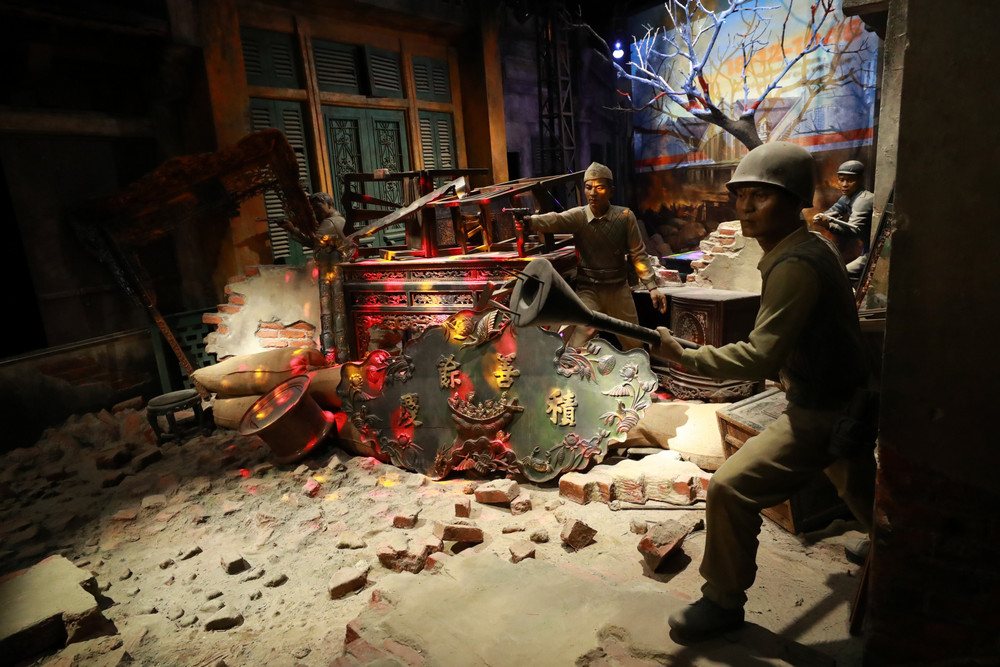
In exhibition space 4, alongside the artifacts, you will also find vivid, 1:1 scale models recreating the streets of Hanoi during the 60 days and nights of fighting in response to President Ho Chi Minh’s call for nationwide resistance.
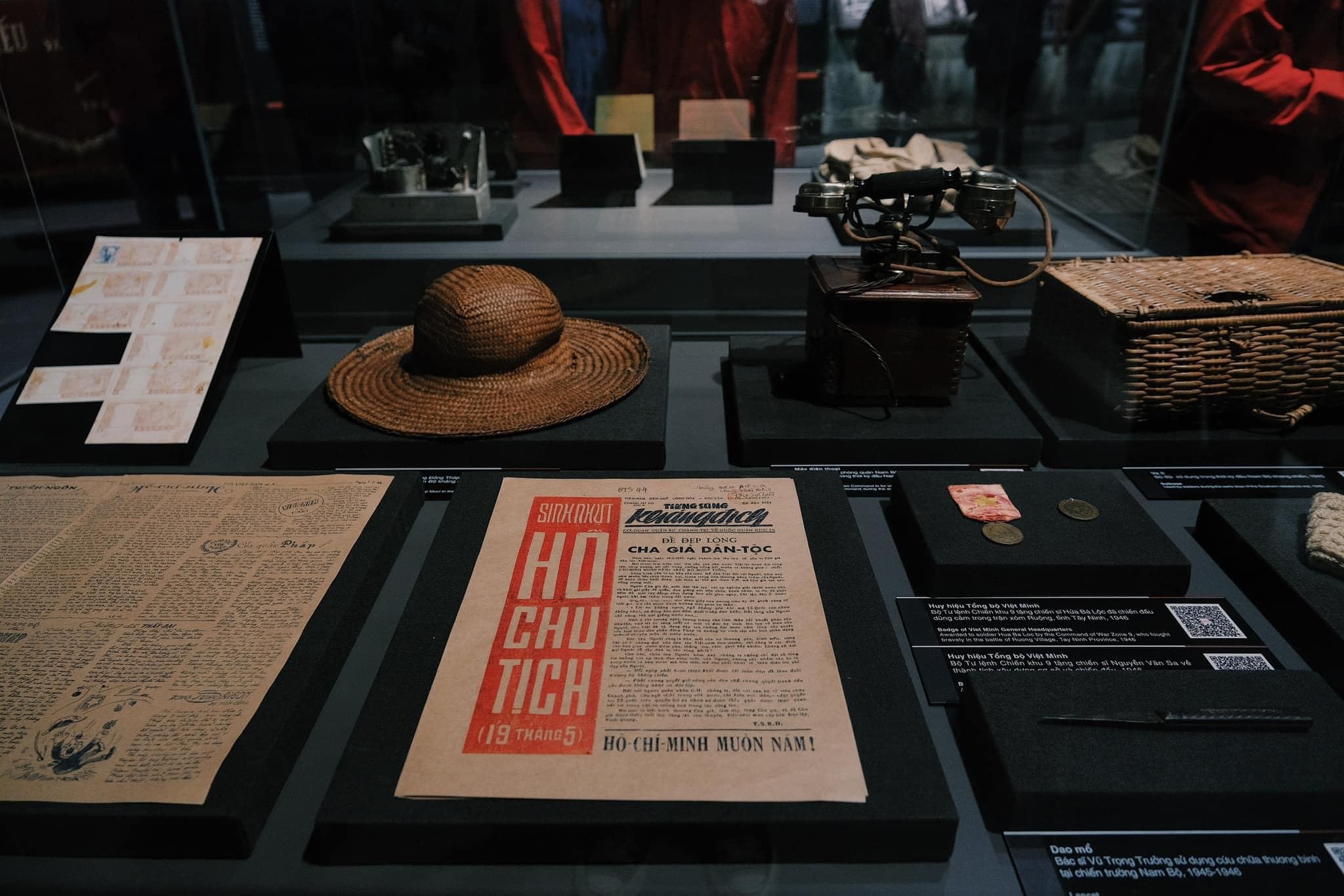
The equipment is arranged according to a specific time frame.
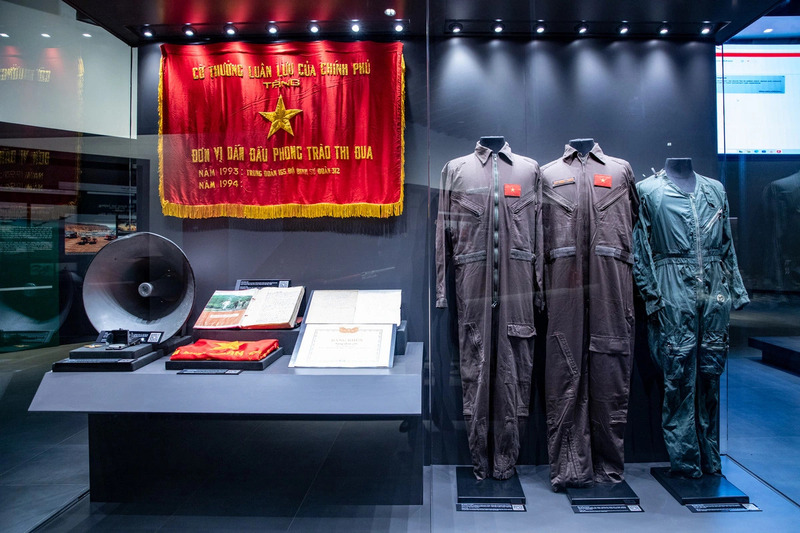
Artifacts from the Air Defense Force unit.

A model of the HQ-505 ship marking a location in the East Sea.
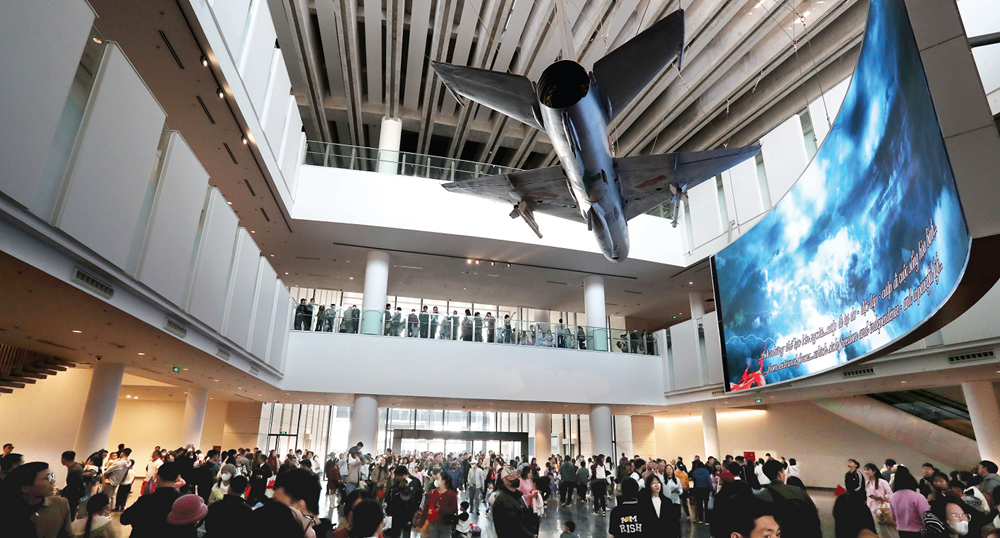
In its early days of opening, the Vietnam Military History Museum attracted a large number of visitors, especially young people.
4.4Interactive Technology and Visitor Experience
To enhance engagement, the museum uses modern technology such as:
- 3D mapping displays
- Interactive screens
- QR codes for quick information access
- Audio guides and video content
For example, the Dien Bien Phu campaign is recreated using a 3D diorama. Similarly, a life-size model of Hanoi during the 60-day resistance provides a vivid experience.
Therefore, visitors not only see artifacts but also understand the stories behind them.
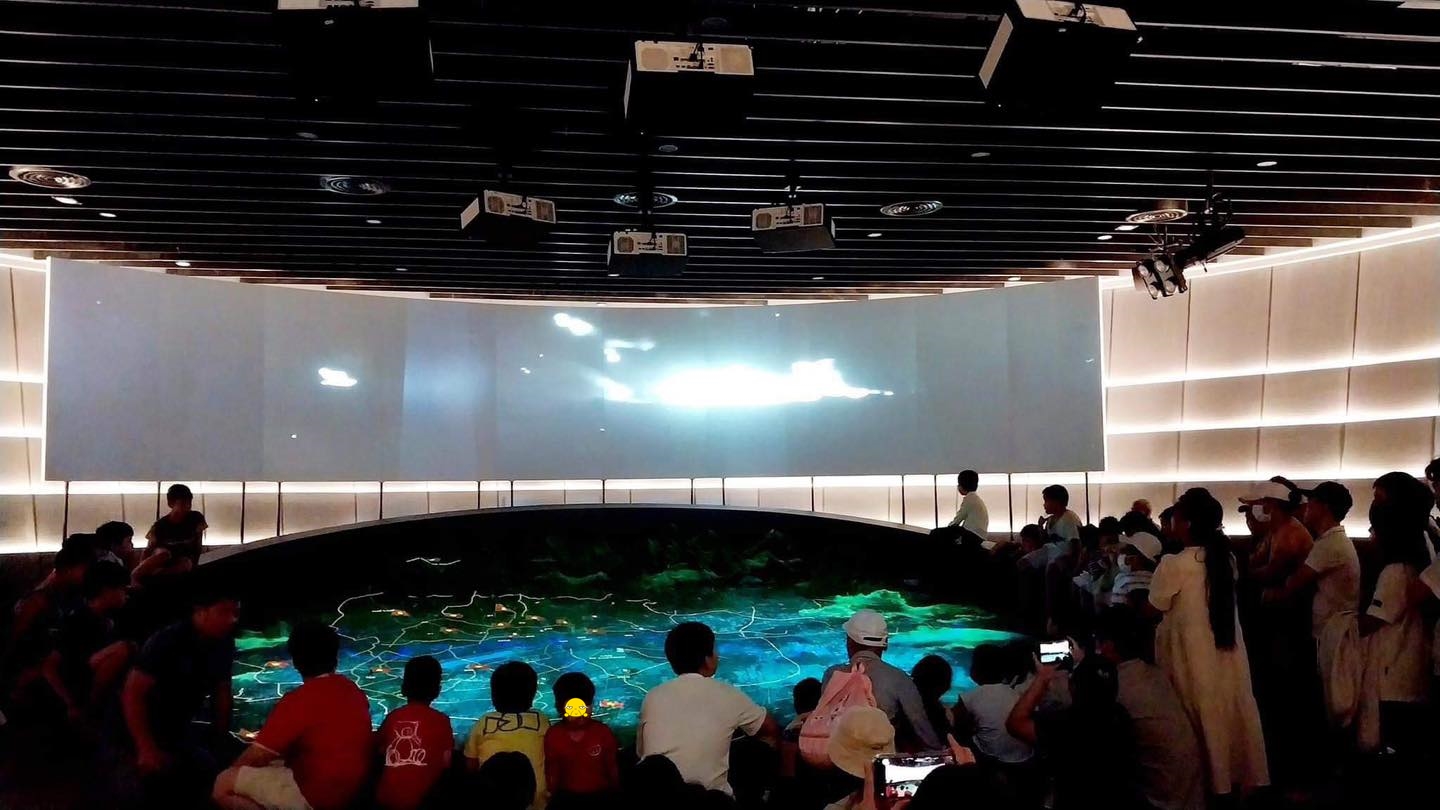
The Dien Bien Phu campaign is recreated using modern 3D diorama technology, providing viewers with a realistic experience.
4.5Virtual Tour Experience (VR 360)
If you cannot visit in person, you can still explore the museum online.
The VR360 system allows users to:
- Navigate different exhibition areas
- Rotate views in all directions
- Access detailed artifact information
As a result, the museum becomes accessible from anywhere.
0 Comment