
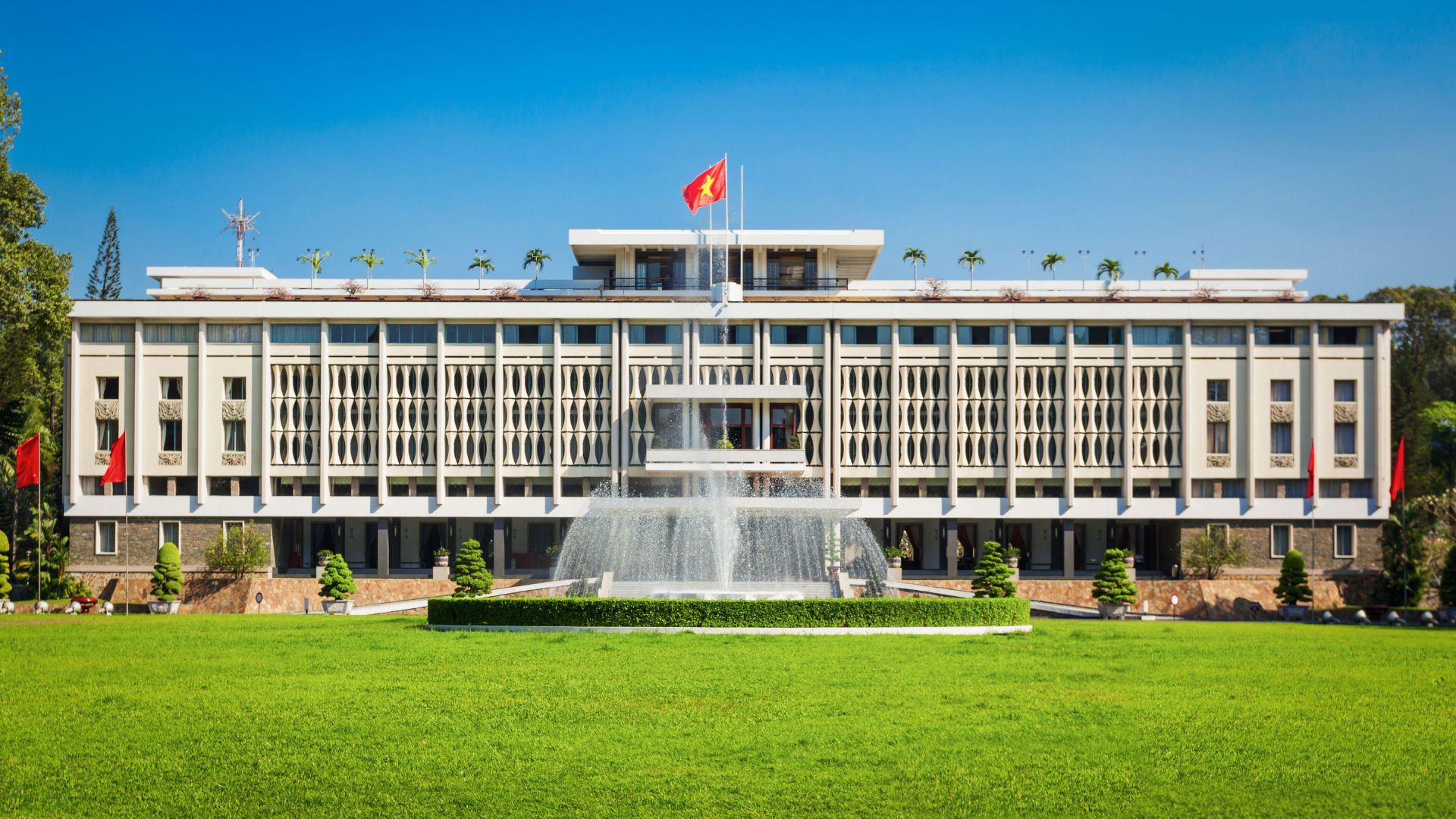

1. General introduction to Independence Palace
Independence Palace , also known as Reunification Palace , is an iconic architectural landmark located in the heart of Ho Chi Minh City. It is not only a popular tourist attraction but also a significant historical witness, marking many important events in modern Vietnamese history.
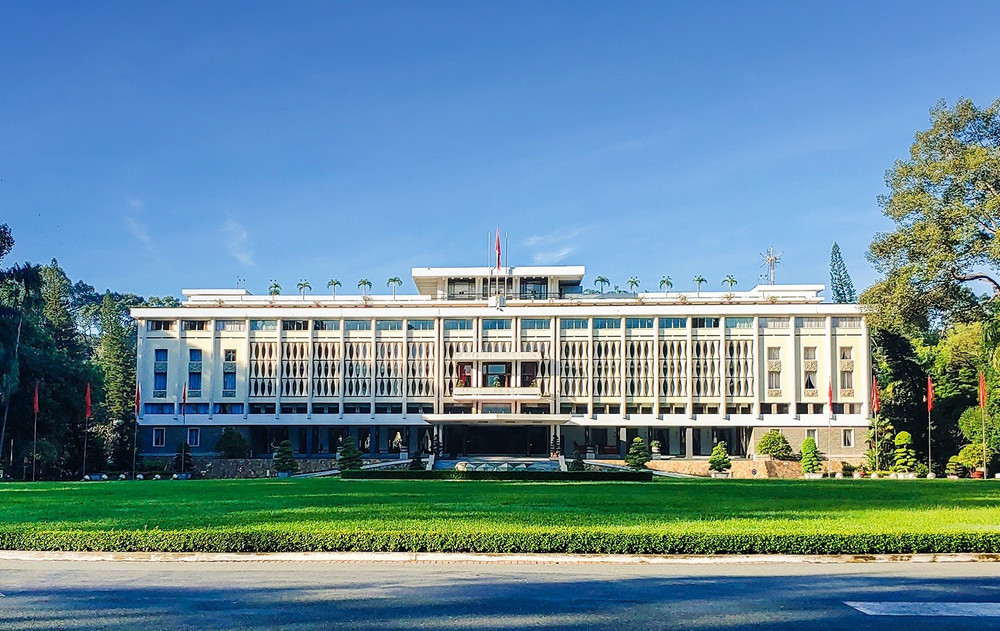
Independence Palace – A symbol of national peace @shutterstock
Address: 135 Nam Ky Khoi Nghia Street, Ben Thanh Ward, Ho Chi Minh City
Phone: 028 3822 3652
Ticket sales hours: 8:00 AM – 3:30 PM
Visiting hours:
– Main building of the Independence Palace historical site: 8:00 AM – 4:30 PM
– Exhibition hall “From Norodom Palace to Independence Palace 1868 – 1966”: 8:30 AM – 4:30 PM
Entrance ticket prices (updated 2025)
– Standard Ticket:
+ Adults: 40,000 VND/person
+ Students: 20,000 VND/person
+ Children: 10,000 VND/person
– Combo ticket (historical site + exhibition):
+ Adults: 65,000 VND/person
+ Students: 45,000 VND/person
+ Children: 15,000 VND/person
The government recognizes Independence Palace as a Special National Monument. It represents Vietnam’s independence and reunification journey.
2. History of Independence Palace
2.1 Early Construction and Name Changes
The palace stands on the former site of Norodom Palace, built in 1868 during the French colonial period.
After the French left Vietnam, the government renamed it Independence Palace. The new name reflected the country’s political change at that time.
In 1962, an air raid damaged the building. President Ngo Dinh Diem then ordered a new palace on the same site. Architect Ngo Viet Thu designed the new structure. He blended modern design with traditional Vietnamese elements.
2.2 Important Historical Events
Construction started on July 1, 1962, and finished in 1966. The palace became the headquarters of the Republic of Vietnam government.
Many important meetings took place here. Leaders from different countries also visited the palace.
On April 30, 1975, a historic event changed Vietnam forever. Tanks entered the palace and ended the war. Tank 843 broke through the main gate, marking national reunification.
After that day, the government renamed it Reunification Palace. The site has remained well preserved and open to visitors.
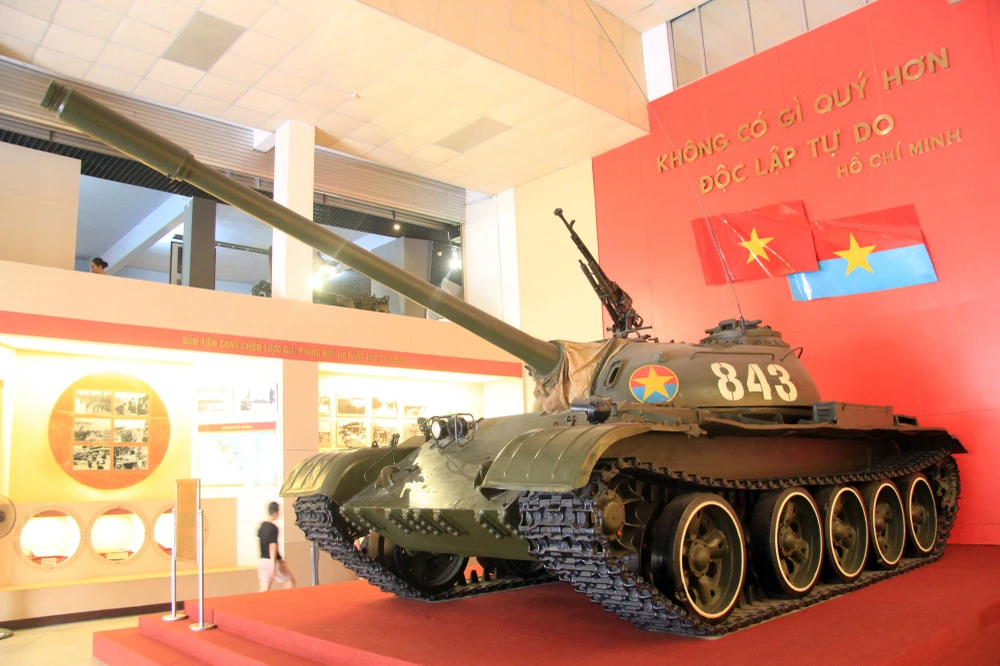
The image shows a tank entering the Independence Palace. @People’s Army Newspaper
2.3 Historical Value Today
Today, Independence Palace stands as a symbol of:
- Peace
- Independence
- National unity
In 2009, authorities officially recognized it as a Special National Monument.
Visitors can explore rooms, artifacts, and historical spaces. Each area tells a story about Vietnam’s past.
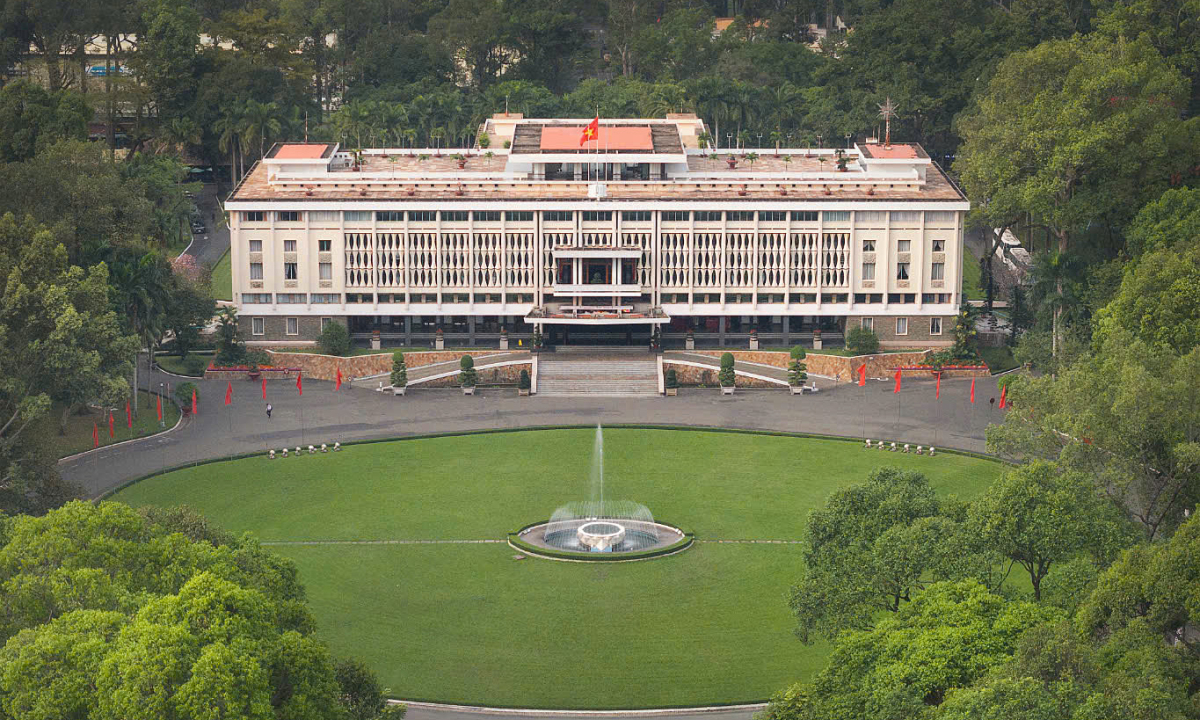
The Independence Palace today, seen from above @shutterstock
3. Unique Feng Shui Architecture of Independence Palace
Architect Ngo Viet Thu carefully blended Eastern philosophy with modern Western architecture when he designed Independence Palace.
According to architect Huynh Van Muoi, the palace layout contains symbolic Chinese characters such as Cát, Khẩu, Trung, Tam, Chu, and Hưng. These characters express ideas about prosperity, loyalty, and harmony.
The palace floor plan forms the character “Cát”, which represents good fortune.
Architectural elements on the facade — including balconies, roof edges, and wooden columns — create the character “Hưng”, meaning prosperity.
The rooftop structure called “Tứ phương vô sự lâu” symbolizes peace and stability in all directions.
When combined with the central flagpole, the rooftop pavilion forms the character “Trung”, which represents loyalty.
These symbolic details show the deep cultural thinking behind the palace design.
Even today, architects and historians continue to study the unique design of Independence Palace.
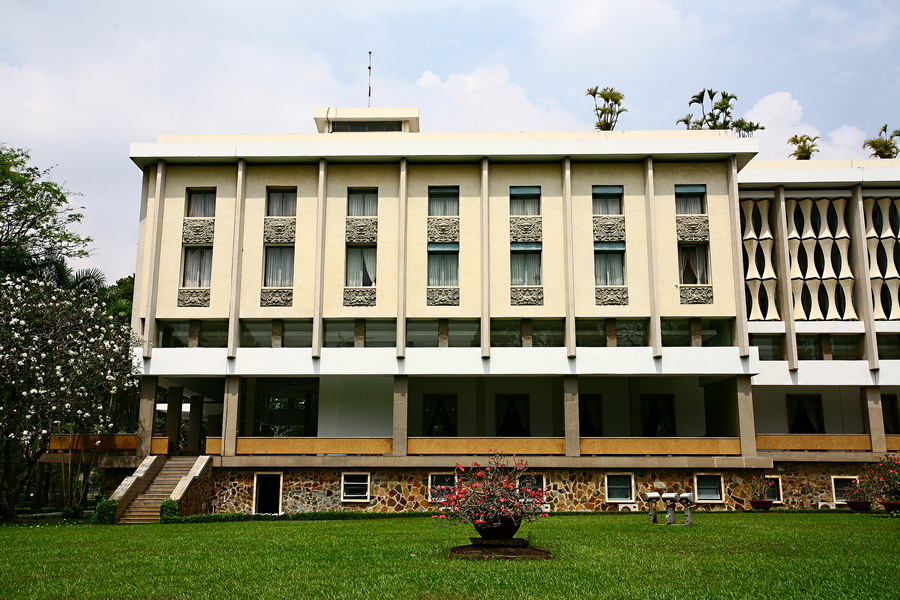
The palace was built using bamboo sections to form Chinese characters. Photo: Uyen Mi Chau

The harmonious blend of architecture and natural light creates a space imbued with artistic flair. Photo: Long Bun
The interior design of the Independence Palace holds many fascinating details, reflecting the dedication of architect Ngo Viet Thu. Photo: HOANG TRIEU
4. Explore Inside Independence Palace
The palace includes three main areas. Each area offers a different experience.
4.1 Permanent Area
This area served as the workplace and living space of the former government.
Key rooms include:
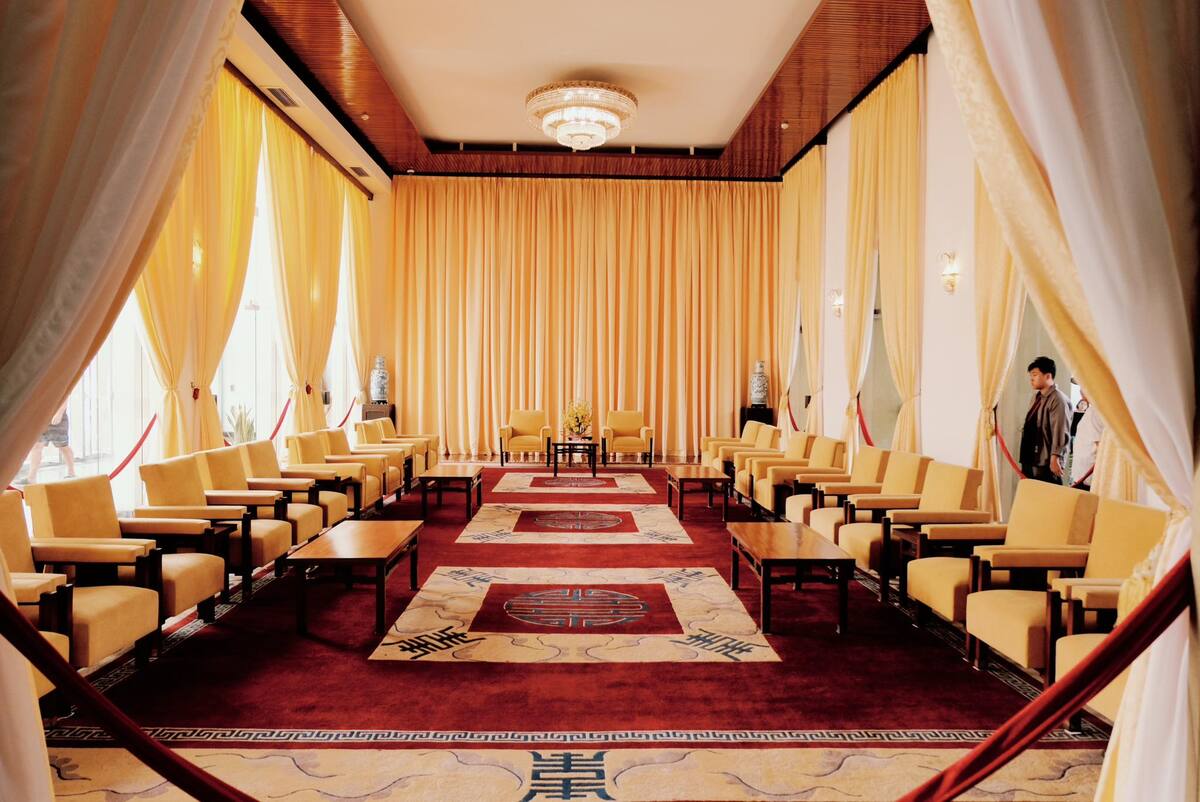
- Reception Hall
- Cabinet Room
- President’s Office
- Banquet Hall
Each room features elegant and simple design. The furniture reflects both luxury and function.

The Reception Hall: a place that has witnessed many historical ups and downs, such as President Nguyen Van Thieu’s resignation announcement, the North-South unification conference… Photo: Hien Tran
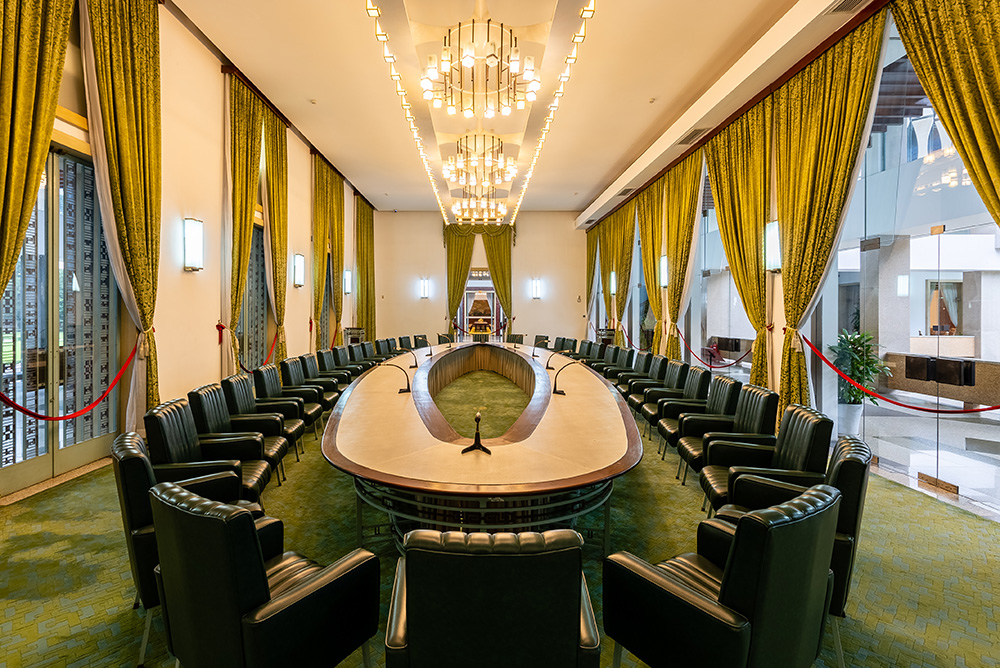
Cabinet Room: Where the old regime held meetings every Wednesday. Photo: Uyen Mi Chau
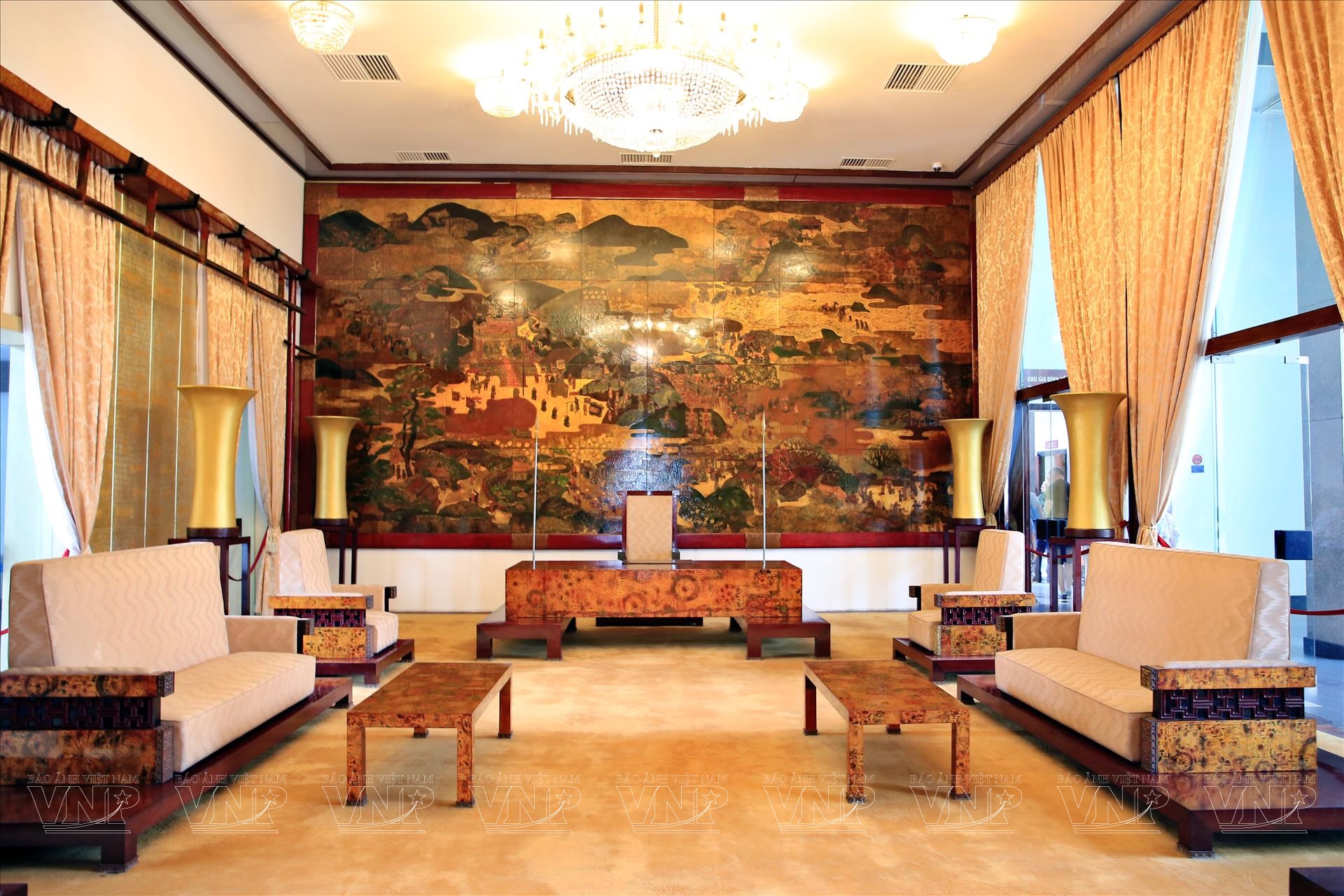
The room for presenting credentials is a resplendent space, centerpieced by a painting of “Bình Ngô Đại Cáo” (Proclamation of Victory over the Wu) composed of 40 small pieces. Photo: HOÀNG TRIỀU
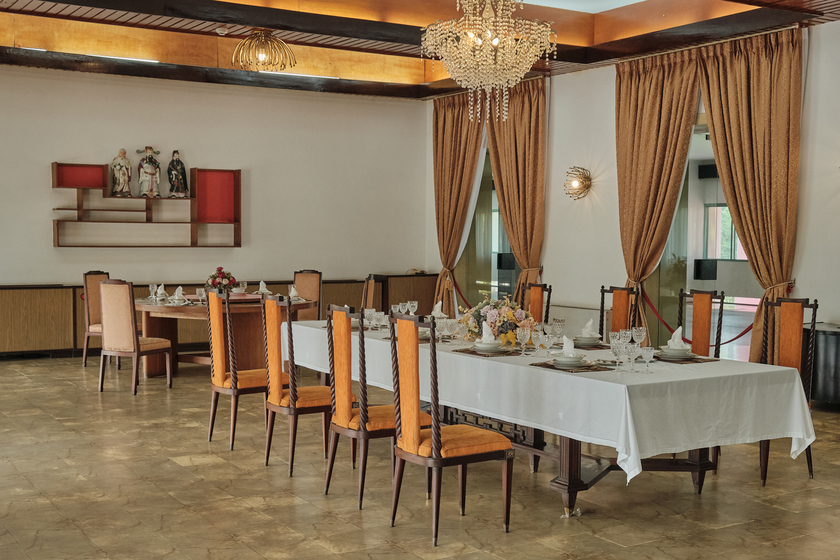
The banquet hall where the First Lady receives guests is located on the third floor. Photo: Edwin Petrus
4.2 Thematic Area
The themed area is a display of historical artifacts. It also regularly hosts large exhibitions for visitors. The themed area will provide you with new insights, allowing you to directly observe and better understand an important period in the nation’s history. The Independence Palace also has guides available to present information about hidden historical details that are not widely known.
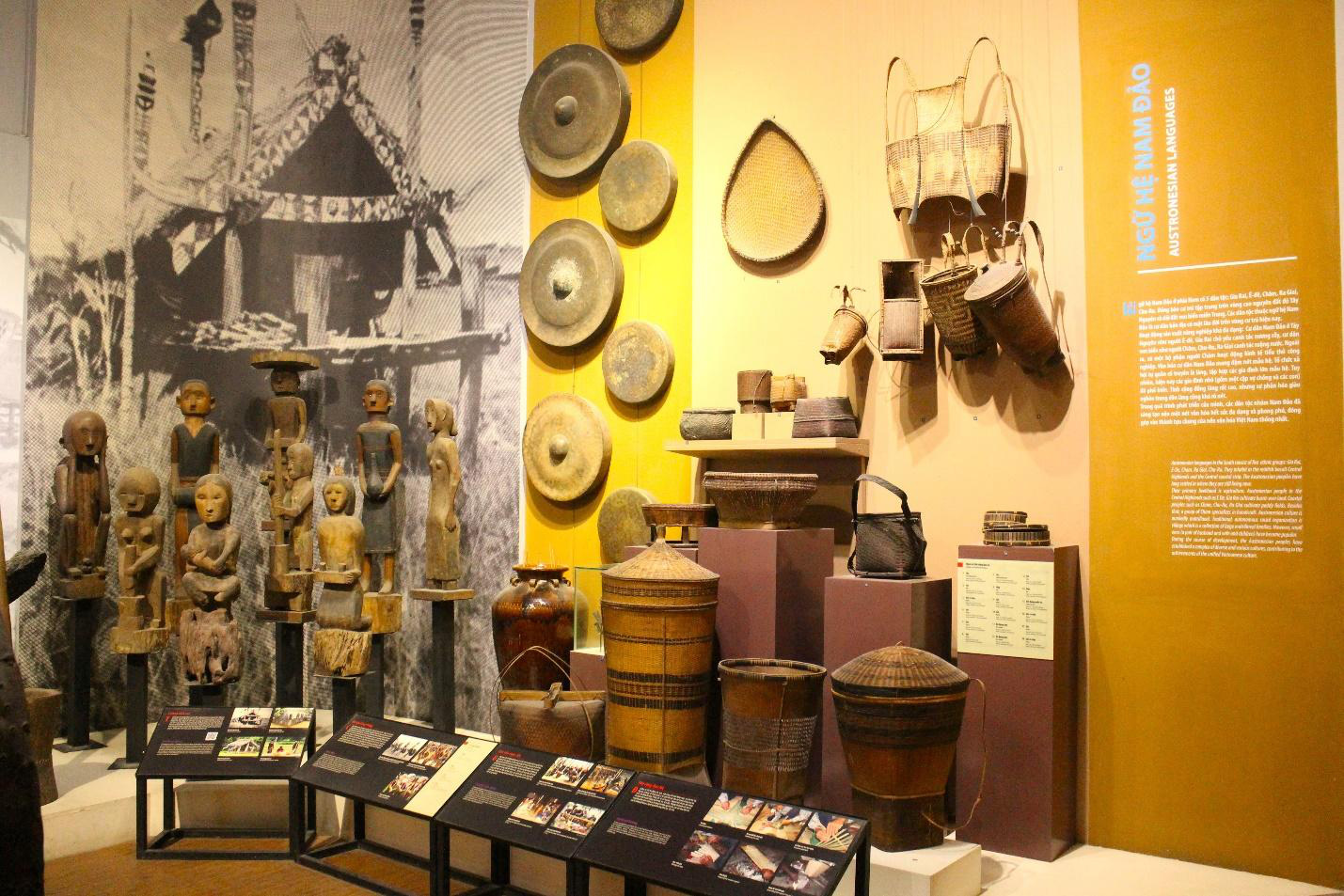
Thematic exhibition area displaying paintings, photographs, and artifacts.
4.3 Additional Areas
The palace basement stores communication systems and war-related equipment.
Outside, visitors can walk through green gardens and open spaces. These areas are perfect for photos.
Independence Palace is especially popular during holidays like April 30 and Tet.
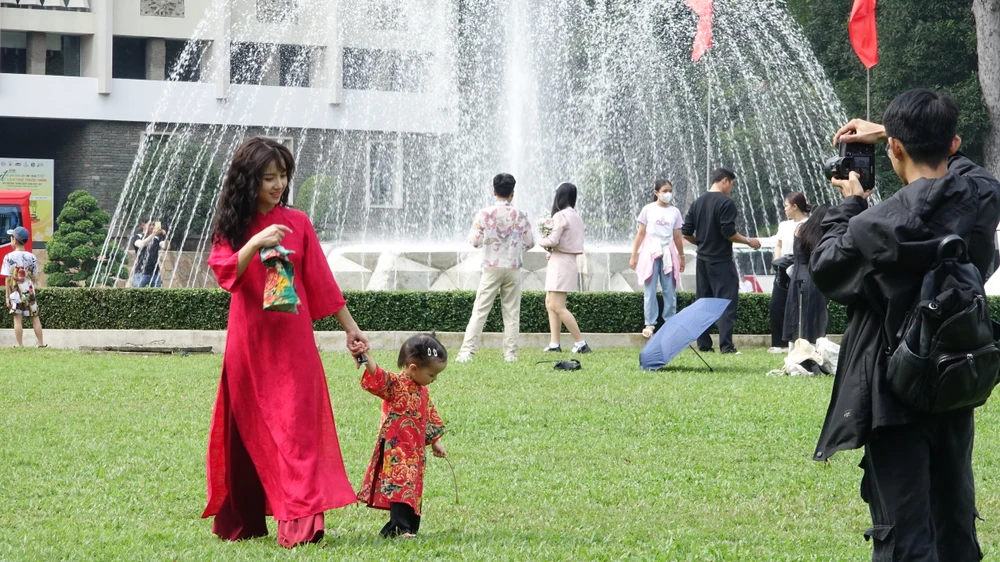
Independence Palace is a popular spot for young people to check in and take photos during holidays like April 30th and Tet (Lunar New Year)… Photo: Provided by the interviewee, Huy Viet
5. Notes when visiting Independence Palace
To ensure a smooth visit to the Independence Palace, please keep in mind a few tips from SeA Travel :
– Choose appropriate attire; avoid wearing anything too short, revealing, or offensive.
– Follow the instructions from the staff and security guards at the Palace.
– No food or drinks are allowed inside the Independence Palace.
– Do not touch paintings, photographs, or artifacts without permission. Visitors will be held fully responsible for any damage caused to the site.
– Weapons and explosives are not allowed.
– It’s recommended to buy a map of the Independence Palace to make your visit easier.
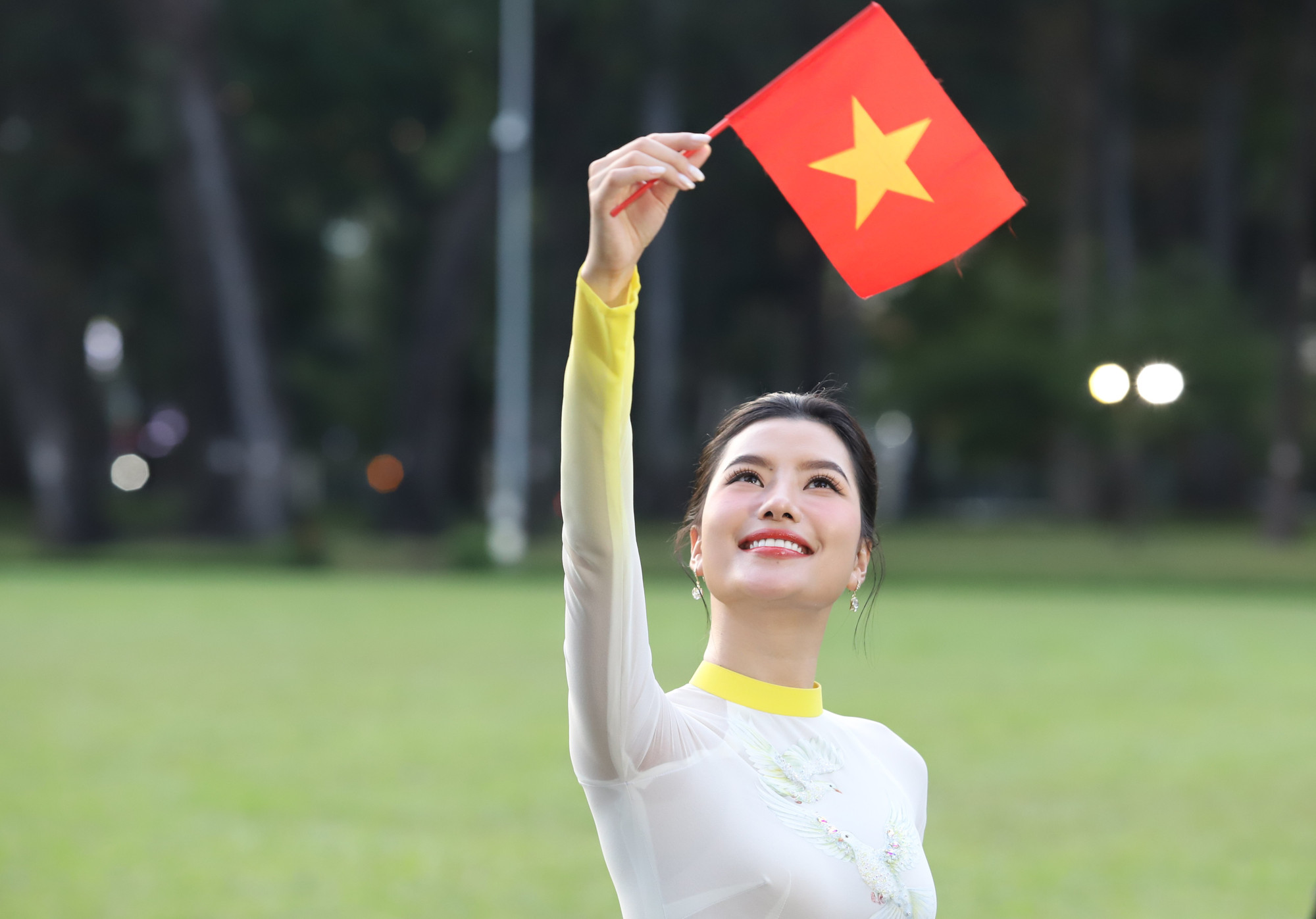
When visiting and taking photos at the Independence Palace, you should choose polite attire.
0 Comment