
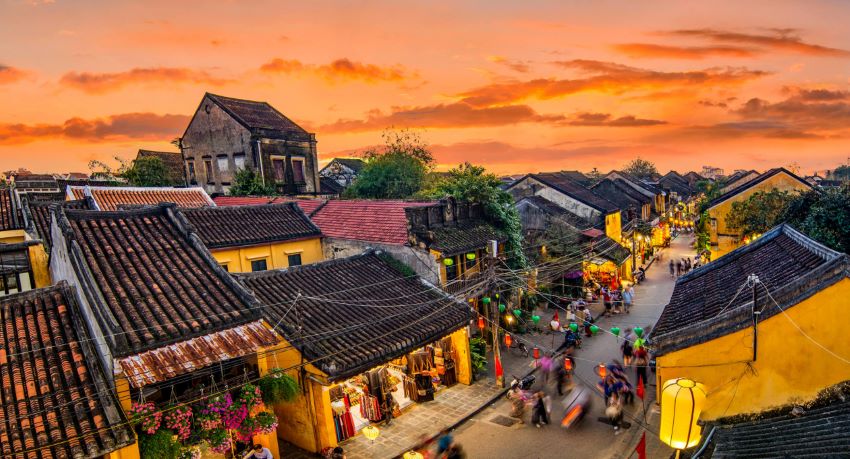

Hoi An, a UNESCO World Cultural Heritage site, attracts visitors with its timeless charm and stunning beauty. However, the city is now famous for something else too—its amazing food scene.
When you think of Hoi An, images of yellow ancient houses, cobblestone streets, and colorful lanterns appear immediately. Yet to truly explore Hoi An, you should activate more of your senses—not only sight. Above all, tasting Hoi An’s food gives you the most authentic “flavor” of the city.
Hoi An’s long history as a vibrant trading port shaped not only its architecture but also its cuisine. Over the centuries, traders from China, Japan, and the West shared their cooking styles with the locals. As a result, today’s Hoi An dishes carry a rich blend of international and regional influences.
In addition, Hoi An’s location also affects its gastronomy. Some dishes are local twists on Vietnamese classics. Others come from Quảng Nam Province. Meanwhile, a few specialties are completely unique to Hoi An. These dishes often use ingredients that only grow here. For example, many feature the fresh herbs from the famous Tra Que Vegetable Village.
Because of this diversity, Hoi An’s food has earned global recognition. Lonely Planet praised Hoi An as a “global food paradise.” TripAdvisor listed it among the “Top 25 Best Culinary Destinations in the World.” Furthermore, the World Association of Chefs even named Hoi An Vietnam’s food capital.
If you love food culture, you can join a cooking class or book a local food tour while visiting Hoi An. Alternatively, you can explore on your own. Below are the top 10 must-try dishes and the best places to enjoy them.
Cao lầu (pork rice noodles)
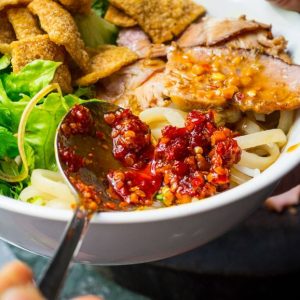
If you try only one dish, choose Cao Lầu because it represents the true “taste of Hoi An.” Locals make it with a unique recipe and ingredients found only in the region. According to legend, the dish got its name (“high storey”) because wealthy diners in the past enjoyed it from the upper floors of restaurants.
What makes it special? First, the noodles. Many chefs prepare them using calcium-rich water from the ancient Ba Le well. They also mix ash made from Melaleuca trees on the Cham Islands into the water. As a result, the noodles are thick, firm, and slightly chewy—similar to Japanese Udon. Cooks then top them with slices of pork belly, bean sprouts, fresh herbs, and crispy rice crackers. Finally, the dish is finished with a spoonful of broth, chili, and lime. It’s truly outstanding.
TRY:
• Cao Lầu bà Bé – 1 Trần Phú, Cẩm Châu
• Quán Cao Lầu Thanh – 26 Thái Phiên, Minh An
• Morning Glory Original – 106 Nguyễn Thái Học
• Ong Hai (Mr. Hai Restaurant) – 6A Trương Minh Lượng, Cẩm Châu
Bánh ướt thịt nướng (grilled pork spring rolls)

source: IG: @FinOneder
This dish is fun because you assemble it yourself. First, cooks grill marinated pork on lemongrass skewers. Next, you combine the meat with fresh herbs, cucumber, salad, and starfruit. Then you wrap everything in wet rice paper. Finally, you dip the roll into a rich sauce made from soybean paste, peanuts, sesame, fish sauce, and chili. The blend of smoky meat and fresh herbs tastes amazing.
TRY:
• Bale Well Restaurant – 51 Trần Hưng Đạo
• Sidewalk stalls near Kazik Park – 13 Trần Phú
• Bà Hường – 31 Tiểu La
Mì Quảng (quang noodles)
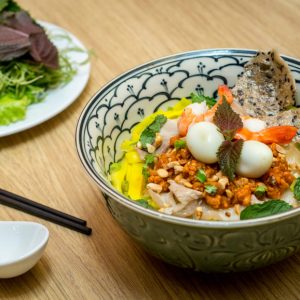
You can find different versions of this “soup-salad” dish across Quảng Nam. Turmeric-infused rice noodles form the base of the dish. Chefs add fresh herbs, meat, shrimp, or quail eggs, then ladle in a small amount of broth. Crispy rice crackers, roasted peanuts, and chili add both aroma and crunch.
TRY:
• Mì Quảng Dì Hát – 81 Phan Chu Trinh
• Mì Quảng Ông Hai – 6A Trương Minh Lượng
• Mì Quảng Hát – 4 Phan Chu Trinh
Bún thịt nướng (grilled pork over vermicelli rice noodles)
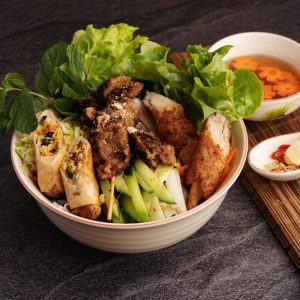
On warm days, this refreshing dish is a great choice. It includes grilled pork slices, vermicelli noodles, and fresh greens. Unlike the northern version (bún chả), everything is mixed directly into a thick, flavorful sauce. It’s quick, tasty, and very satisfying.
TRY:
• Bún Thịt Nướng – 81 Trần Cao Vân
• Cô Bảy Hội An – 12 Trần Quang Khải
• Ty Ty Quán – 17/6 Hai Bà Trưng
Cơm gà (chicken rice)
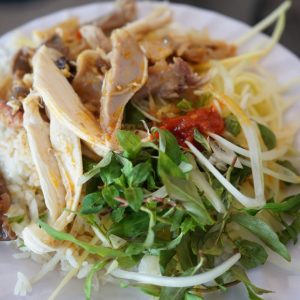
If you prefer rice, choose Hoi An’s chicken rice. Many locals say you haven’t truly visited the city until you’ve tried it. Although the dish resembles Hainanese chicken rice, the Hoi An version offers its own twist: shredded chicken, fragrant turmeric rice, a side of broth, and tangy papaya salad. Together, these elements create a well-balanced meal.
TRY:
• Cơm Gà Bà Buội – 22 Phan Chu Trinh
• Hoi An Chicken Rice – 47/2 Trần Hưng Đạo
Bánh xèo (savoury Vietnamese pancake)

Visitors love this dish because it mixes fried pancakes with fresh herbs. You slice the pancake, wrap it with herbs in dry rice paper, and dip it into a sweet-savory sauce. Each region prepares Bánh Xèo differently, so try as many versions as possible during your stay.
TRY:
• Bánh Xèo Cô Anh, Sông Hoài – 59/32, 18/8
• Bánh Xèo Minh Tú – Chợ ẩm thực Hội An
Bánh Bao Bánh Vạc (‘white rose’ savoury dumpling)
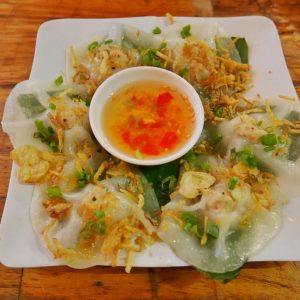
This beautiful dumpling looks like a white rose. A single family has perfected the recipe for generations, making it one of Hoi An’s most famous dishes. The dumplings are filled with minced pork, shrimp, and mushrooms, then topped with crispy shallots.
TRY:
• White Rose Restaurant – 533 Hai Bà Trưng
Bánh mì (Vietnamese baguette sandwich)
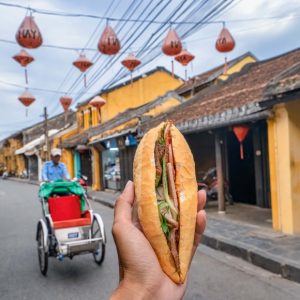
You’ll find bánh mì throughout Vietnam, but Hoi An’s version stands out. The late chef Anthony Bourdain famously praised the bánh mì at Bánh Mì Phượng, calling it the best in town. Crispy bread, flavorful fillings, and fresh herbs make it irresistible.
TRY:
• Bánh Mì Phượng – 2B Phan Chu Trinh
• Madam Khanh – 115 Trần Cao Vân
Bánh xoài (mango cake)
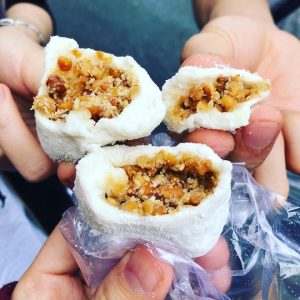
If you want something sweet, try this chewy little cake. Despite its name, it doesn’t contain mango. Instead, it’s made from glutinous rice flour, peanuts, and brown sugar. Many visitors compare it to Japanese mochi.
0 Comment