
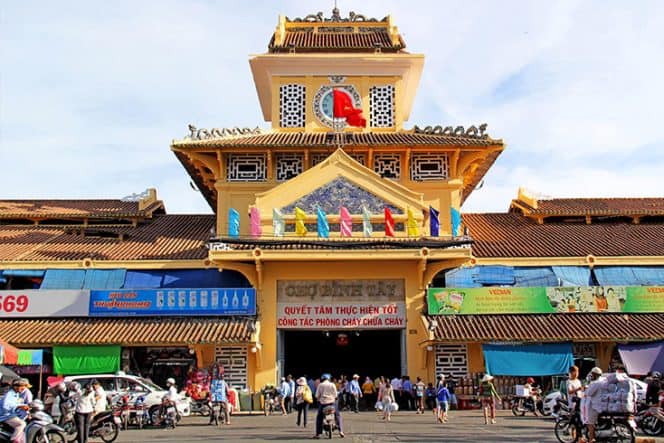

11 Local Markets in Saigon
Discover the Best Fresh Markets in Ho Chi Minh City
Saigon’s fresh markets offer a completely different experience from the city’s shopping malls and supermarkets. At first glance, especially in District 1 or the newer urban areas, you might think traditional Vietnamese markets have disappeared.
However, look a little closer and you’ll find that local markets in Saigon remain an essential part of daily life. Every morning, thousands of residents shop here for fresh vegetables, fruit, meat, seafood, herbs, and household goods.
These markets are lively, colourful, and surprisingly well organised. More importantly, almost everything on sale comes from local farms or nearby suppliers. As a result, the produce is both fresh and affordable.
Walking through one of these fresh markets in Ho Chi Minh City feels completely different from visiting a supermarket. You’ll discover vibrant colours, unforgettable aromas, friendly conversations, and a true sense of community. That atmosphere is something modern shopping centres simply cannot recreate.
A Local Guide to Saigon’s Fresh Markets
This guide is a collaboration between Luke, Thảo, and me. Together, we visited, photographed, and reviewed 11 local markets in Saigon.
For the best experience, visit early in the morning. In general, the busiest hours are between 5:00 AM and 10:00 AM. During this time, the produce is at its freshest and the markets are full of energy.
Plan to spend about one hour exploring each market. Browse the stalls, chat with vendors, and try bargaining if you feel comfortable. Afterwards, enjoy a coffee or a bowl of noodles in the food section. Including travel time, each visit usually takes around two hours.
Come with an open mind. You’ll see familiar ingredients alongside products that may surprise you. In Vietnamese, “chợ” simply means “market.”
One important note: this guide does not include Bến Thành Market. Although famous, it mainly serves tourists rather than local shoppers. Instead, the markets below reflect everyday life in Ho Chi Minh City.

Why We Say “Fresh Market” Instead of “Wet Market”
Personally, I avoid using the phrase “wet market.” The term has never accurately described these places. Furthermore, it gained unfair negative associations during the COVID-19 pandemic.
Instead, I prefer “fresh market.” The name better reflects what these markets really offer: fresh ingredients, local produce, and hardworking vendors who supply their communities every day.
1. Trần Hữu Trang Market
Address: Trần Hữu Trang Street, Ward 10, Phú Nhuận District
A Traditional Local Market in Phú Nhuận
Located north of the city centre, Trần Hữu Trang Market sits in the heart of Phú Nhuận District. Narrow lanes, small houses, and quiet alleyways surround this long-established neighbourhood market.
For me, this market is especially memorable. Nearly ten years ago, I lived nearby and walked here almost every morning to buy fresh papayas and bananas for breakfast.
The market occupies a large grey building beside the railway. Nevertheless, the activity extends well beyond its walls. Vendors line the surrounding streets, creating a lively shopping area that stretches through the neighbourhood.
Although the exterior looks simple, the market is clean, organised, welcoming, and easy to explore.

The grey exterior of Trần Hữu Trang market
Exploring Trần Hữu Trang Market
Start outside by wandering through the stalls around the market building. Watch motorbikes carefully as they move between shoppers and vendors. Meanwhile, street sellers announce today’s prices through loudspeakers, adding to the lively atmosphere.
Next, enter through the western entrance, where you’ll find fresh fruit and vegetables. From there, continue into the spacious central hall.
Natural light pours through the high roof, creating a bright and inviting space. Inside, you’ll find an impressive variety of products, including fresh herbs, vegetables, seafood, meat, spices, flowers, noodles, household goods, baked treats, and cooked meals.
As you walk around, different aromas fill the air. Lemongrass, garlic, roasted coffee, jasmine tea, salted fish, and freshly baked bread create an unforgettable sensory experience.

Pickles and dry goods stalls inside Trần Hữu Trang market

Dozens of fresh noodle varieties at a stall in Trần Hữu Trang market
What to Eat at Trần Hữu Trang Market
One of the market’s highlights is its impressive selection of đậu hủ (tofu). Several vendors prepare fresh tofu in front of customers, offering many different varieties.
The cooked food section inside the market is also worth visiting. In addition, you’ll find excellent street food around the surrounding roads.
One local favourite is the cơm chay (vegetarian rice) restaurant on the southern side of the market. It’s an ideal place to stop after exploring.
Overall, Trần Hữu Trang Market remains one of the most authentic local markets in Saigon. Rather than catering to tourists, it continues to serve local families with fresh produce, fair prices, and a genuinely friendly atmosphere.
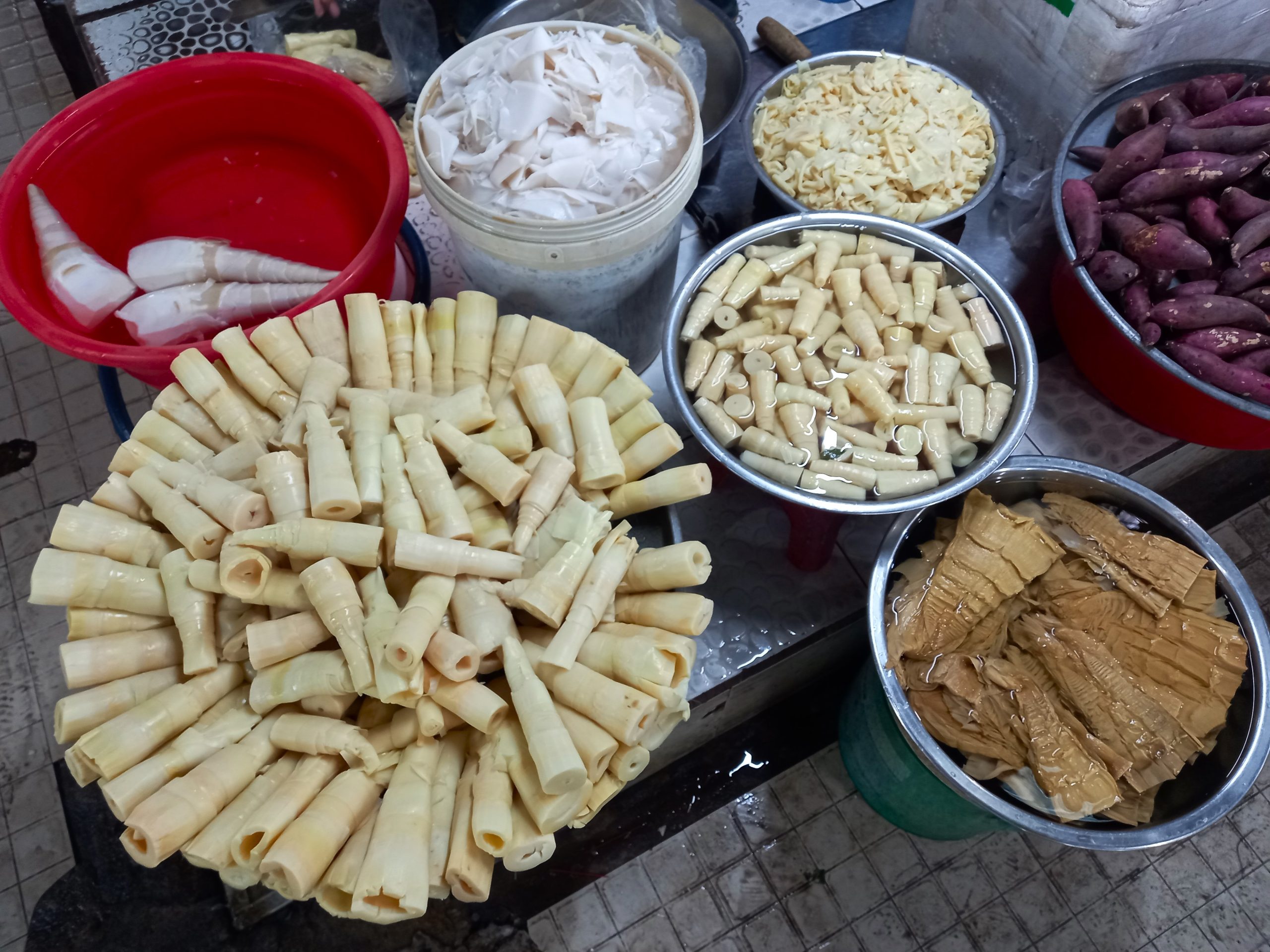
Varieties of măng – bamboo shoots – for sale inside Trần Hữu Trang market
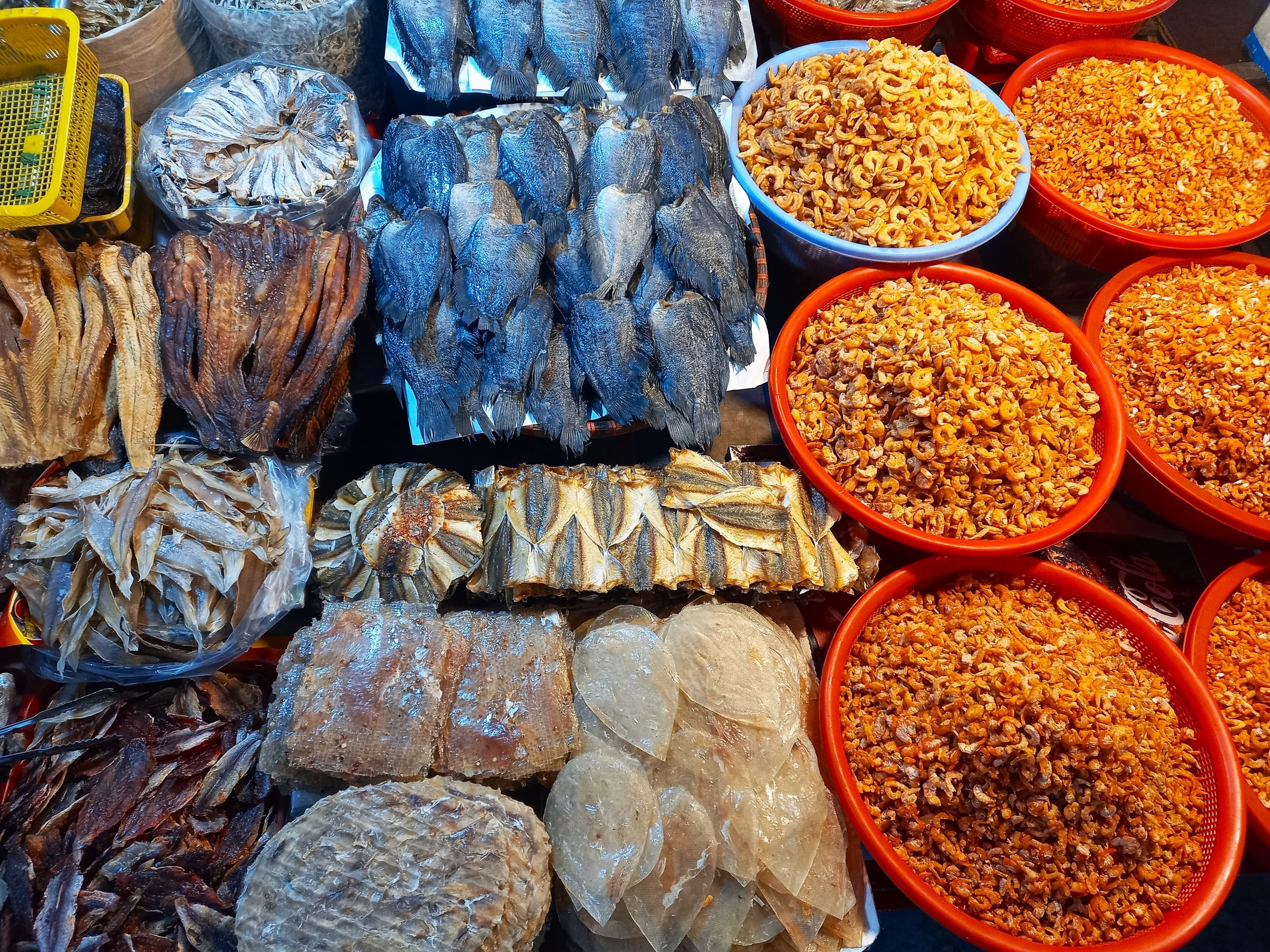
Dried, salted fish and shrimp, Trần Hữu Trang market
2. Bà Hoa Market
Address: Quảng Hiền Street, Ward 11, Tân Bình District
A Taste of Central Vietnam in Saigon
Hidden in the heart of Tân Bình District, Bà Hoa Market is one of the most unique local markets in Saigon. Its history dates back to the Vietnam War, when many families from central Vietnam moved to Saigon in search of safety and new opportunities.
The government settled many of these migrants in this neighbourhood. As a result, the market became a cultural centre for central Vietnamese communities. Although Saigon has changed dramatically over the years, Bà Hoa Market has preserved its regional identity.
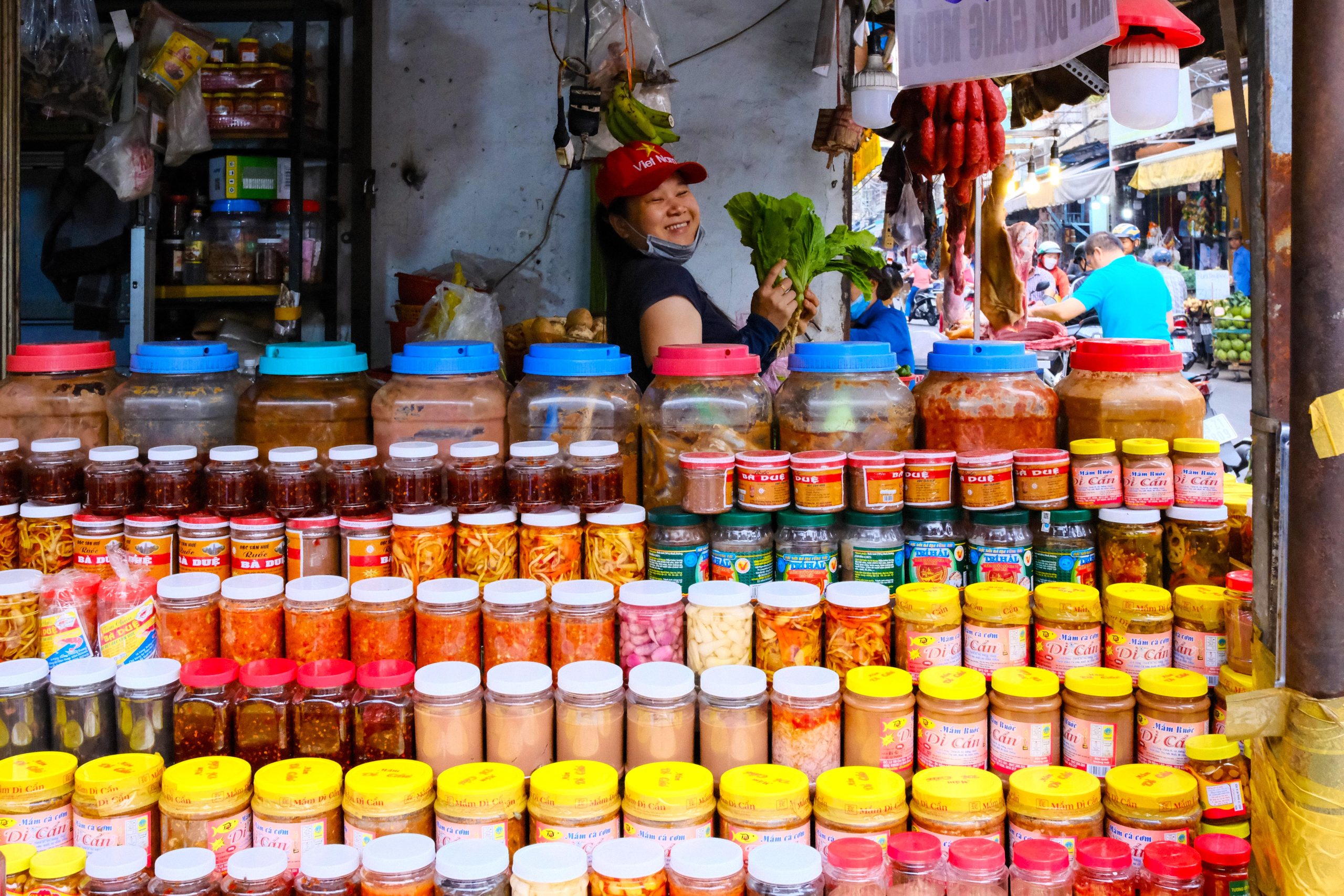
Pickles and fermented sauces for sale at Bà Hoa market

Rick crackers sold at Bà Hoa market
What to Eat at Bà Hoa Market
Food is the biggest reason to visit Bà Hoa Market. Travellers who have explored central Vietnam will recognise many regional dishes.
Popular choices include bánh bèo, mì Quảng, bún xào nghệ, and the famous chè Huế. Another local favourite is bánh đập, a traditional rice cracker dish from Hội An.
Meanwhile, visitors familiar with Vietnamese dialects may notice the distinctive central Vietnamese accent spoken throughout the market.
After your meal, stop by the charming café at 120 Sơn Hưng Street. Its collection of vintage wall clocks makes it one of the area’s most unusual coffee shops.

A vegetable stall at Bà Hoa market

A stall specializing in central Vietnamese noodles, snacks and ingredients at Bà Hoa market

A butcher stall outside Bà Hoa market
3. Gò Vấp Market
Address: Nguyễn Văn Nghi Street, Ward 5, Gò Vấp District
One of Saigon’s Most Authentic Local Markets
Gò Vấp Market was my regular shopping destination during my university years in Saigon. More than ten years later, it still feels remarkably familiar.
Nguyễn Thái Sơn Street divides the market into two sections. The eastern side focuses on fresh produce, clothing, and household goods. Meanwhile, the western section specialises in cooked food and drinks, although fresh ingredients are also available there.
Unlike modern supermarkets, many stalls display their products wherever customers can easily see them. Consequently, the market appears busy and slightly chaotic at first.
However, that lively atmosphere reminds me more of a countryside market than an urban shopping centre.
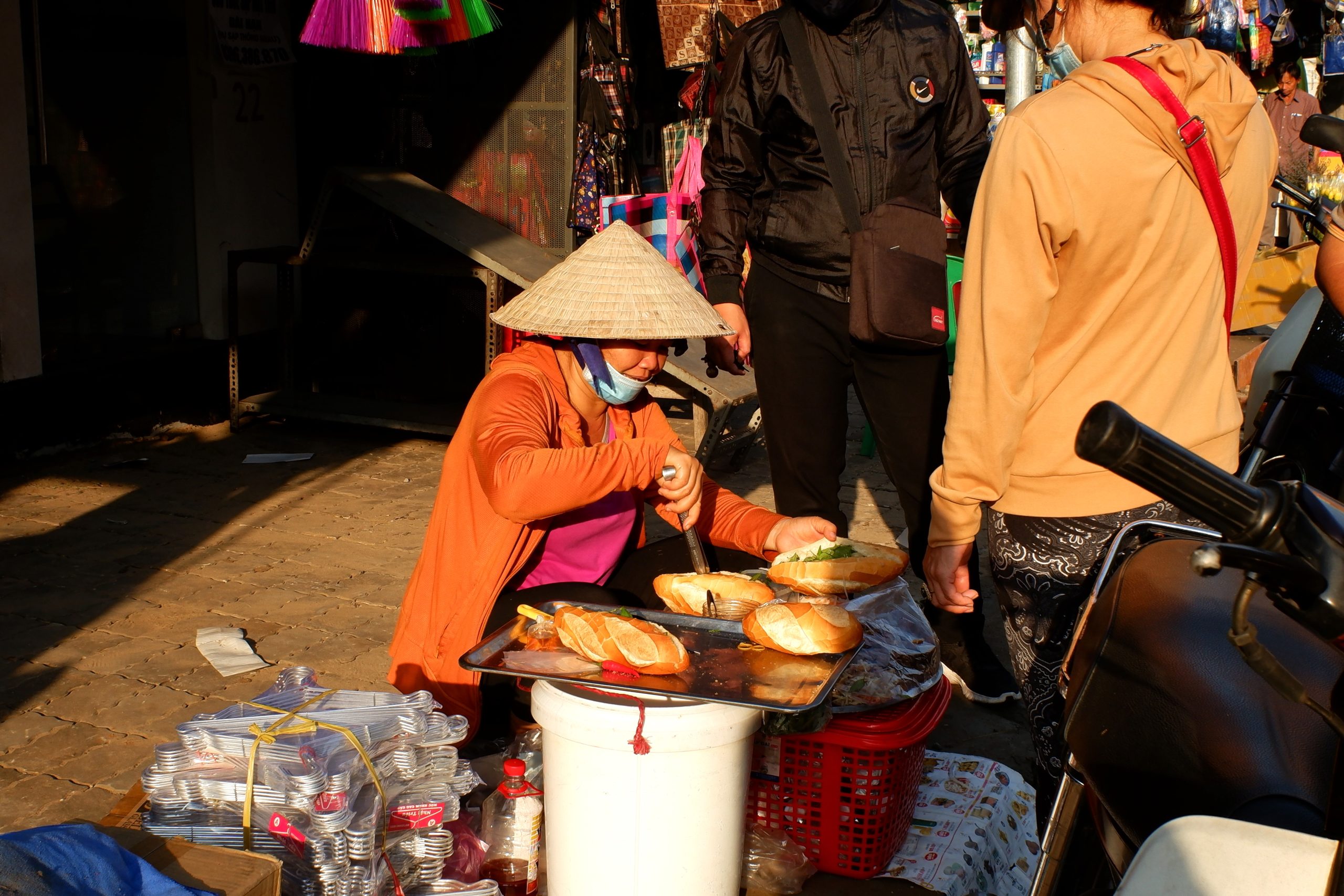
A fresh bánh mì stall outside Gò Vấp market
Local Food Worth Trying
If you visit the food section, order a cà phê sữa đá and a bowl of bún riêu or cơm chay.
Several vendors have served customers here for more than 30 years. Their long history adds to the market’s welcoming atmosphere.

Varieties of incense for worship on sale in Gò Vấp market
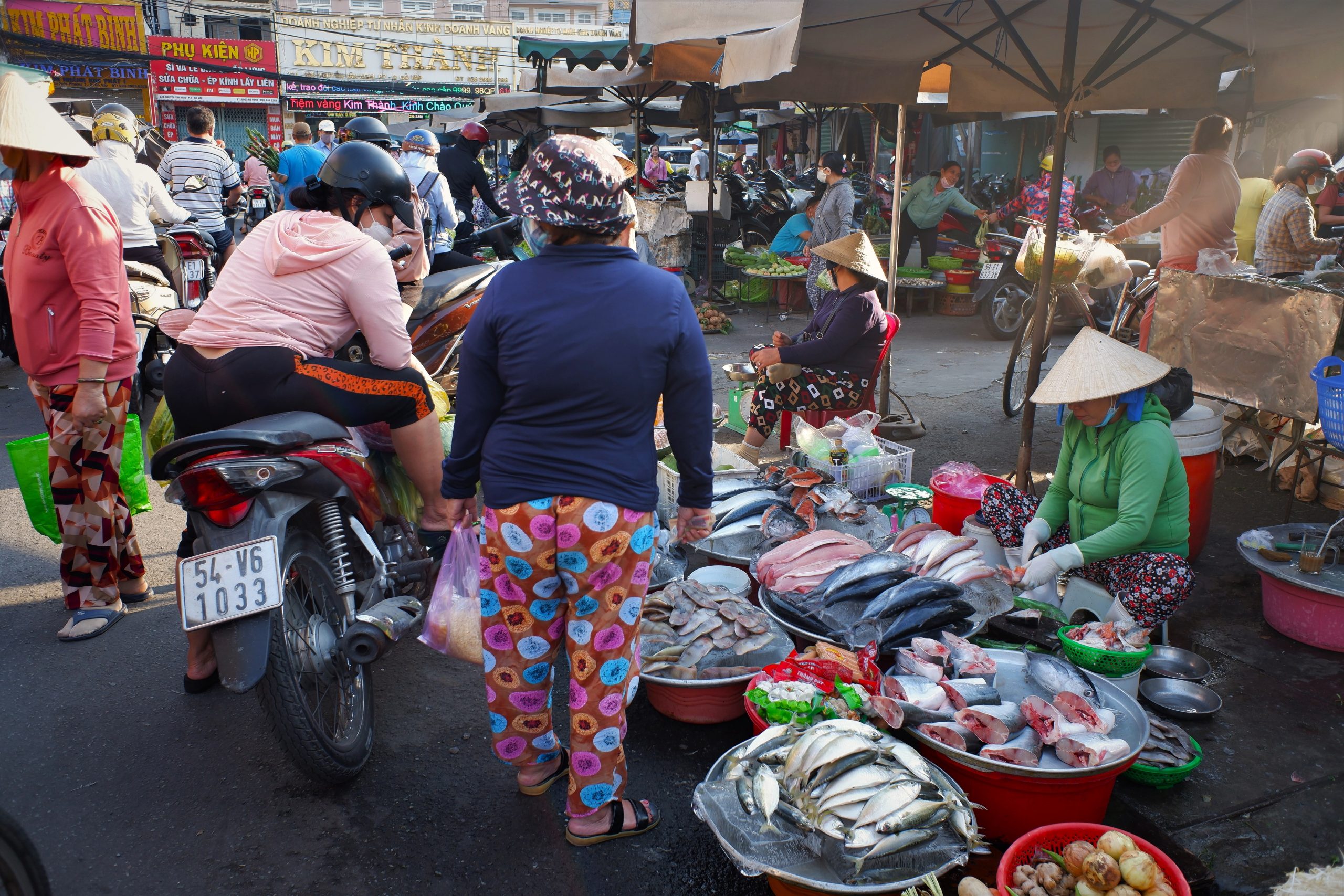
Fresh fish sold outside Gò Vấp market
Why Local Markets Still Matter
Returning after a decade reminded me why fresh markets in Ho Chi Minh City continue to thrive.
Fresh ingredients are usually cheaper and higher quality than those in supermarkets. More importantly, local markets are social spaces where neighbours meet, chat, and maintain community connections.
For many older residents, visiting the market is not simply shopping. Instead, it remains an important part of everyday life.
Nearby Attractions
Besides shopping, you can also explore several nearby temples.
Visit Thất Phủ Temple opposite the market entrance or Thiên Hậu Pagoda on Lý Thường Kiệt Street. If you have extra time, continue to Phù Châu Floating Temple, a 300-year-old temple that visitors can only reach by boat.

A fabric stall at Gò Vấp market
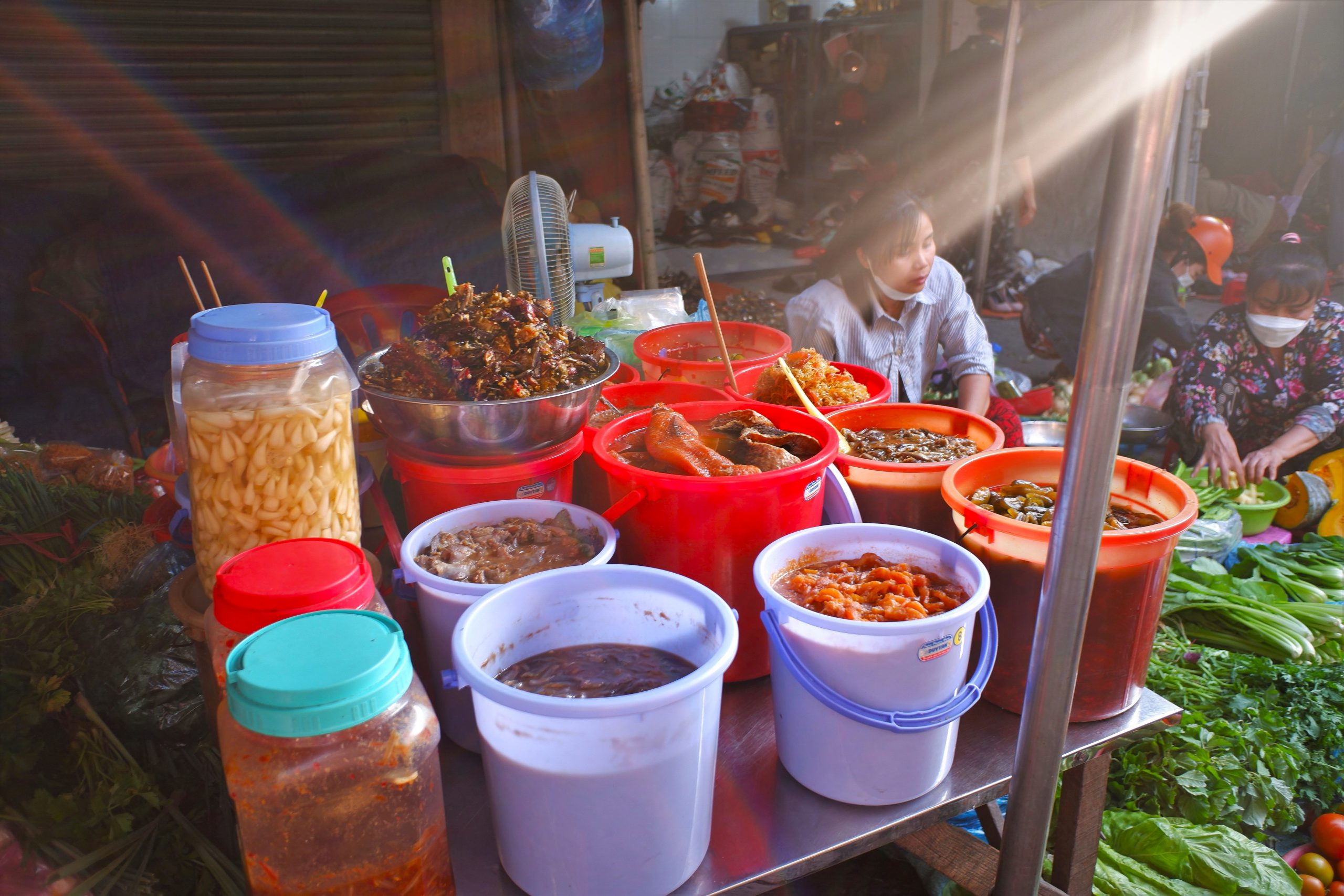
Varieties of pungent mắm – fermented fish sauce – at a stall in Gò Vấp market
4. Bàn Cờ Market
Address: Nguyễn Đình Chiểu Street, Ward 3, District 3
Exploring Bàn Cờ Market
Located near the city centre, Bàn Cờ Market is one of the easiest local markets in Ho Chi Minh City to reach.
Although the main entrance sits on Nguyễn Đình Chiểu Street, the market actually spreads through a maze of narrow alleyways covering several city blocks.
Its name means “chessboard.” The grid-like layout of the surrounding streets inspired this nickname.
Wherever you enter, the narrow lanes eventually guide you toward the lively centre of the market.
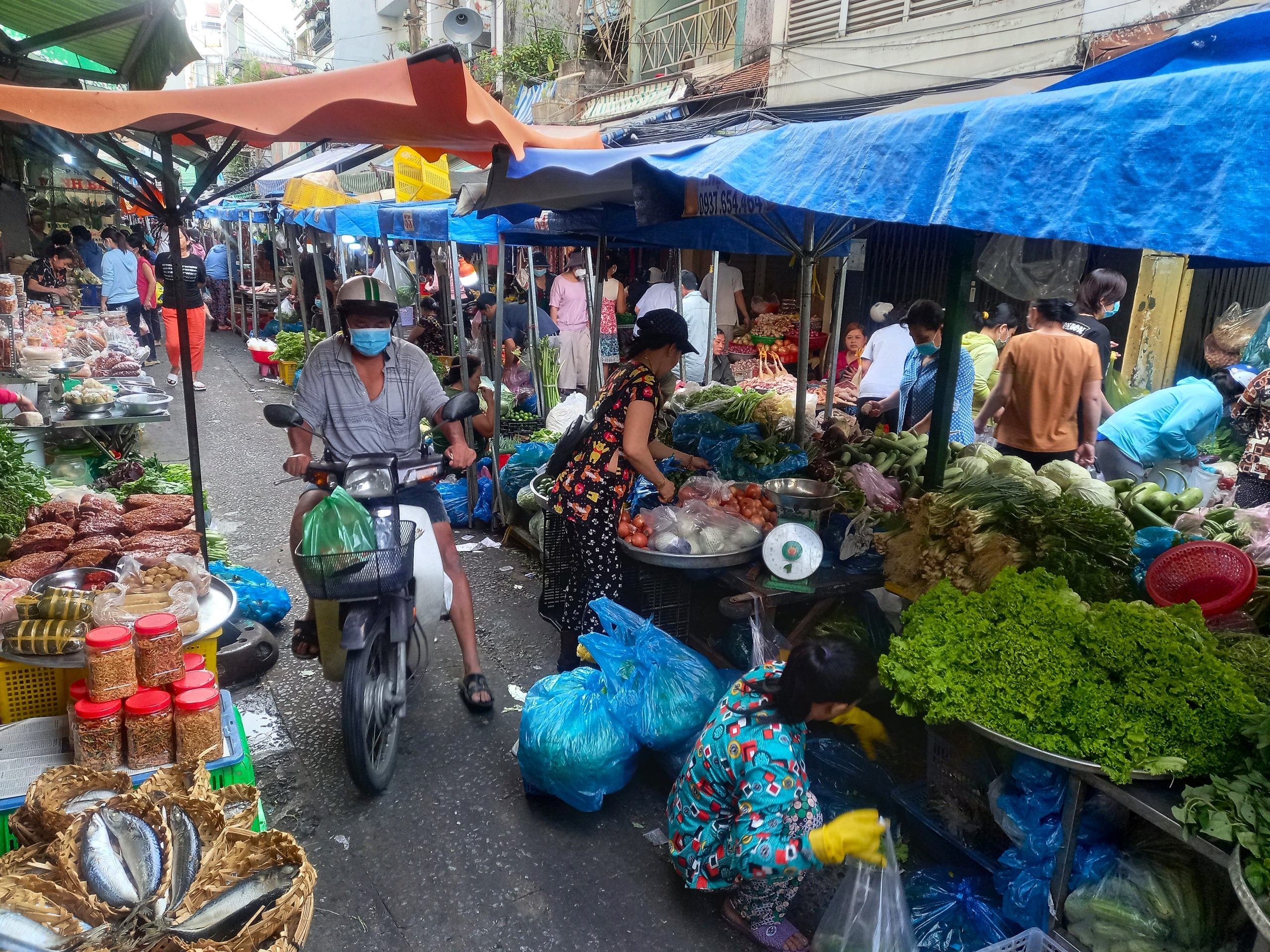
The narrow lanes of Bàn Cờ market are filled with produce
What Makes Bàn Cờ Special
The heart of the market is always busy. Nevertheless, the atmosphere feels surprisingly calm and organised compared with the surrounding streets.
Traditional Saigon townhouses shade the narrow walkways, making the market comfortable even during hot afternoons.
Instead of staying on the main path, explore the smaller alleys. In fact, the hidden corners often provide the most rewarding experiences.
You’ll discover vendors selling fresh noodles, herbs, pickles, seafood, jewellery, household goods, clothing, sweets, and many other everyday products.
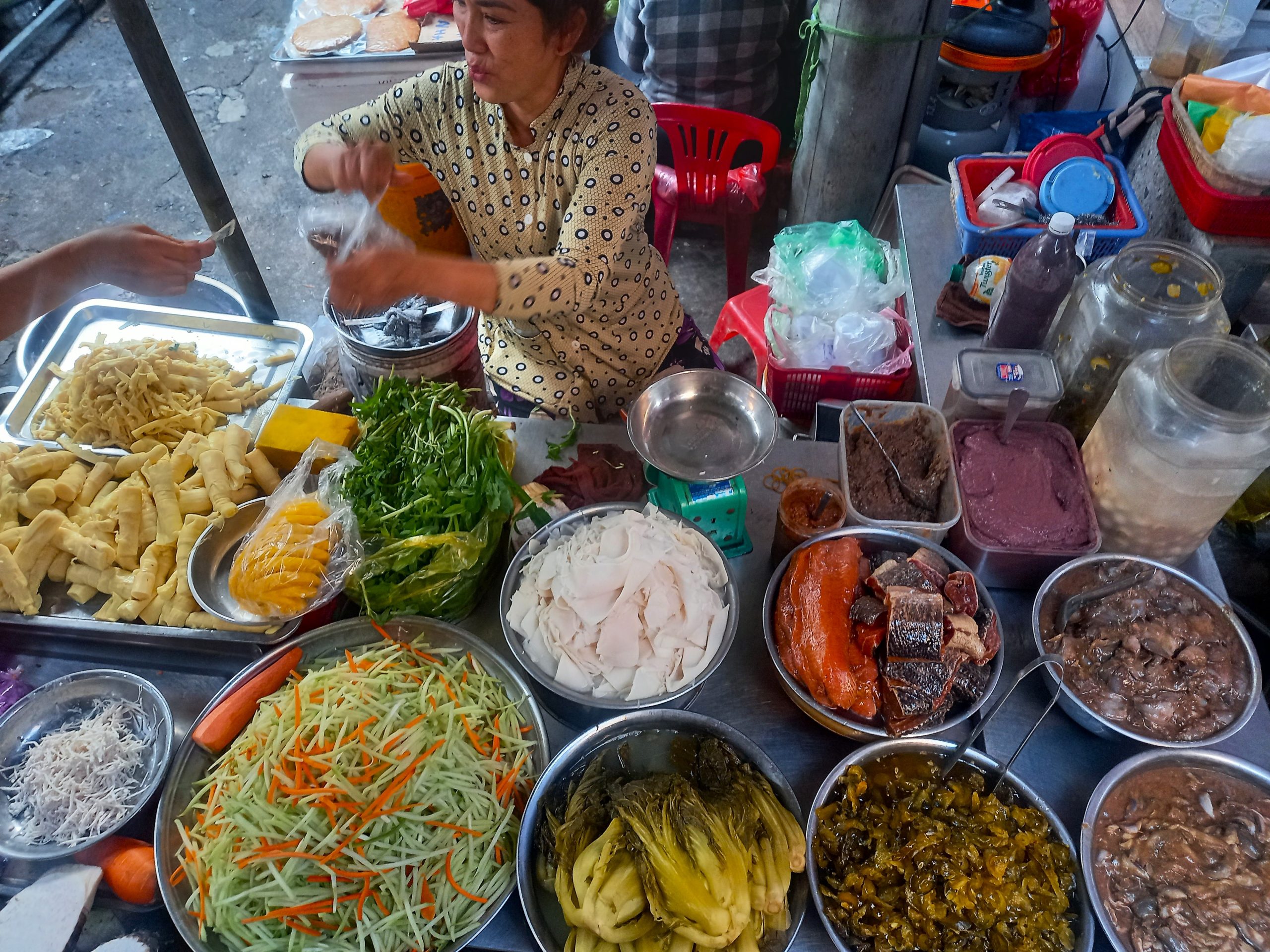
A vendor sells assorted pickles and fermented sauces in Bàn Cờ market
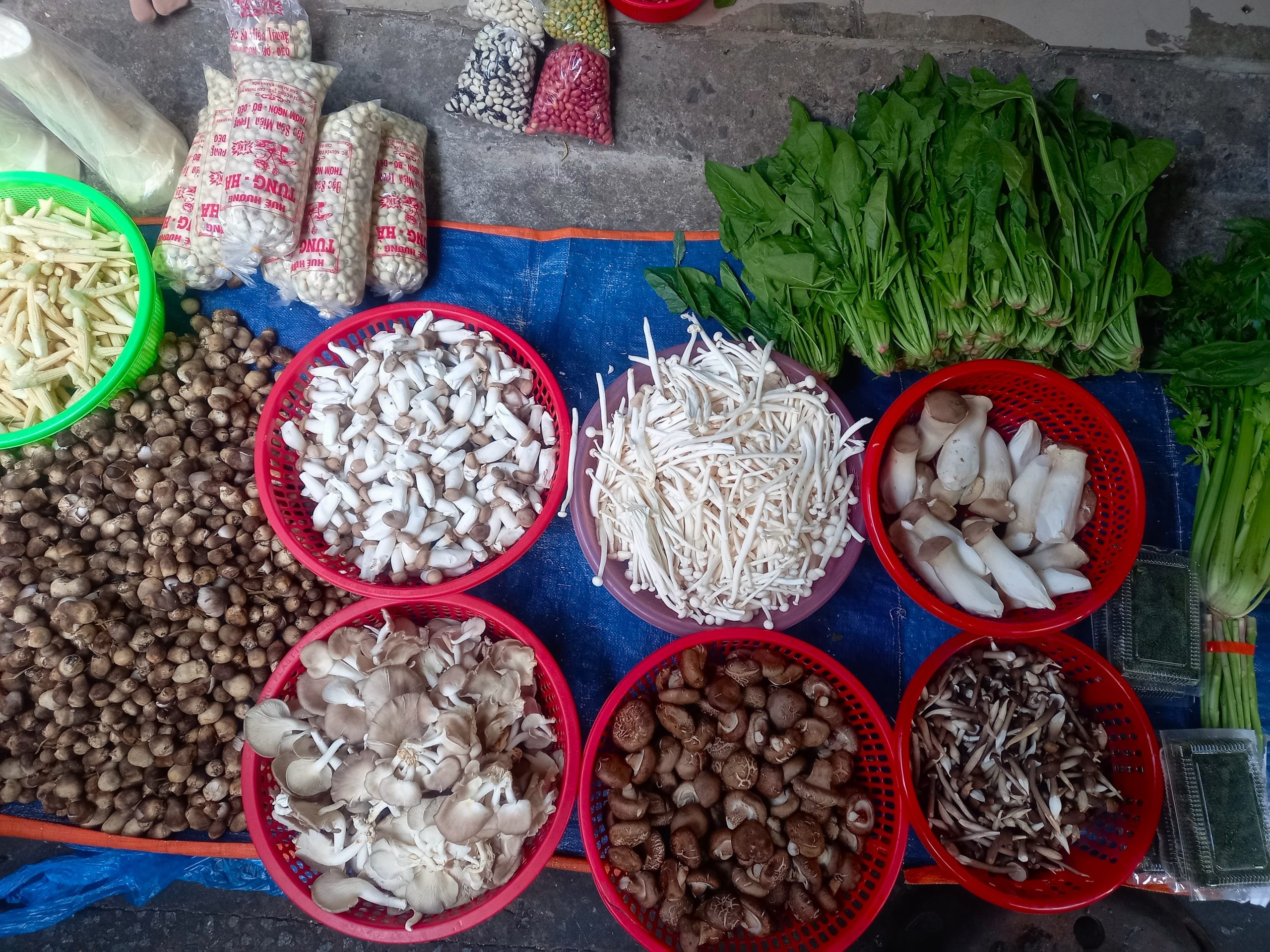
Mushrooms on display in Bàn Cờ market
Food and Local Atmosphere
Small cafés and family-run food stalls appear throughout the market.
Most specialise in only one or two dishes, giving visitors an authentic taste of neighbourhood life.
Overall, Bàn Cờ Market still feels like old Saigon. Walking through its alleyways is like stepping back to the city of the 1990s and early 2000s.
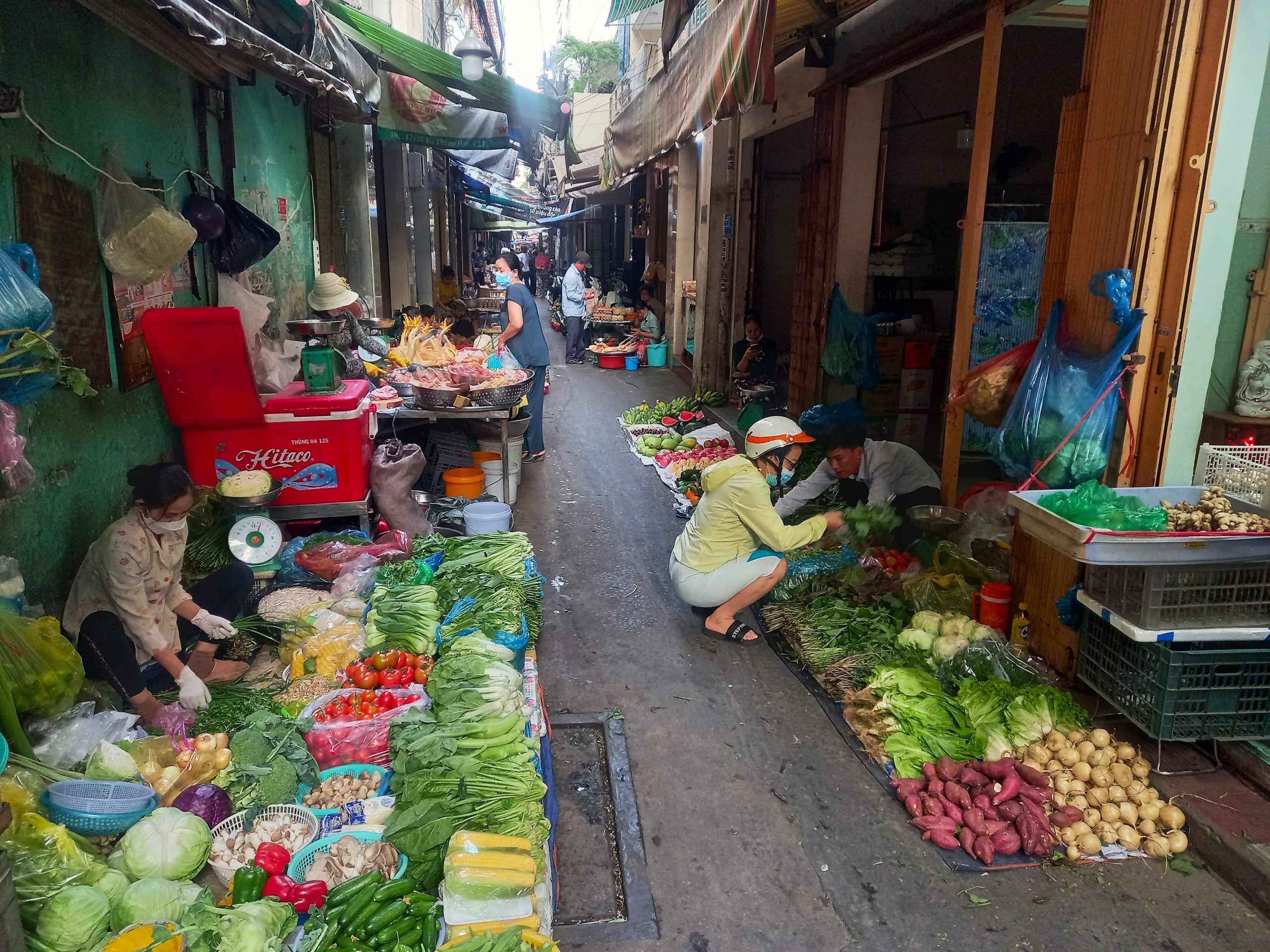
Fresh vegetables and fruit in one of Bàn Cờ market’s many alleyways

Varieties of onion, garlic, shallot at a stall in Bàn Cờ market
5. Bình Tây Market
Address: Tháp Mười Street, Ward 2, District 6
The Largest Traditional Market in Saigon Chinatown
Located in the heart of Chợ Lớn, Bình Tây Market is one of the most impressive traditional markets in Ho Chi Minh City.
Built in 1930, the market combines Chinese and Vietnamese architectural styles. Its colourful courtyard, dragon decorations, and historic clock tower immediately distinguish it from most other city markets.
Although the surrounding streets are crowded and noisy, the interior feels surprisingly peaceful.

Bình Tây market building is grand and palatial, dating from 1930
What to See Inside Bình Tây Market
Begin your visit at the main entrance on Tháp Mười Street. A large market map helps visitors navigate the enormous complex.
Hundreds of stalls are organised into clearly marked sections. You’ll find clothing, household goods, sweets, candles, shoes, herbs, tea, and many other products.
Unlike most fresh markets, the interior mainly focuses on dry goods.

Candied fruits and sweets on display at Bình Tây market
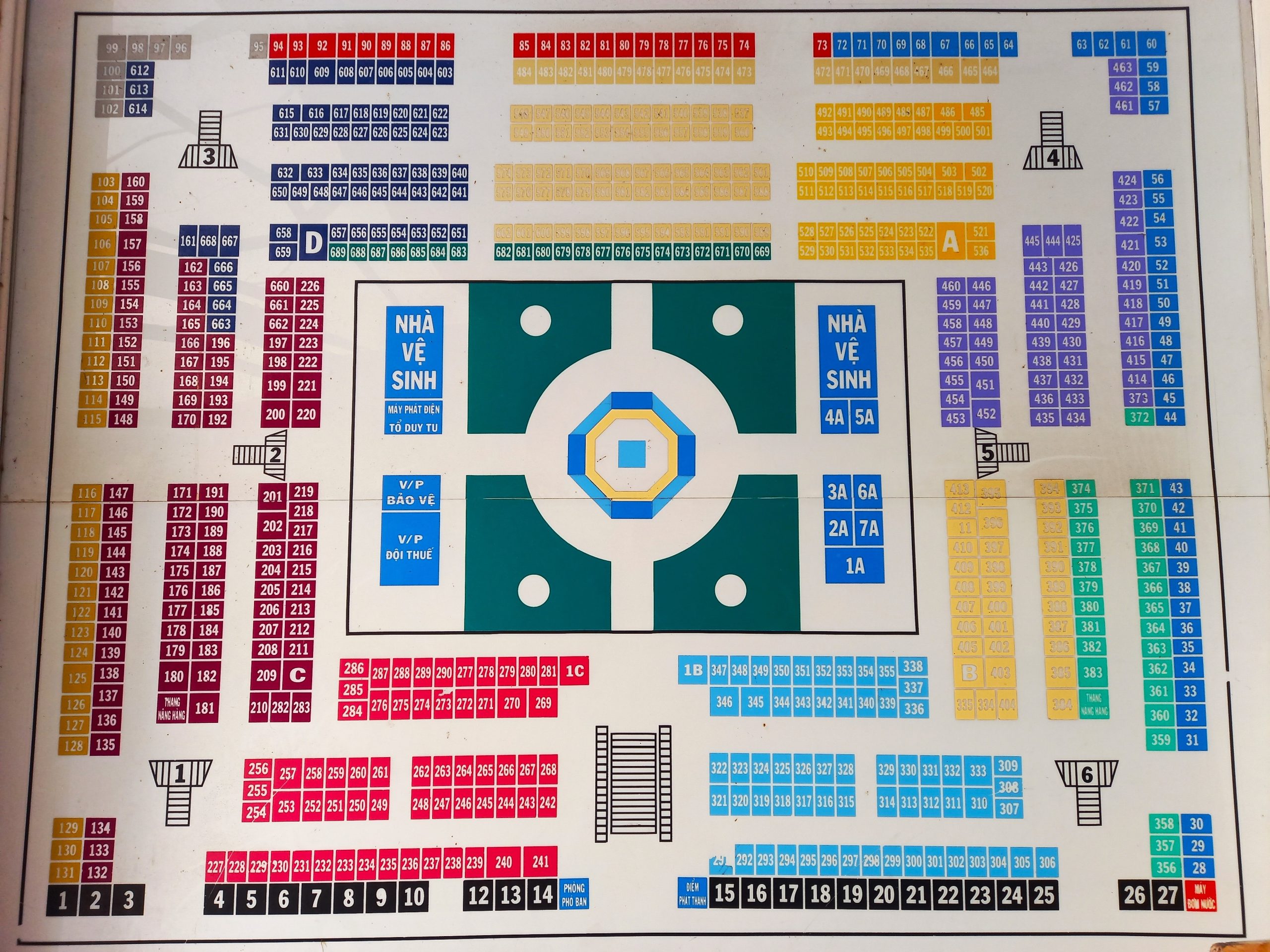
A map of Bình Tây market stalls
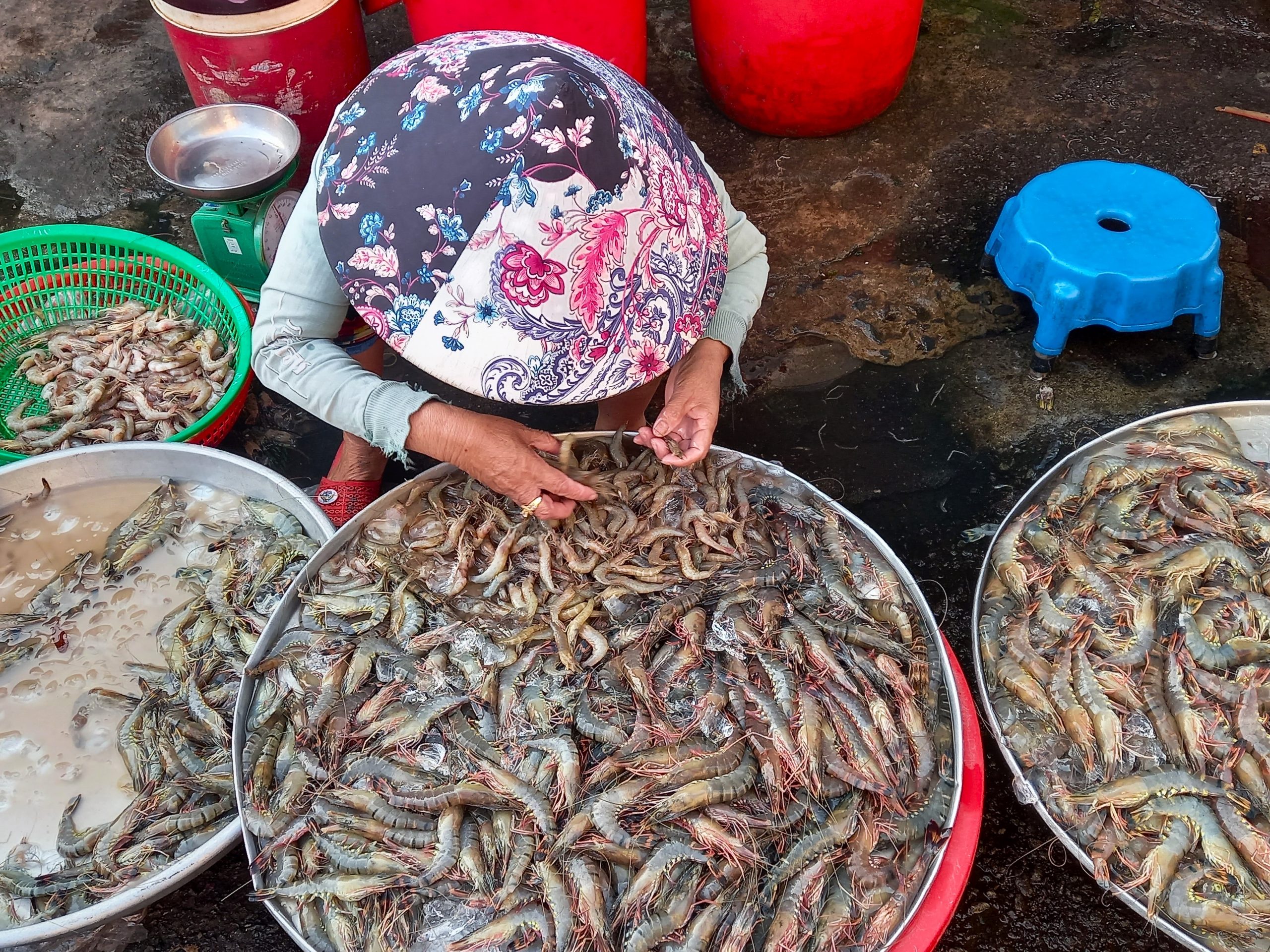
Sorting fresh shrimp outside Bình Tây market
Fresh Produce and Street Food
Fresh fruit, vegetables, seafood, and meat are usually sold around the outside of the building.
Meanwhile, the southern side of the market features an excellent food court filled with noodle soups, rice dishes, fresh juices, coffee, and tea.
Finally, spend some time exploring the surrounding streets of Chợ Lớn. These historic alleyways are full of traditional shops, Chinese temples, and local businesses, making the neighbourhood one of the most fascinating areas in Saigon.
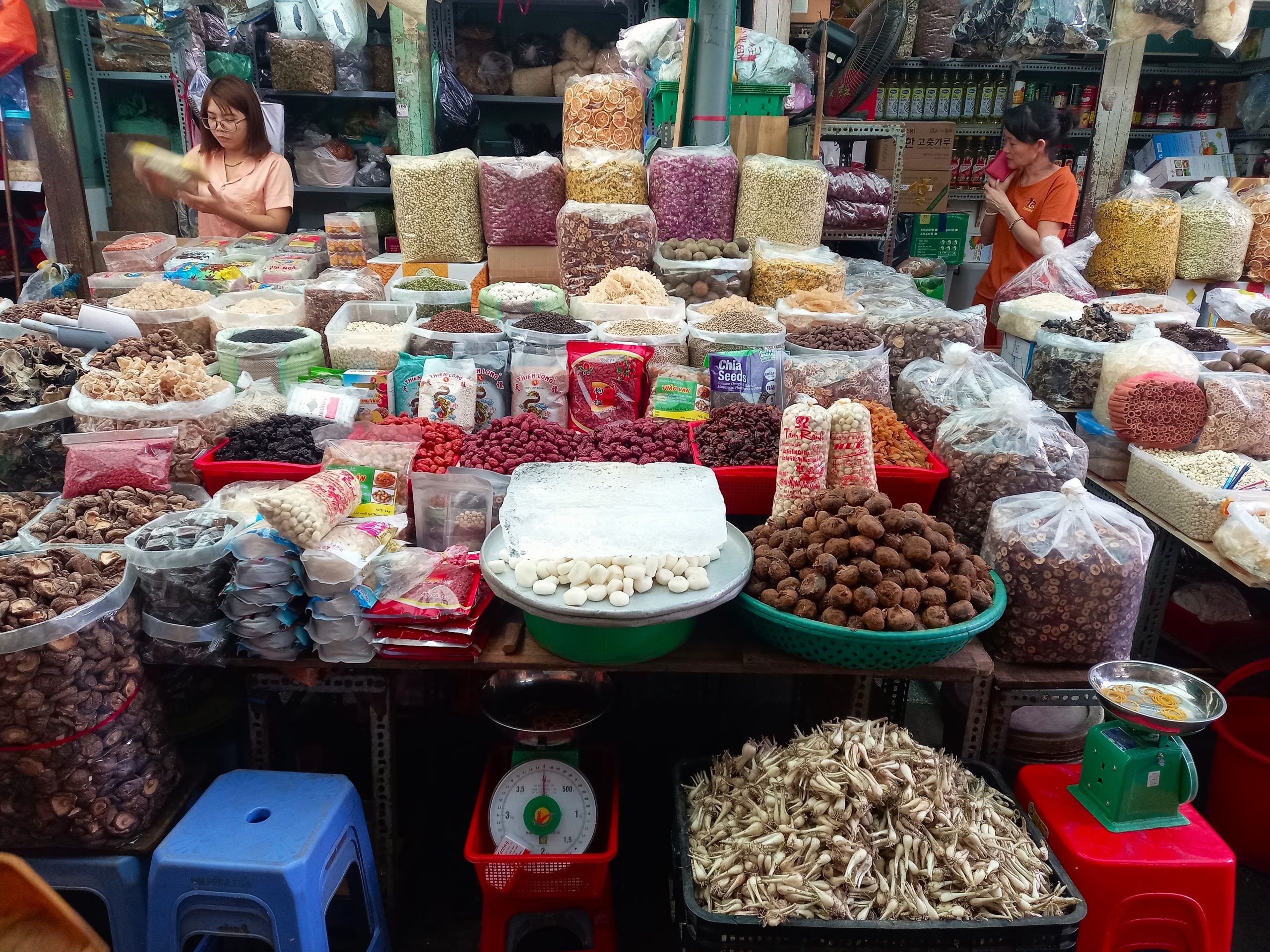
Dry goods and medicinal ingredients at Bình Tây market
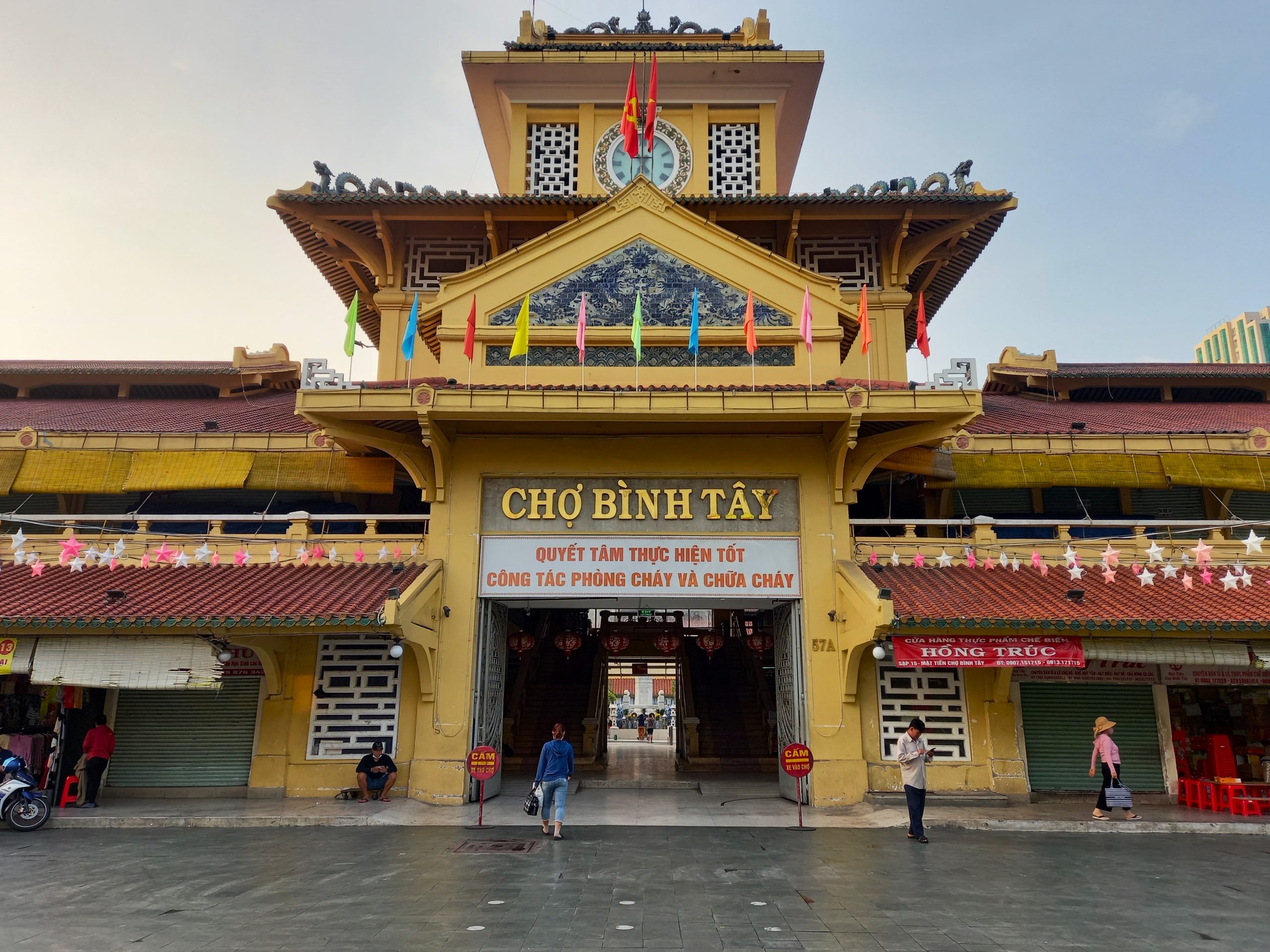
The imposing main entrance to Bình Tây market
6. Bình Điền Market
Address: Quản Trọng Linh Street, Ward 7, District 8
Saigon’s Largest Wholesale Market
Bình Điền Market is the only wholesale market in this guide. Located on the southwestern edge of Ho Chi Minh City, it opened in 2006 during Vietnam’s post-Đổi Mới economic period.
Unlike traditional neighbourhood markets, Bình Điền focuses entirely on wholesale trading. Although it may not have the colourful charm that many visitors expect, its enormous scale makes it one of the most fascinating markets in Saigon.

Late night in the fish section of Bình Điền market
Best Time to Visit
The market comes alive after sunset. In fact, the busiest hours are between 8:00 PM and 6:00 AM.
Reaching the market takes around 45 minutes from the city centre via Nguyễn Văn Linh Boulevard. This route connects Ho Chi Minh City with the Mekong Delta, Vietnam’s agricultural heartland. Along the way, you’ll see modern developments standing beside traditional homes and roadside businesses.
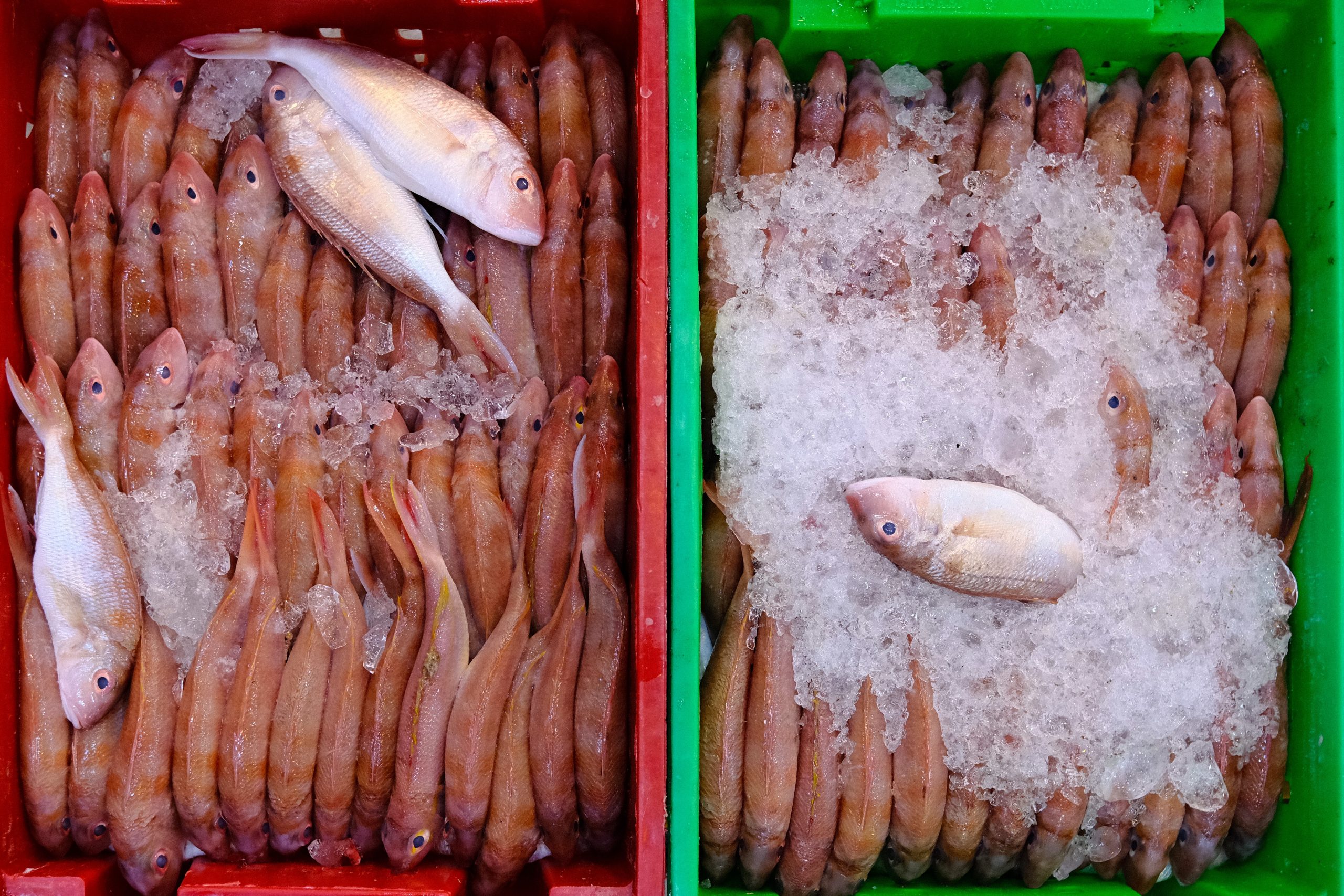
Fresh fish on display at Bình Điền market

Showing off fresh shrimp at Bình Điền market
Inside Bình Điền Market
The market consists of several massive warehouse-style buildings.
Building B specialises in fruit and vegetables, while D and F focus on seafood and fresh fish. Other buildings sell meat, dried seafood, agricultural products, and additional fresh produce.
Among them, the seafood, fish, and meat sections attract the largest crowds.
Tips for Visiting
Bình Điền is an intense working environment. Thousands of traders, trucks, and motorbikes move continuously throughout the night.
Therefore, stay alert and avoid blocking workers as they transport goods. Floors can also become wet and slippery, so wear comfortable shoes with good grip.
If you arrive by motorbike, convenient parking is available outside Building B.
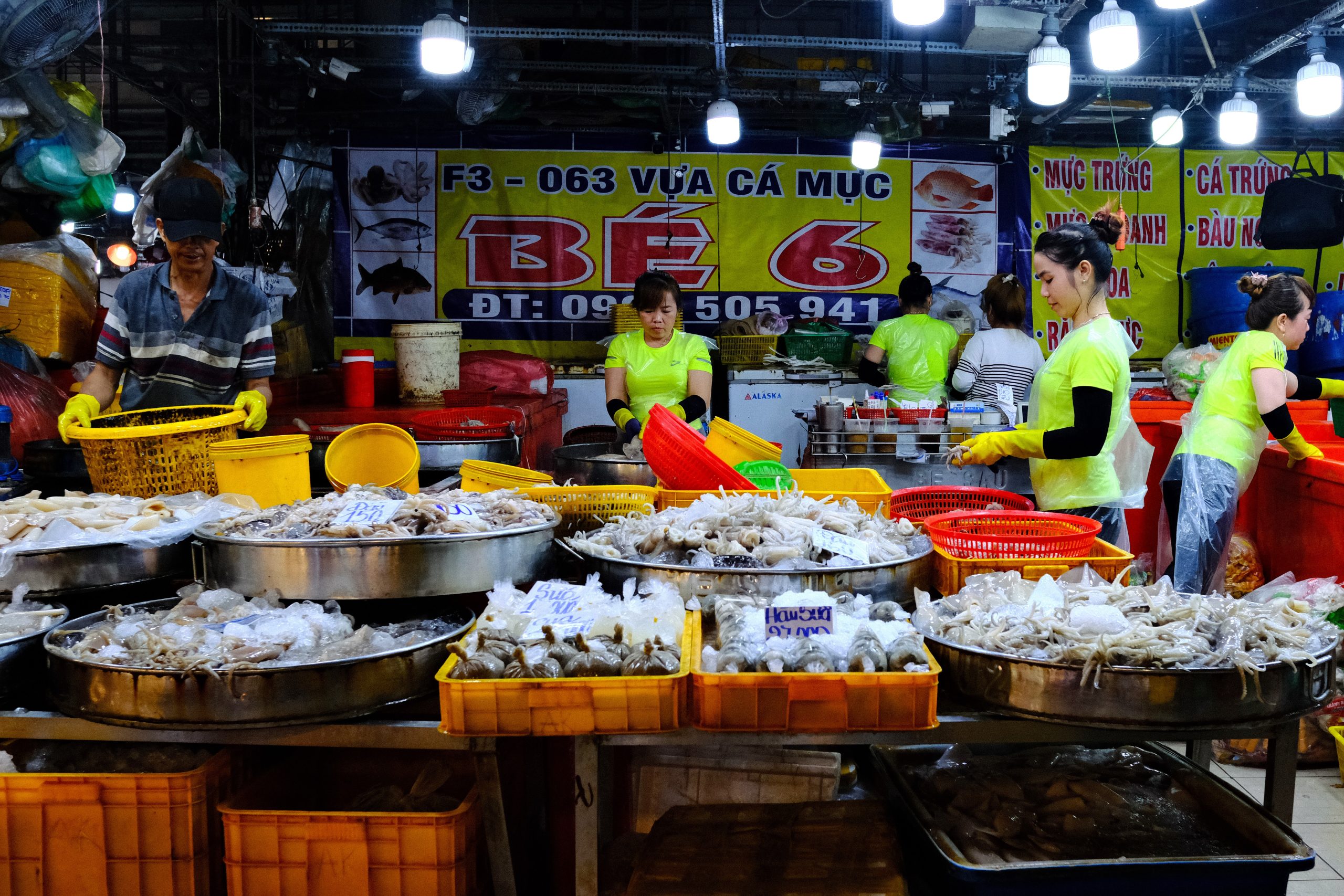
Sorting large quantities of fish and squid at Bình Điền market
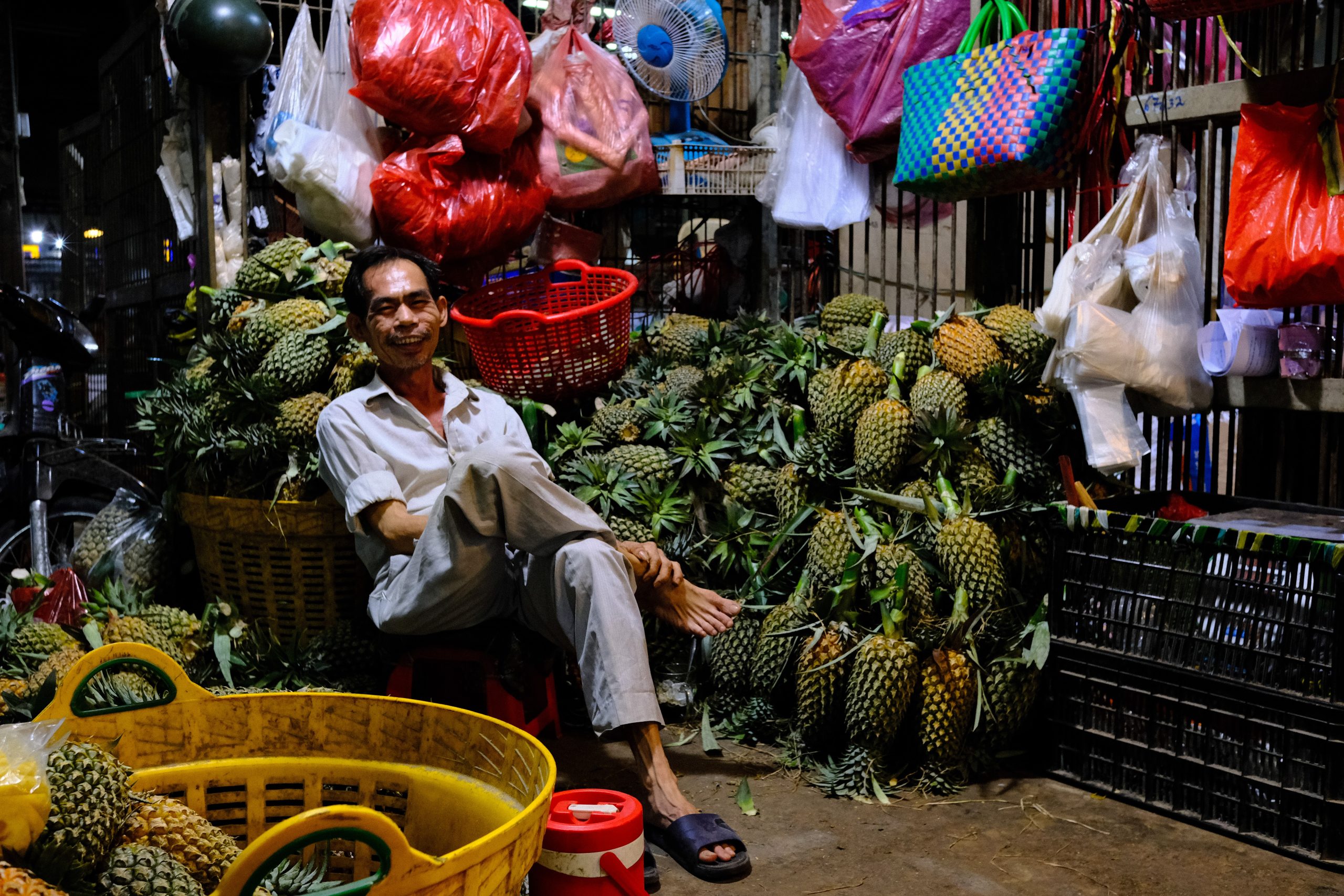
A pineapple vendor at Bình Điền market
7. Thị Nghè Market
Address: Phan Văn Hân Street, Ward 19, Bình Thạnh District
A Traditional Market in a Modern Neighbourhood
Thị Nghè Market occupies a long building that dates back to the early 1990s. With entrances on both Phan Văn Hân Street and Nguyễn Ngọc Phương Street, it stretches across an entire city block.
Although the market itself is relatively small, vendors also occupy the surrounding streets.
I lived nearby during my first four years in Vietnam. Since then, the neighbourhood has transformed into one of the city’s trendiest areas, filled with cocktail bars, cafés, and restaurants.
Nevertheless, Thị Nghè Market has preserved its authentic local atmosphere.
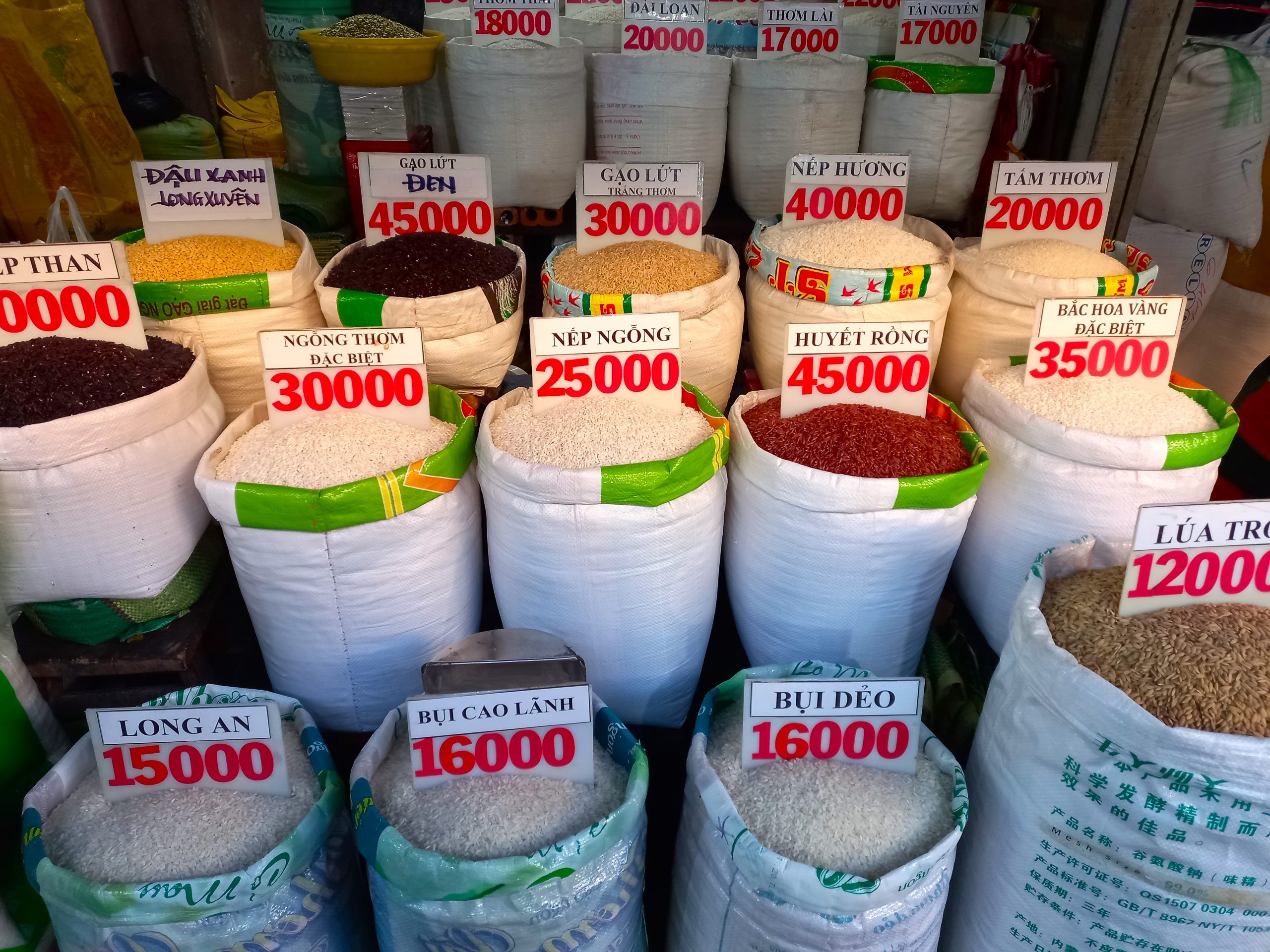
Varieties of rice on sale at Thị Nghè market

Early morning at the cooked food section of Thị Nghè market
What You’ll Find Inside
The central aisles mainly sell clothing, household goods, footwear, and textiles.
Meanwhile, stalls along the sides offer fresh fruit, vegetables, herbs, and spices. Their aromas mix with the scents of the seafood and meat section at the back of the market.
Fresh fish glisten on ice, while skilled butchers prepare meat throughout the morning.

Different kinds of tea for sale at Thị Nghè market

Fresh fish sold at Thị Nghè market
Local Highlights
Several food vendors line the eastern side of the market, serving noodle soups and rice dishes.
Another interesting feature is the collection of shops selling products for ancestor worship. You’ll also find excellent tea vendors offering jasmine, oolong, chamomile, green tea, and traditional herbal blends.

Fruit and vegetable stalls at the back of Thị Nghè market
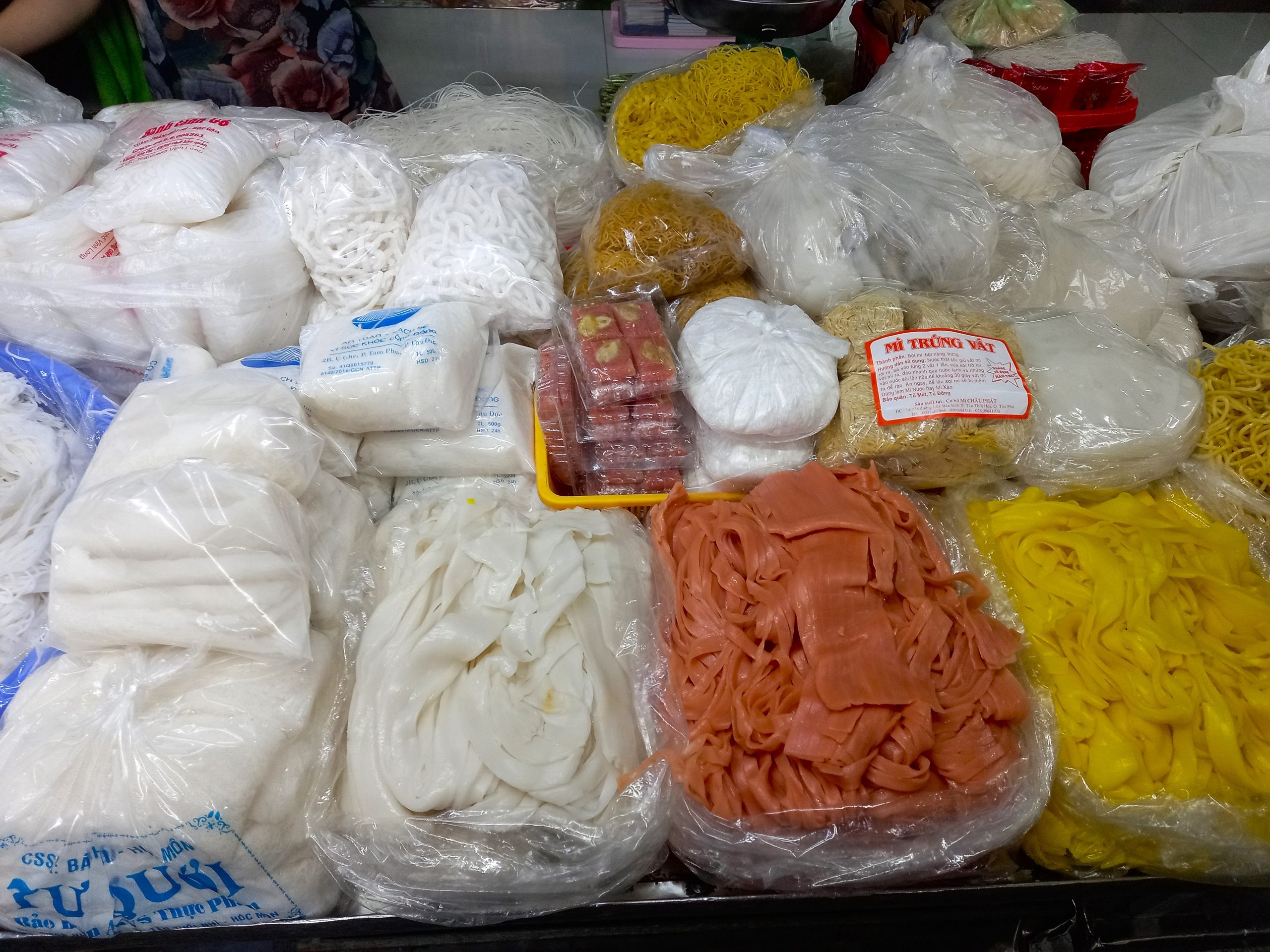
Noodle varieties at a stall in Thị Nghè market
8. Xóm Chiếu Market
Address: Đinh Lễ Street, Ward 12, District 4
A Food Lover’s Market in District 4
District 4 once had a reputation for crime because of its maze of narrow alleyways. Today, however, it is famous for its outstanding street food.
That reputation is reflected at Xóm Chiếu Market, where the cooked food section forms the heart of the market.

Shellfish and snails on sale outside Xóm Chiếu market
Visiting the Market
Inside the large concrete building, vendors organise their products into clearly marked sections.
Morning is the best time to shop for fresh ingredients or enjoy breakfast. By afternoon, many indoor food stalls close, although business continues outside until evening.

Xóm Chiếu market is housed is a large, grey structure
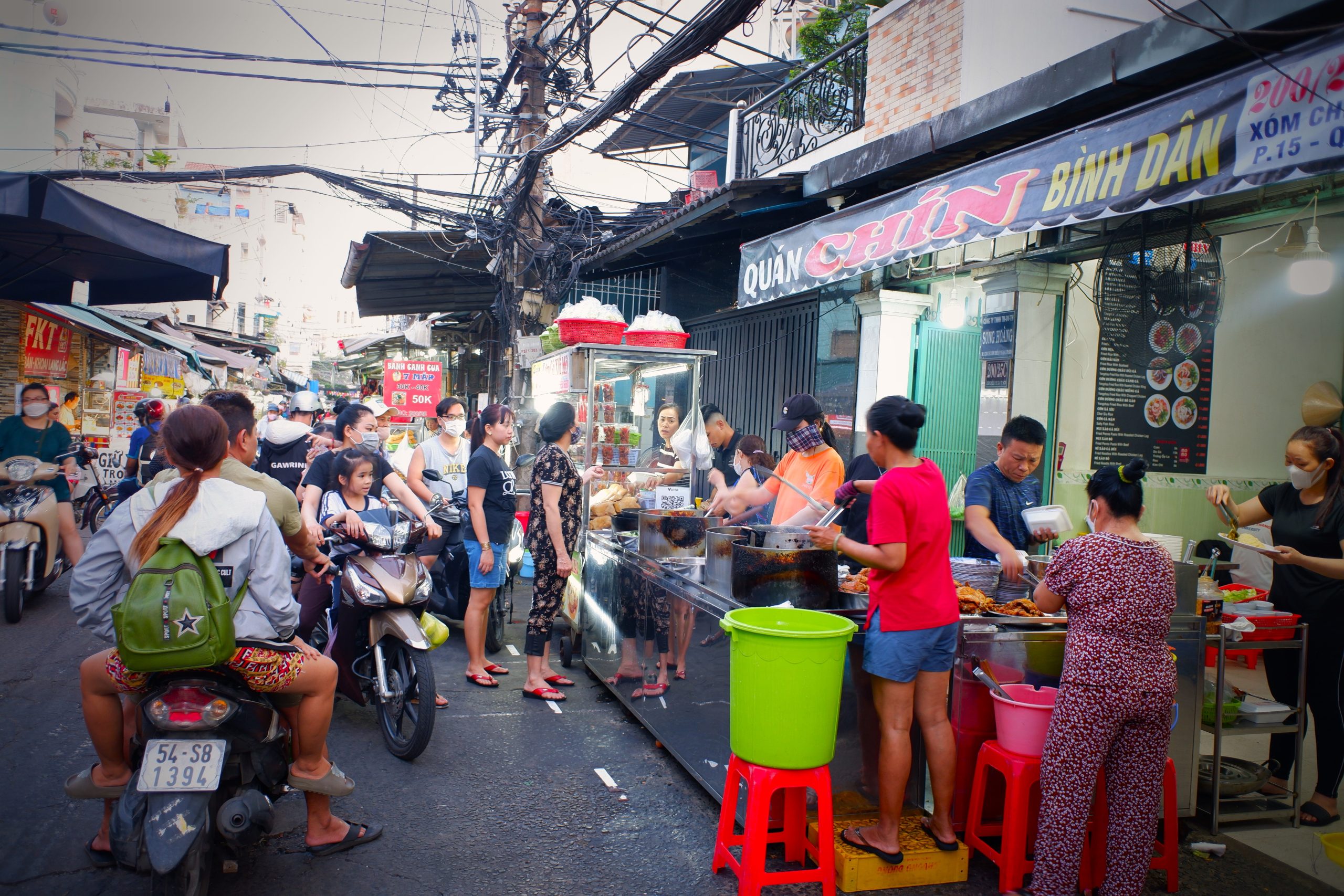
The street food scene around Xóm Chiếu market is one of the liveliest and best in the city
Explore the Surrounding Streets
The busiest outdoor trading areas are located along Lê Văn Linh Street and Lê Quốc Hưng Street.
Fresh seafood, poultry, and meat dominate one side, while fruit vendors and prepared food line the other.
If you enjoy Vietnamese street food, return after dark. From the market, walk towards Alley 200 Xóm Chiếu, one of the city’s best-known food streets. With so many local specialities available, you’ll probably need more than one visit.

Xóm Chiếu market is located in District 4, an area previously known to have a rough edge
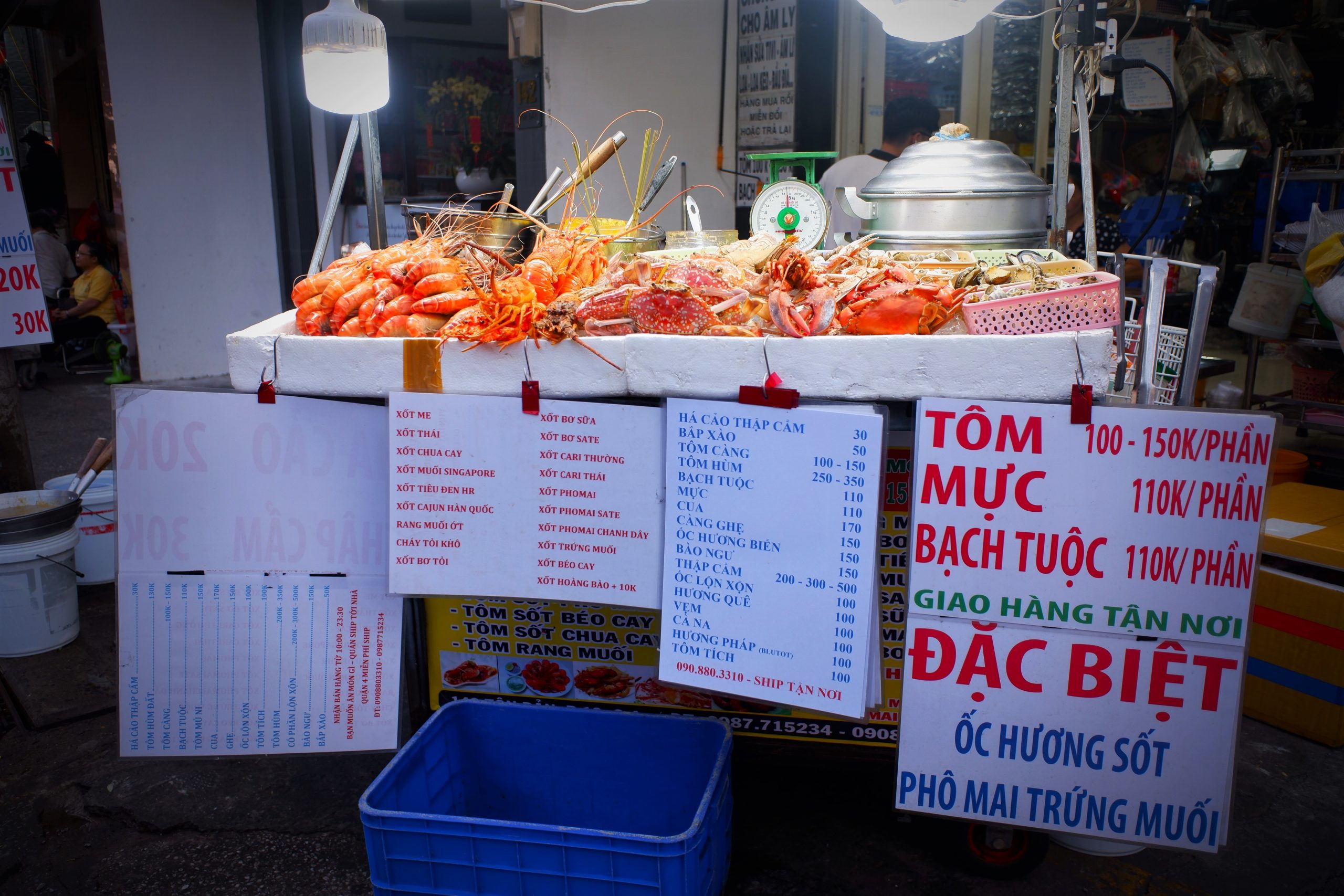
The seafood dining around Xóm Chiếu market in the evening is excellent
9. Tân Định Market
Address: Hai Bà Trưng Street, Tân Định Ward, District 1
One of Saigon’s Historic Markets
Built in 1926, Tân Định Market is one of the oldest traditional markets in Ho Chi Minh City.
Its beautiful French colonial façade stands out immediately. Three bell towers rise above the entrance, while the central tower features a large clock.
Unlike most local markets, security guards watch each entrance. Even so, the surrounding streets remain lively neighbourhood shopping areas.
I bought most of my fruit and vegetables here while living nearby for almost three years.
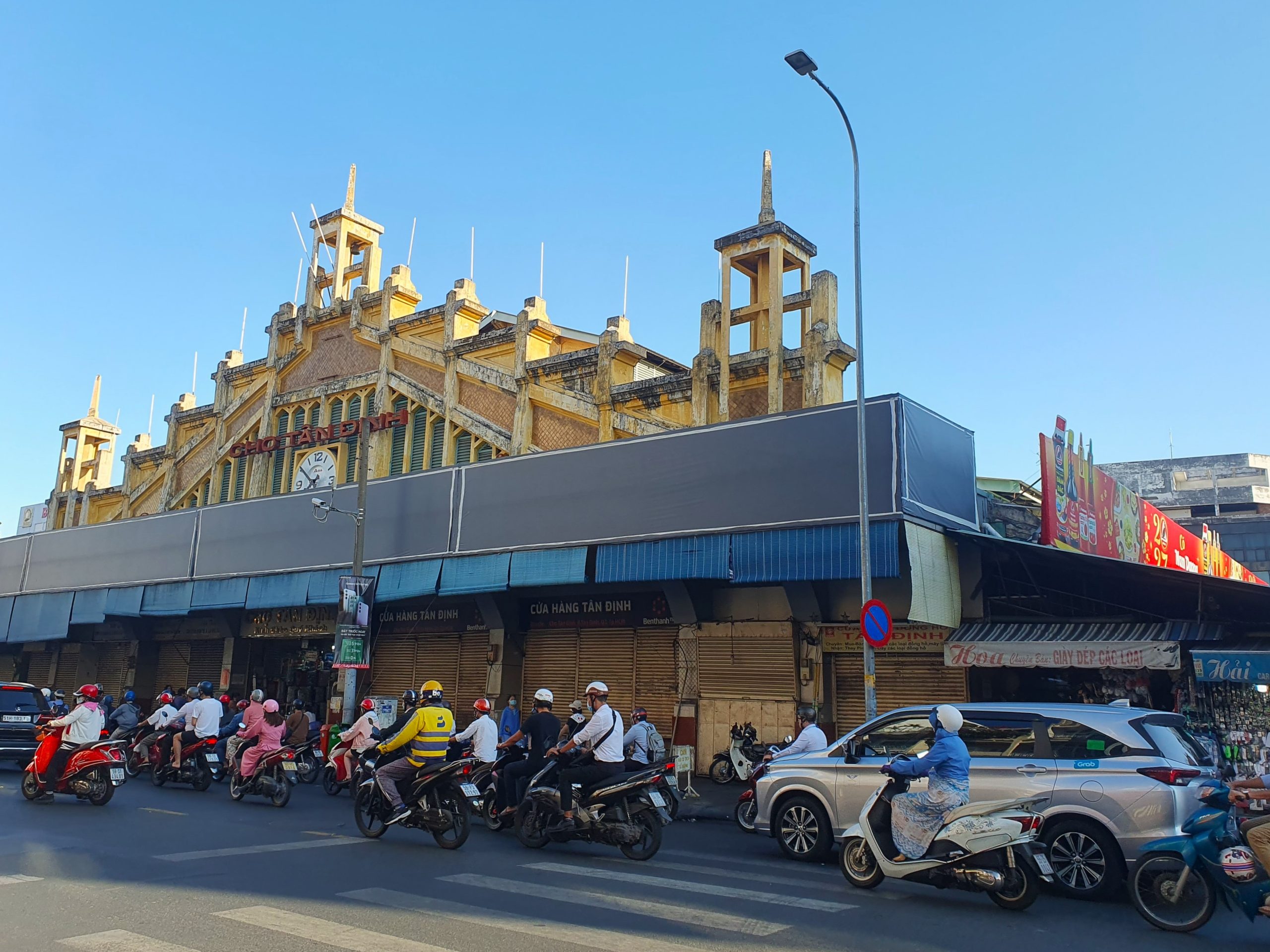
The striking exterior of Tân Định market dates from the French colonial era
Shopping at Tân Định Market
The market is especially famous for fabrics and clothing.
Inside, you’ll also find dried fruit, nuts, sweets, and household goods. Fresh seafood, vegetables, and meat are mainly sold around the outside of the building and along Mã Lộ Street.
Among all the markets I’ve visited, the meat section here is one of the cleanest and best organised.
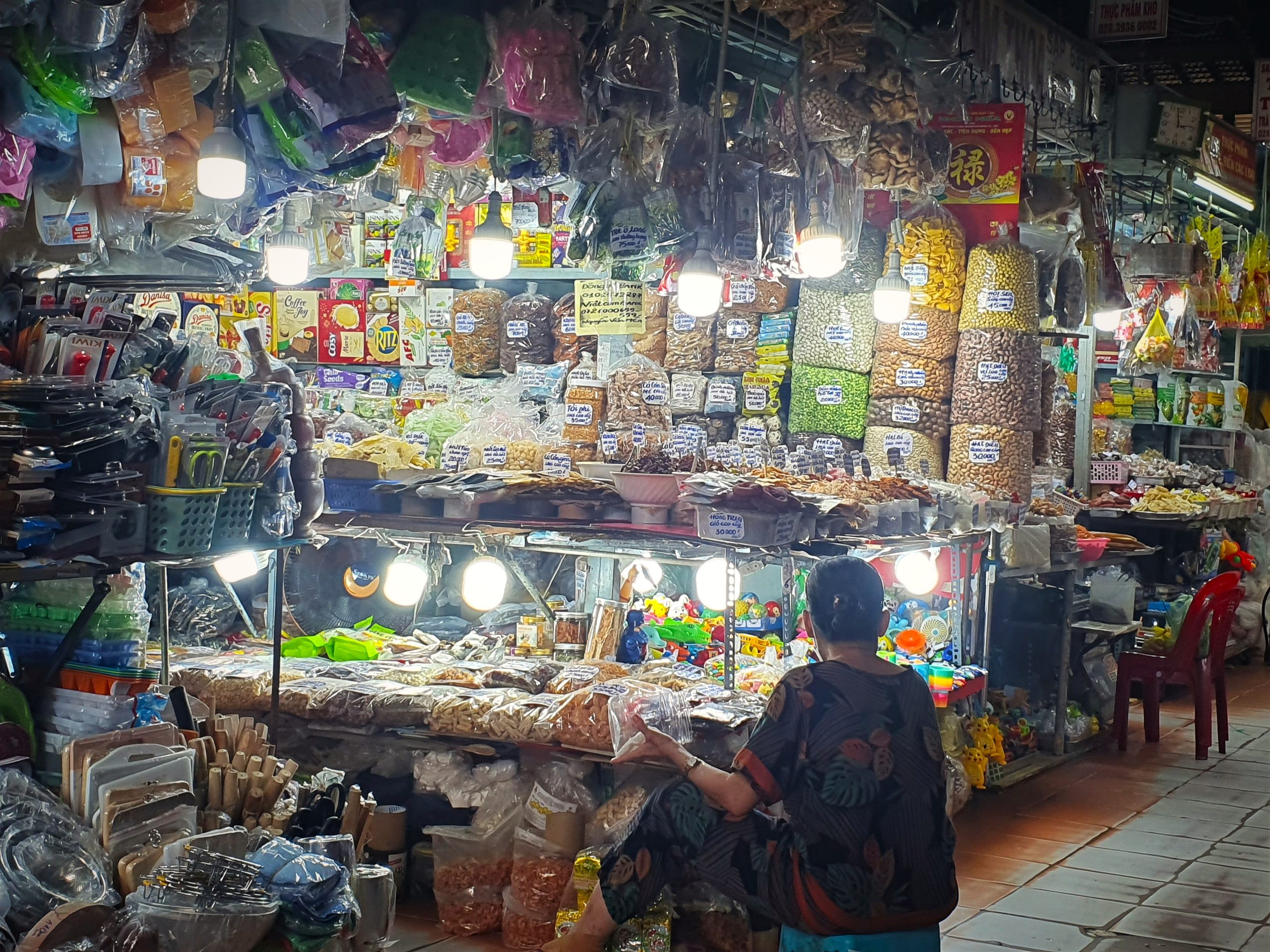
Dried goods for sale inside Tân Định market
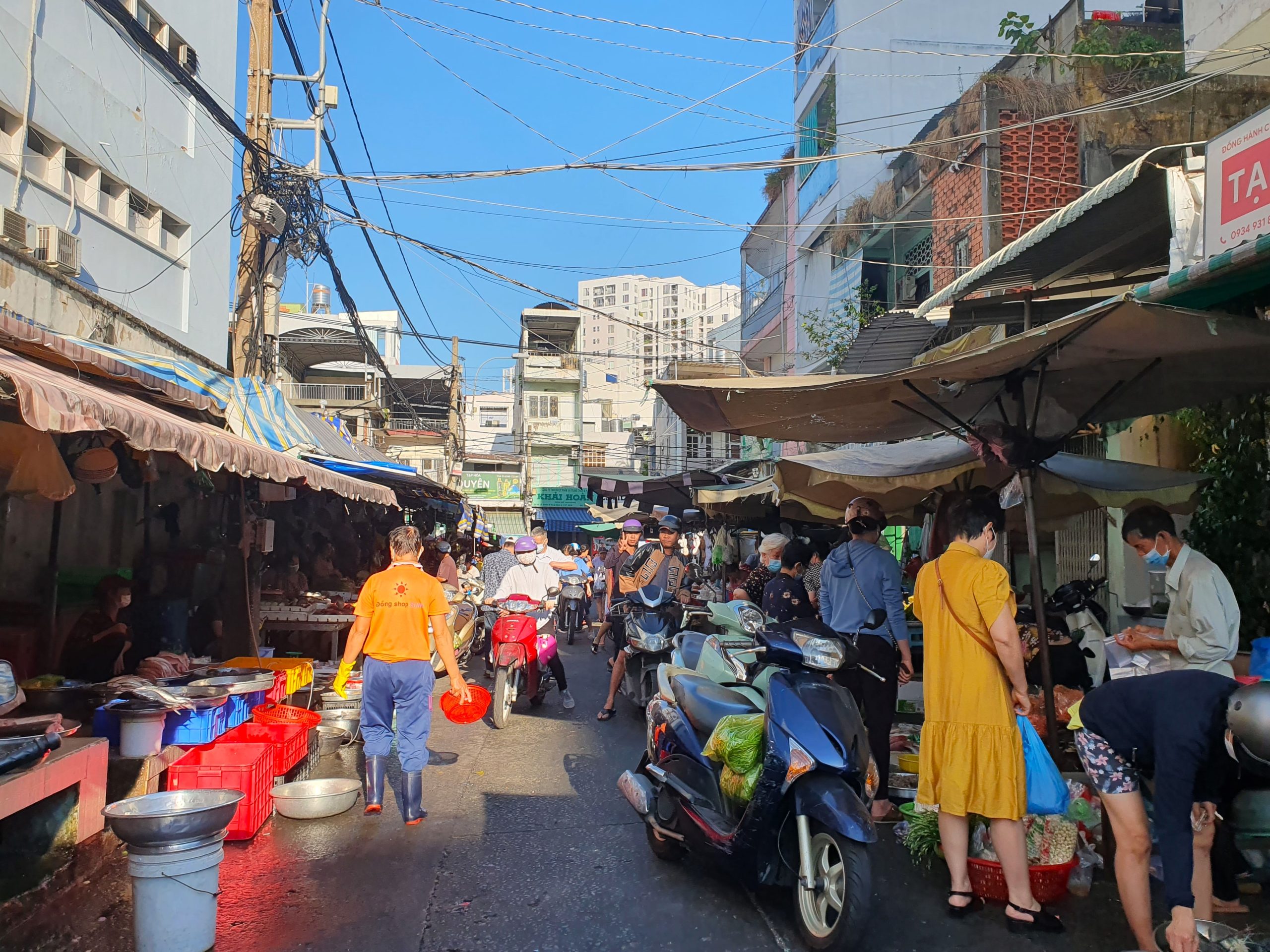
Tân Định market spills out onto the streets, especially fresh produce stalls
Food and Nightlife
The eastern side of the market, along Nguyễn Hữu Cầu Street, is packed with food vendors from early morning until late evening.
Popular dishes include cháo ếch, cơm tấm, and xôi gà. As a result, this corner becomes a lively gathering place for local residents every night.
A Great Place to Buy Fabric
Some people call Tân Định “the market of the rich.” Personally, I have always found it affordable.
If you’re looking for fabric, this is one of the best places near the city centre. Many shops sell cloth by weight under signs reading “vải ký,” making it an excellent destination for sewing and DIY projects.

A popular bánh mì stall at Tân Định market
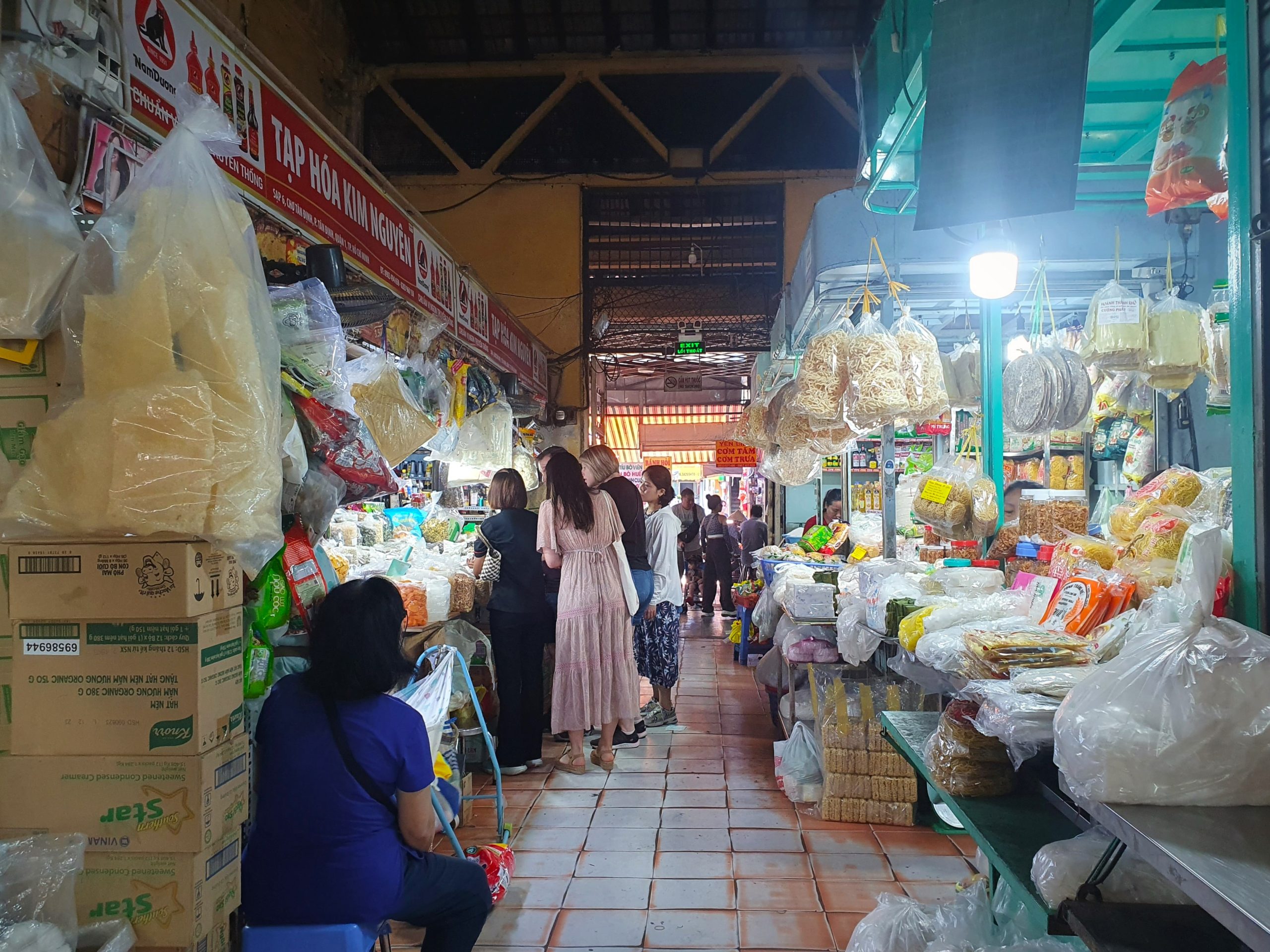
Noodles and rice crackers for sale inside Tân Định market
10. Bà Chiểu Market
Address: Diên Hồng Street, Ward 1, Bình Thạnh District
One of Saigon’s Oldest Local Markets
Located at the busy intersection of Phan Đăng Lưu and Bùi Hữu Nghĩa streets, Bà Chiểu Market is one of the oldest local markets in Saigon.
Although the exterior looks plain, the market is packed with products for everyday life. Local residents visit to buy clothing, household goods, accessories, fresh food, and many other essentials.
Unlike many traditional markets, Bà Chiểu also has a dedicated section selling gold and silver jewellery.
For the freshest vegetables, herbs, seafood, and meat, head to the back of the market along Vũ Tùng Street. Prices there are often lower, and bargaining is much easier.

Fresh fruit on display at Bà Chiểu market
Shopping Tips
Bà Chiểu was once known as a market for working-class shoppers. Today, prices are generally higher, and bargaining has become more important.
Instead of accepting the first price, negotiate politely. In many cases, experienced shoppers reduce the initial asking price by 30% to 50%.
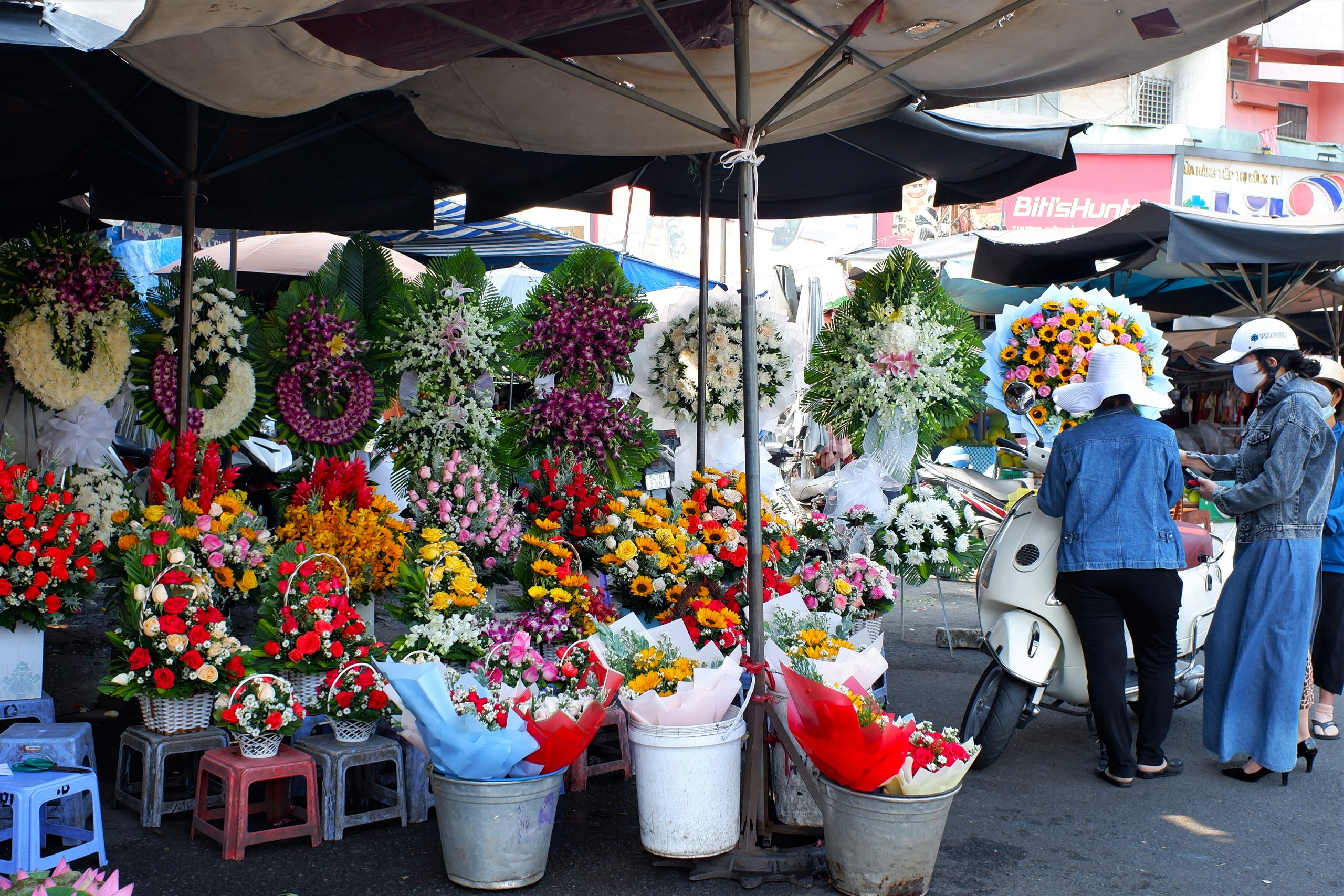
A flower stall at Bà Chiểu market
Street Food and Night Market
After 5:00 PM, many indoor stalls close. However, the surrounding streets become even livelier as food vendors begin serving dinner.
One of the best-known dishes is xôi gà xá xíu at the corner of Vũ Tùng and Bùi Hữu Nghĩa streets.
Meanwhile, the western side of the market transforms into a lively second-hand shopping area. Visitors can browse affordable clothing, bags, shoes, and accessories.
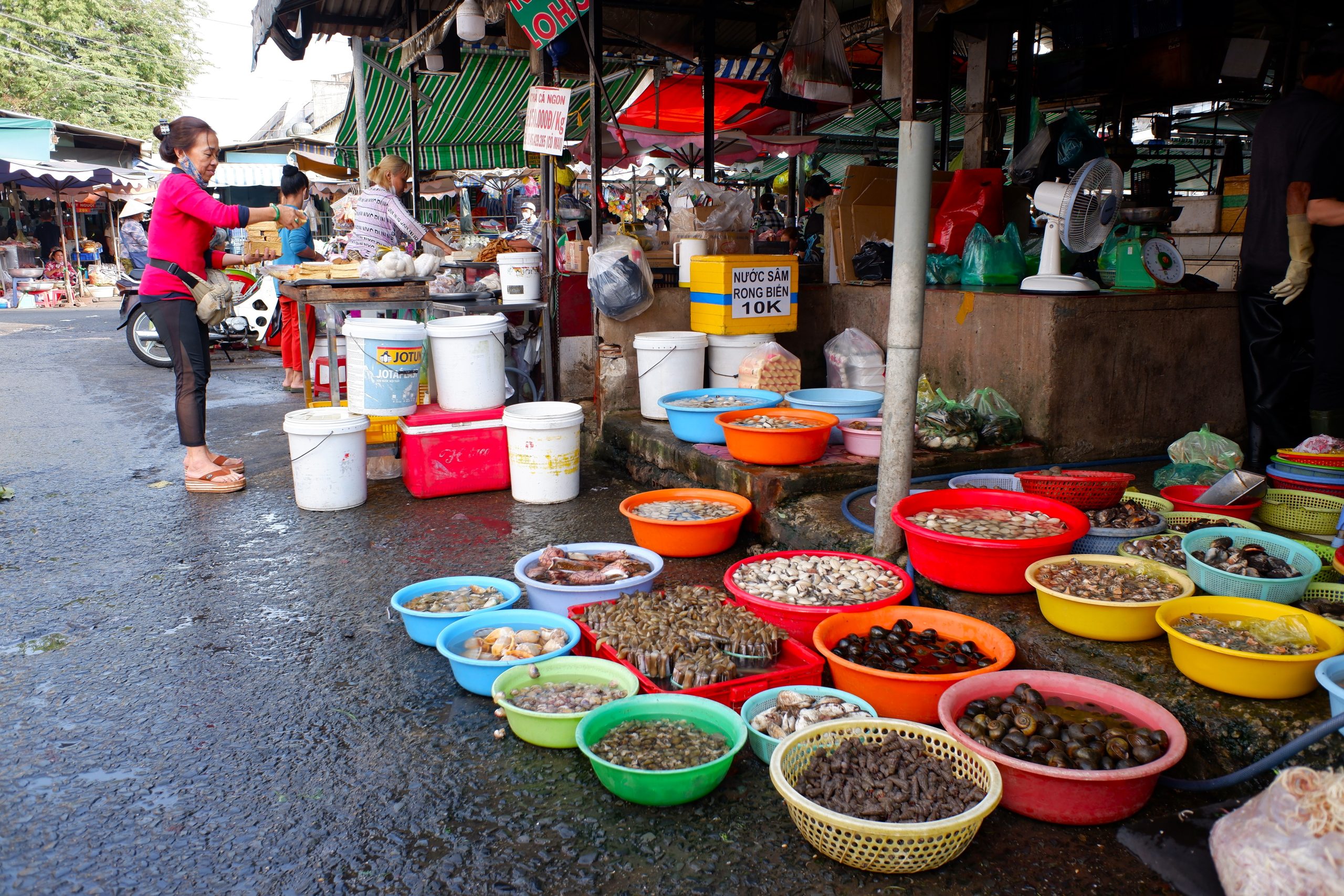
Shellfish and snails at a stall outside Bà Chiểu market
Nearby Attraction
Before leaving, visit the Lê Văn Duyệt Mausoleum, located beside the western edge of the market.
Although many people pass without noticing it, this historic site is one of the finest traditional architectural landmarks in Ho Chi Minh City. The peaceful grounds provide a welcome contrast to the busy streets surrounding the market.

Temple and mausoleum of Lê Văn Duyệt (1763-1832) just outside Bà Chiểu market
11. Hòa Hưng Market
Address: Cách Mạng Tháng 8 Street, Ward 15, District 10
A Quiet Local Market in District 10
Hòa Hưng Market sits beside one of the busiest roads in Ho Chi Minh City. At first, heavy traffic can easily distract visitors from the market itself.
However, once you step inside, the atmosphere changes completely. The noise of the street quickly fades, replaced by the familiar sounds of everyday market life.
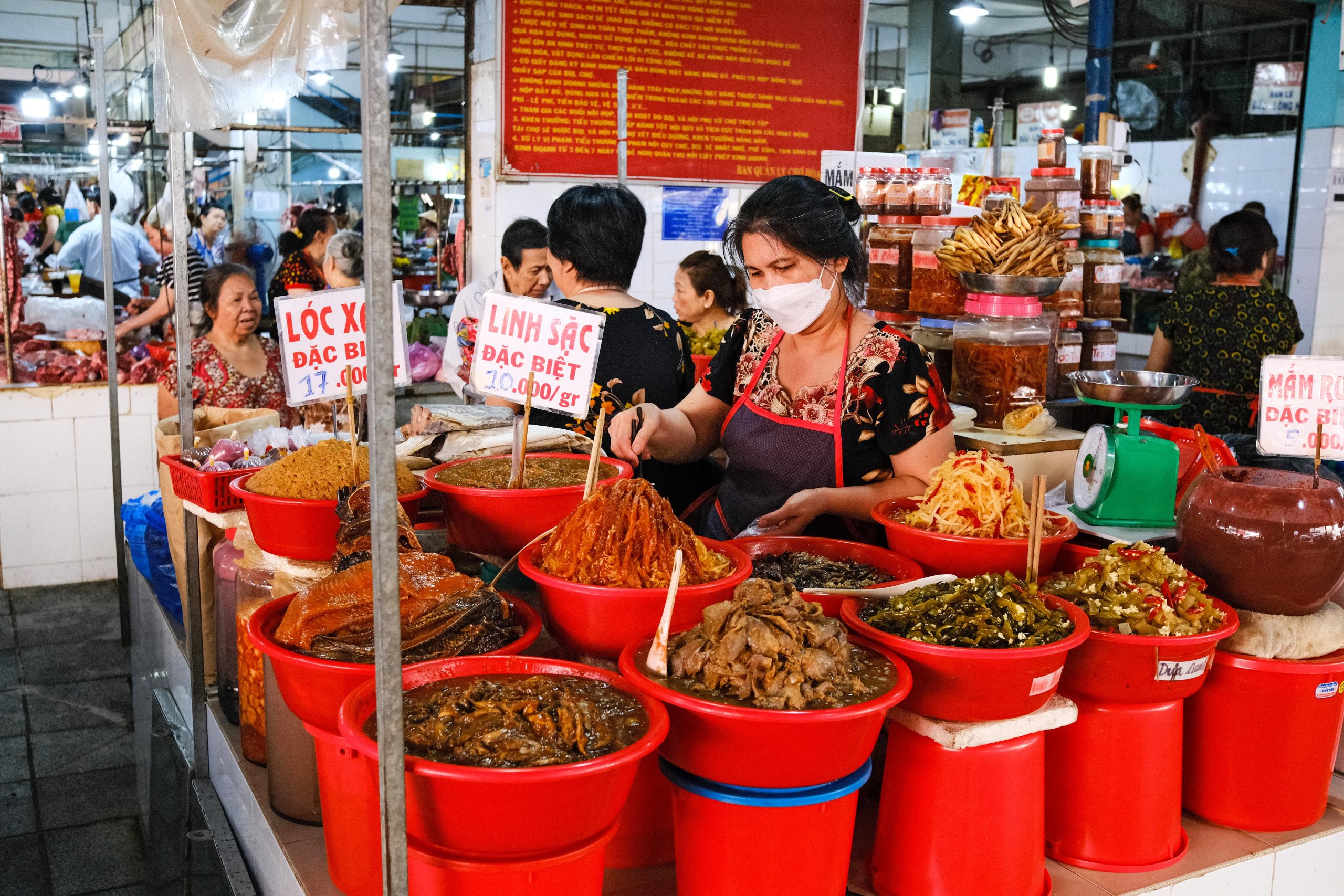
Varieties of mắm (fermented fish sauce) on sale in Hòa Hưng market
Exploring the Market
The building has three floors connected by a central staircase.
The ground floor focuses on fresh food and cooked dishes. Meanwhile, the second floor mainly sells clothing and accessories.
Surprisingly, the top floor houses a Muay Thai gym. Sunlight filters through the roof, creating a dramatic setting above the boxing ring.
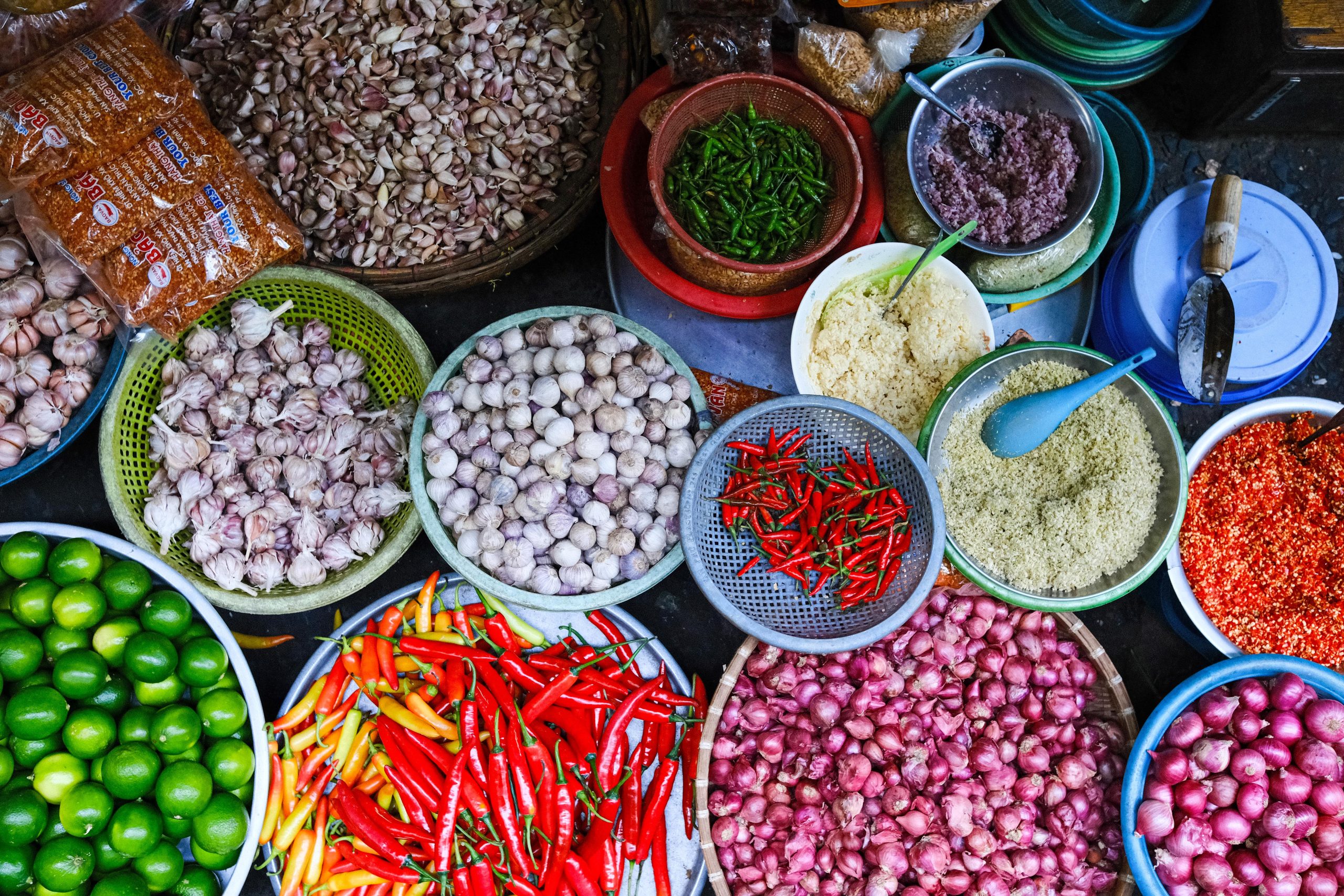
Colourful display of shallots, garlic, chillies and lime in Hòa Hưng market
What to Eat
Several small eateries line the ground floor.
Popular choices include bún vịt, gỏi cuốn, and cơm chay. During my visit, many customers were drinking nước ép rau má, a refreshing herbal juice that is popular throughout southern Vietnam.
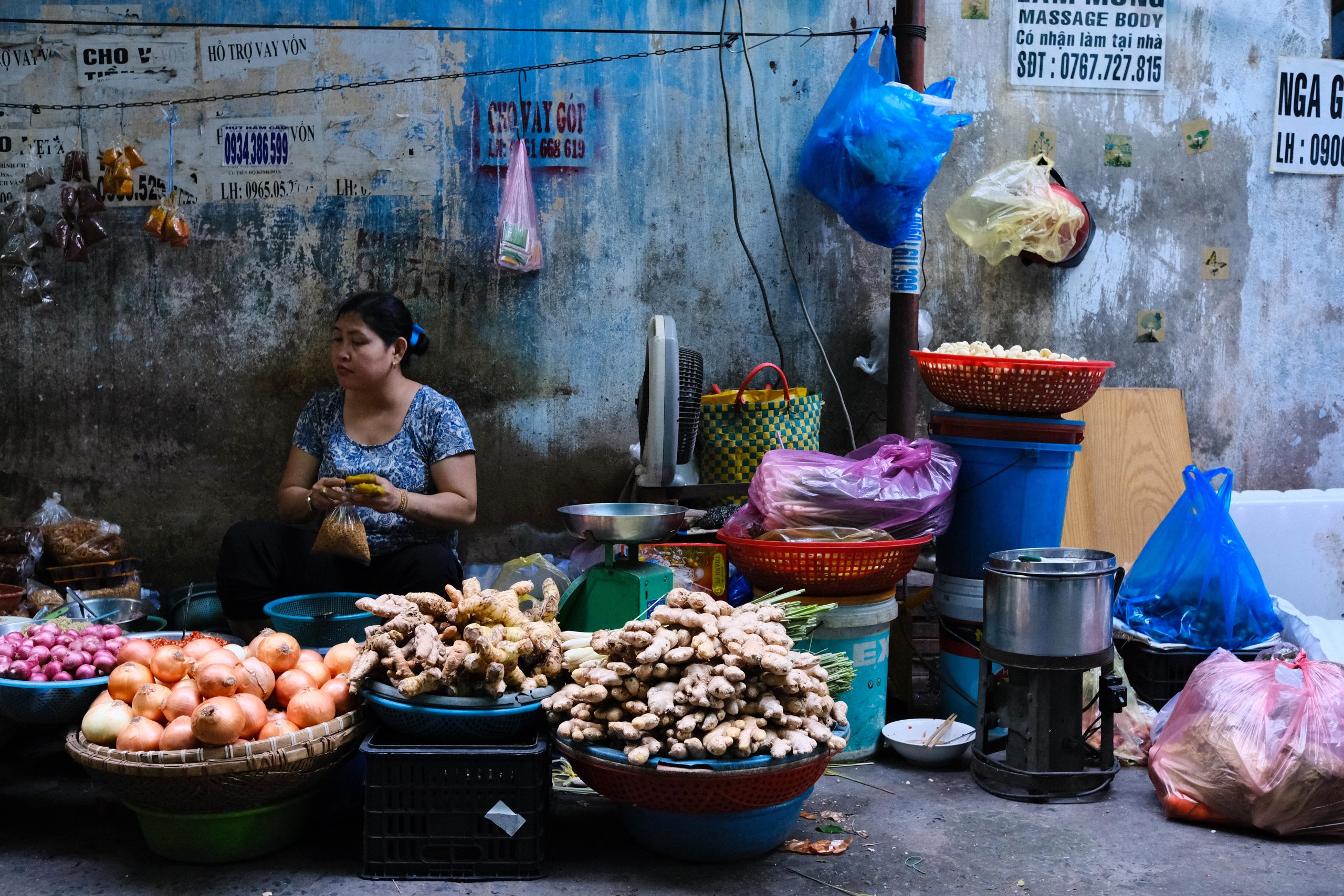
A spice vendor outside Hòa Hưng market
Friendly Local Atmosphere
Unlike the busy food section downstairs, the upper floor feels calm and relaxed.
Shop owners often sit chatting or waiting for customers, creating a friendly environment for visitors.
After exploring the market, I wandered into the nearby residential lanes. There, I met a vendor named Cường while he prepared fresh soy milk for sale.
When I asked what made Hòa Hưng Market special, he smiled and simply replied, “It’s been here for a long time.”
Another local added, “Around 100 years.”
That brief conversation perfectly reflected the character of the market. Rather than standing out because of its size or architecture, Hòa Hưng remains important because it continues to serve its neighbourhood every day.
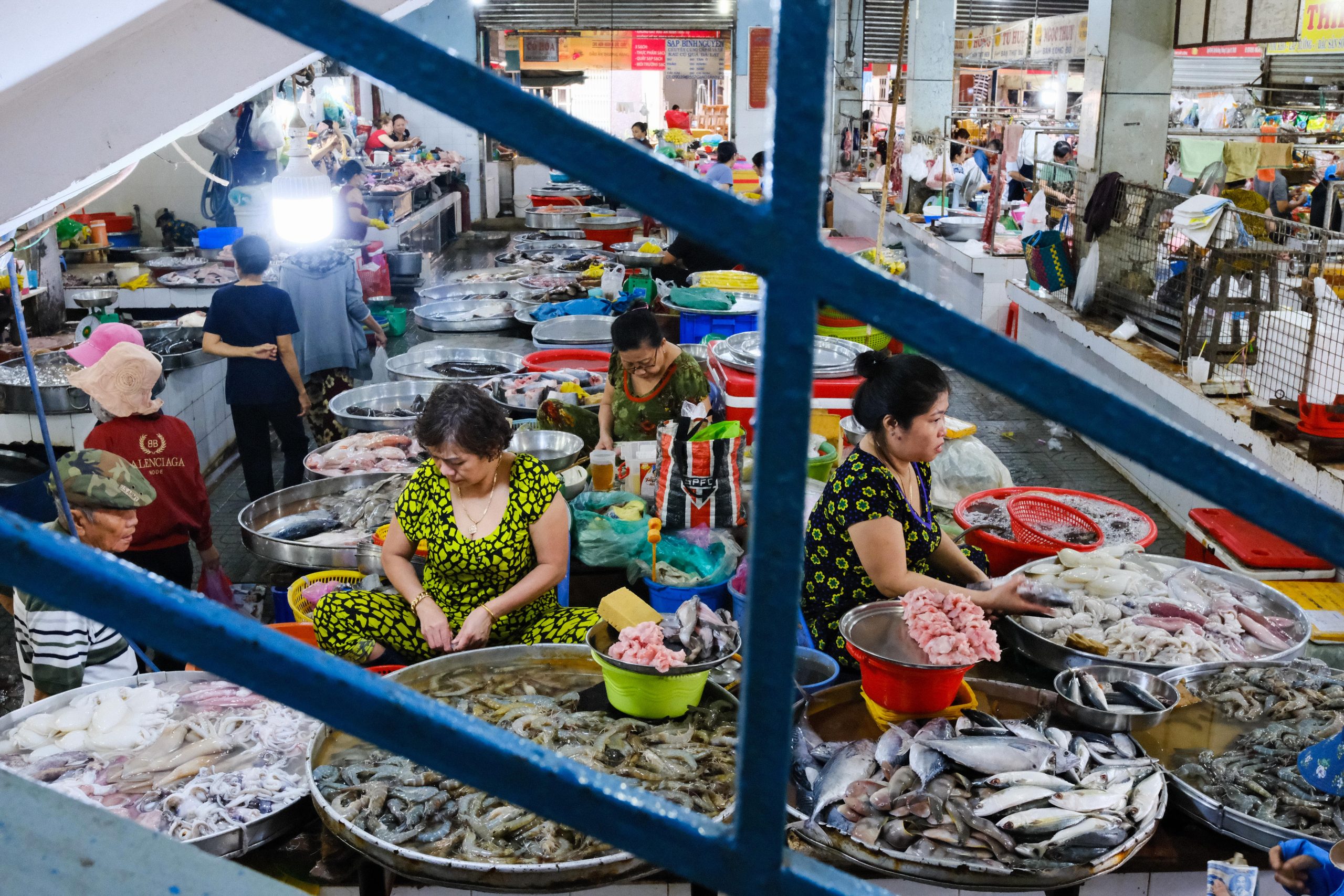
The fish section of Hòa Hưng market
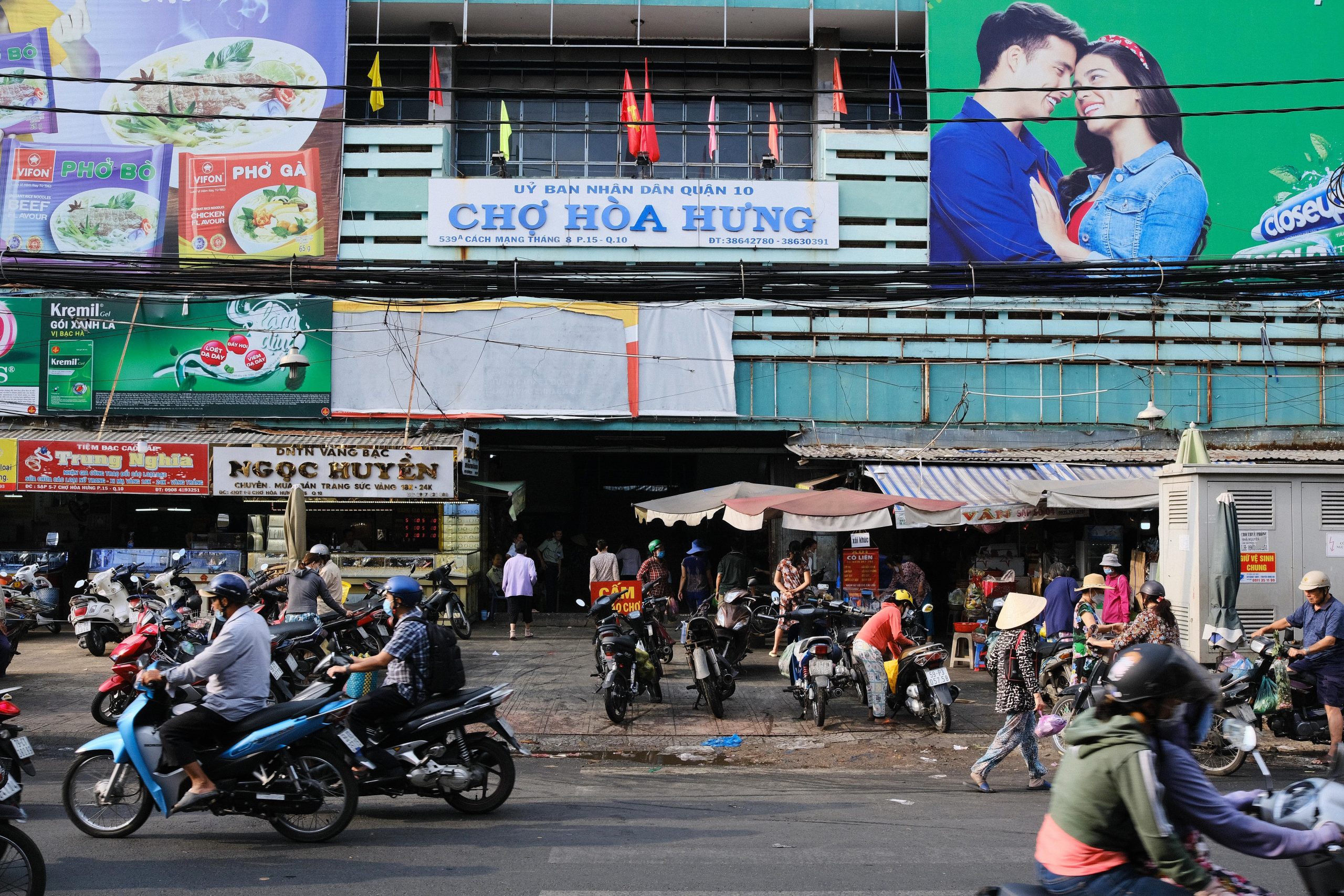
The uninviting exterior of Hòa Hưng market
Nearby Historic Site
Although Hòa Hưng Market receives little attention online, the nearby Đình Chí Hòa Communal House is one of the city’s most important historic landmarks.
More than 200 years old, the communal house is recognised as a national cultural relic.
For that reason, combining both destinations makes an enjoyable half-day visit. Together, they offer a fascinating glimpse into the everyday life and history of Ho Chi Minh City.

A fabric stall inside Hòa Hưng market
0 Comment